Sweet Potato Salad
さつまいもサラダ · Satsumaimo Sarada
 By Aoi, licensed nutritionist · From a Japanese preschool lunch menu
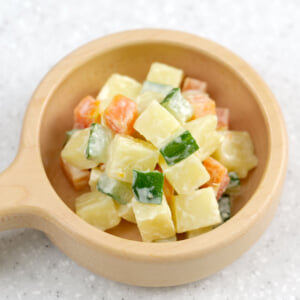
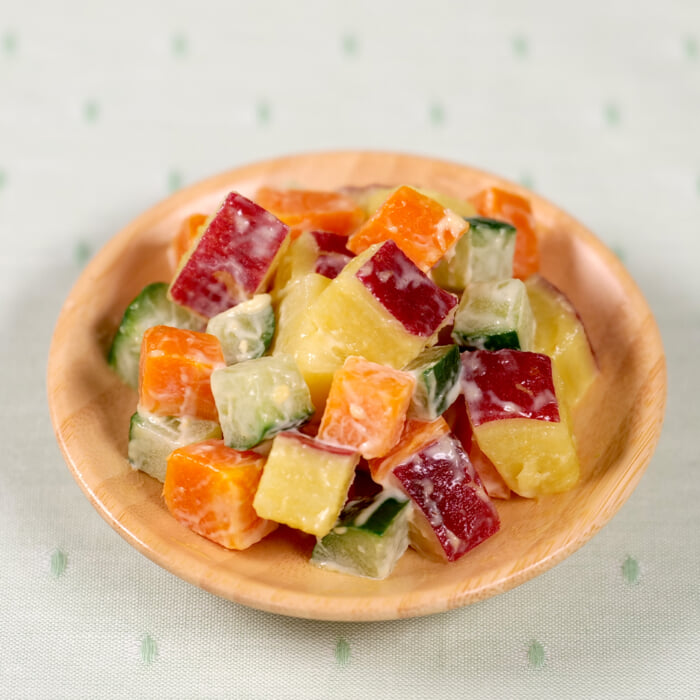
This is a simple, gently sweet salad built around satsumaimo, the Japanese sweet potato with purple skin and pale yellow flesh that stays fluffy and mild when cooked. Cubes of sweet potato are tossed with little dice of carrot and cucumber and a creamy dressing, so every spoonful has some color and a bit of crunch. Children love the natural sweetness of the potato, and since the dressing is egg-free mayonnaise, it is easy to serve to kids with egg allergies too. The sweet potato is left unpeeled, which adds color and keeps the cubes from falling apart.
Added. Open the recipe helper (bottom right) → ☰ Menu → 🛒 Shopping list to see the ingredients for your family size.
Printing uses the number of adults and children set under Ingredients, so set those first.
Ingredients
Amounts for 1 child (1 serving). An adult counts as 2 servings.
One serving here is 1.5× the portion served to a child in a Japanese preschool, sized for Western appetites. An adult counts as two servings. Tap an ingredient to check it off.
Ingredients
- 45 gJapanese sweet potato (satsumaimo)A purple-skinned, pale-yellow-fleshed sweet potato that is sweeter, drier, and fluffier than orange varieties. Substitute: Any sweet potato.
- 11.3 gcarrot
- 13.5 gcucumber
Seasonings
- 7.5 gegg-free mayonnaise (Mayodore)A Japanese egg-free mayonnaise-style dressing. Substitute: Any egg-free or vegan mayonnaise.
- 0.1 gsalt
- to tastepepper
About the Japanese ingredients in this recipe
- Japanese sweet potato (satsumaimo) (さつまいも)
- A purple-skinned, pale-yellow-fleshed sweet potato that is sweeter, drier, and fluffier than orange varieties. Substitute: Any sweet potato.
- egg-free mayonnaise (Mayodore) (マヨドレ)
- A Japanese egg-free mayonnaise-style dressing. Substitute: Any egg-free or vegan mayonnaise.
Directions
- 1
Trim away only any blemished parts of the sweet potato and cut it into cubes, leaving the skin on. Boil until tender, drain in a colander, and let cool as is.
- 2
Cut the carrot and cucumber into small dice. Boil each separately, then cool under cold running water.
- 3
Squeeze the carrot and cucumber from step 2 to remove excess water, then toss with the sweet potato from step 1 and the seasonings.
Do not rinse the sweet potato under running water after boiling, as it would turn watery. Just let it cool in the colander as is.
Nutrition
| Per | 1 serving | 1 adult serving | Your total |
|---|---|---|---|
| Energy | 105 kcal | 210 kcal | 105 kcal |
| Protein | 0.8 g | 1.5 g | 0.8 g |
| Fat | 4.7 g | 9.3 g | 4.7 g |
| Carbohydrates | 17 g | 33.9 g | 17 g |
| Fiber | 1.7 g | 3.3 g | 1.7 g |
| Salt equivalent | 0.3 g | 0.6 g | 0.3 g |
| Calcium | 24 mg | 48 mg | 24 mg |
| Iron | 0.3 mg | 0.6 mg | 0.3 mg |
| Potassium | 234 mg | 468 mg | 234 mg |
| Energy | Protein | Fat | Carbs | Fiber | Salt equiv. | Calcium | Iron | Potassium | |
|---|---|---|---|---|---|---|---|---|---|
| 1 serving | 105 kcal | 0.8 g | 4.7 g | 17 g | 1.7 g | 0.3 g | 24 mg | 0.3 mg | 234 mg |
| 1 adult serving | 210 kcal | 1.5 g | 9.3 g | 33.9 g | 3.3 g | 0.6 g | 48 mg | 0.6 mg | 468 mg |
Values are per serving (1.5× the Japanese preschool portion); an adult serving is double. They were calculated by a licensed Japanese nutritionist using the Standard Tables of Food Composition in Japan. "Salt equivalent" is sodium × 2.54, the standard Japanese measure. Allergen flags cover egg, milk and wheat only and come from the nutritionist's records. Soy sauce and miso are made with wheat but are usually allowed on Japanese wheat-free school menus, so check with your doctor.