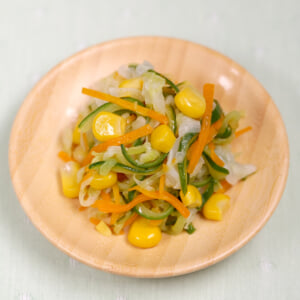
Hijiki Mayonnaise Salad
ひじきのマヨネーズサラダ · Hijiki no Mayonezu Sarada
 By Aoi, licensed nutritionist · From a Japanese preschool lunch menu
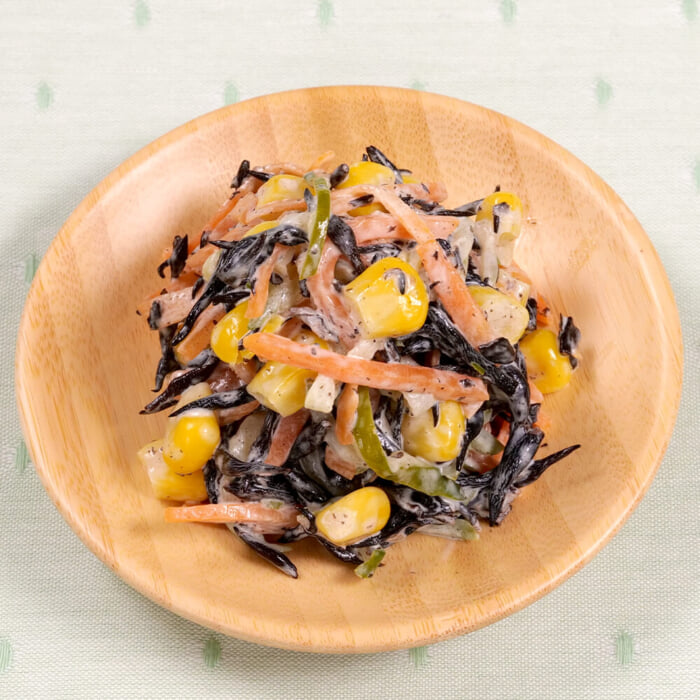
Hijiki is a dark, fine-stranded seaweed that Japanese cooks usually simmer with soy sauce, but in this salad it gets a creamy makeover. The hijiki is seasoned lightly with soy sauce first, then tossed with crisp carrot, cucumber and sweet corn in egg-free mayonnaise. The mild, familiar dressing takes the edge off the seaweed's sea flavor, so even children who are wary of hijiki tend to eat it happily. It is a simple side dish from our preschool lunch menu that also works as a way to sneak minerals onto the plate.
Wheat-free, but uses soy sauce (made with wheat). Japanese school-lunch allergy menus usually allow it, so check with your doctor. How to read the labels
Added. Open the recipe helper (bottom right) → ☰ Menu → 🛒 Shopping list to see the ingredients for your family size.
Printing uses the number of adults and children set under Ingredients, so set those first.
Ingredients
Amounts for 1 child (1 serving). An adult counts as 2 servings.
One serving here is 1.5× the portion served to a child in a Japanese preschool, sized for Western appetites. An adult counts as two servings. Tap an ingredient to check it off.
Ingredients
- 1.8 gdried hijiki seaweedShort, black strands of dried seaweed with a mild, earthy flavor that are soaked before simmering. Substitute: Dried wakame or arame.
- 10.5 gcarrot
- 18 gcucumber
- 15 gwhole kernel corn (canned or frozen)
Seasonings
- 0.5 gsoy sauce
- 4.5 gegg-free mayonnaise (Mayodore)A Japanese egg-free mayonnaise-style dressing. Substitute: Any egg-free or vegan mayonnaise.
- 0.1 gsalt
- to tastepepper
About the Japanese ingredients in this recipe
- dried hijiki seaweed (干しひじき)
- Short, black strands of dried seaweed with a mild, earthy flavor that are soaked before simmering. Substitute: Dried wakame or arame.
- egg-free mayonnaise (Mayodore) (マヨドレ)
- A Japanese egg-free mayonnaise-style dressing. Substitute: Any egg-free or vegan mayonnaise.
Directions
Video is in Japanese and may show a different version of this dish (other ingredients or steps). Follow the ingredients and steps on this page, especially when cooking for allergies.
- 1
Boil the hijiki and drain it in a colander. Return it to the pan and stir-fry it with the soy sauce to season it lightly. Once the liquid has cooked off, let it cool a little.
- 2
Cut the carrot and cucumber into short, thin matchsticks and boil each separately. Rinse them under cold running water to cool.
- 3
Briefly boil the corn (no need to heat it if you are using anything other than frozen corn), then rinse under cold running water to cool.
- 4
Squeeze the carrot and cucumber from step 2 to remove the excess water, then toss them with the hijiki from step 1, the corn from step 3 and the seasonings.
Seasoning the hijiki with soy sauce first helps it blend with the mayonnaise, so the whole salad tastes better.
Nutrition
| Per | 1 serving | 1 adult serving | Your total |
|---|---|---|---|
| Energy | 46.5 kcal | 93 kcal | 46.5 kcal |
| Protein | 0.6 g | 1.2 g | 0.6 g |
| Fat | 2.8 g | 5.7 g | 2.8 g |
| Carbohydrates | 5.7 g | 11.4 g | 5.7 g |
| Fiber | 1.8 g | 3.6 g | 1.8 g |
| Salt equivalent | 0.8 g | 1.5 g | 0.8 g |
| Calcium | 25.5 mg | 51 mg | 25.5 mg |
| Iron | 0.2 mg | 0.3 mg | 0.2 mg |
| Potassium | 204 mg | 408 mg | 204 mg |
| Energy | Protein | Fat | Carbs | Fiber | Salt equiv. | Calcium | Iron | Potassium | |
|---|---|---|---|---|---|---|---|---|---|
| 1 serving | 46.5 kcal | 0.6 g | 2.8 g | 5.7 g | 1.8 g | 0.8 g | 25.5 mg | 0.2 mg | 204 mg |
| 1 adult serving | 93 kcal | 1.2 g | 5.7 g | 11.4 g | 3.6 g | 1.5 g | 51 mg | 0.3 mg | 408 mg |
Values are per serving (1.5× the Japanese preschool portion); an adult serving is double. They were calculated by a licensed Japanese nutritionist using the Standard Tables of Food Composition in Japan. "Salt equivalent" is sodium × 2.54, the standard Japanese measure. Allergen flags cover egg, milk and wheat only and come from the nutritionist's records. Soy sauce and miso are made with wheat but are usually allowed on Japanese wheat-free school menus, so check with your doctor.