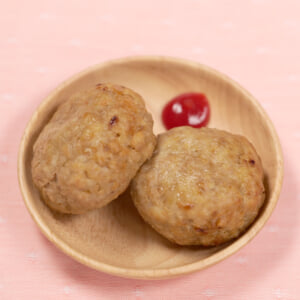
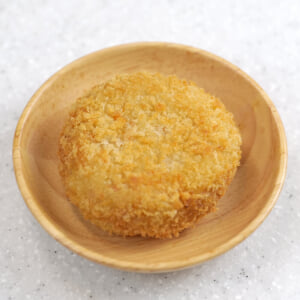
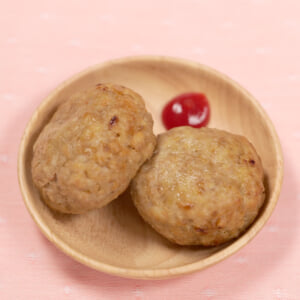
Soybean Menchi Katsu (Japanese Minced Meat Cutlet)
大豆のメンチカツ(卵なし) · Daizu no Menchi Katsu
 By Aoi, licensed nutritionist · From a Japanese preschool lunch menu
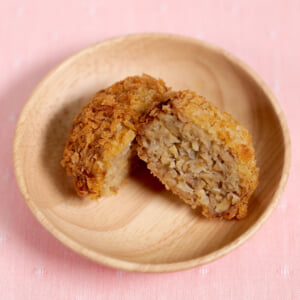
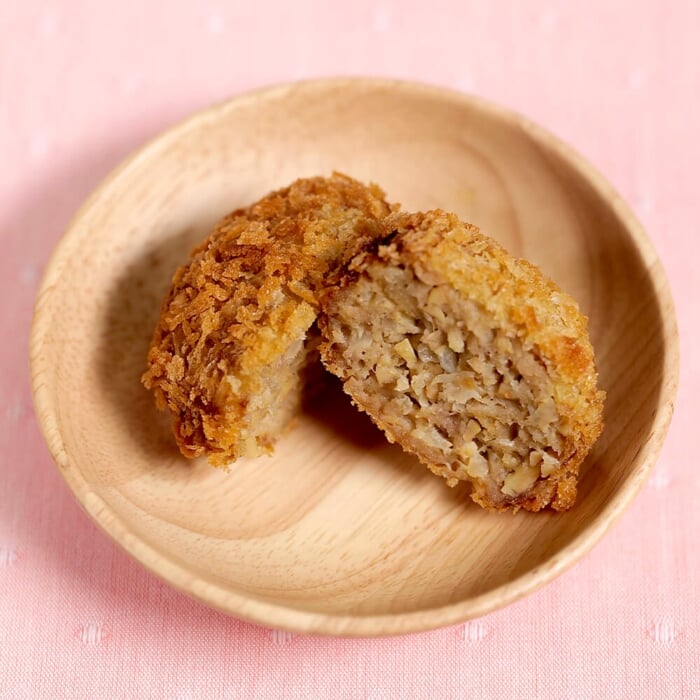
Menchi katsu is a Japanese favorite: a seasoned ground meat patty coated in panko and deep-fried until golden, the kind of thing you find at butcher shops and in bento boxes all over Japan. In this preschool version, roughly chopped soybeans are mixed into the pork, which stretches the meat, adds a gentle nutty sweetness, and slips extra beans into kids who would never eat them plain. Instead of the usual egg, a simple flour-and-water batter holds the panko in place, so the cutlet is made without egg and still has the same crunchy coating. Skim milk powder dissolved in warm water keeps the mixture moist and tender without adding any strong flavor.
Added. Open the recipe helper (bottom right) → ☰ Menu → 🛒 Shopping list to see the ingredients for your family size.
Printing uses the number of adults and children set under Ingredients, so set those first.
Ingredients
Amounts for 1 child (1 serving). An adult counts as 2 servings.
One serving here is 1.5× the portion served to a child in a Japanese preschool, sized for Western appetites. An adult counts as two servings. Tap an ingredient to check it off.
Ingredients
- 13.5 gboiled soybeans (canned or vacuum-packed)Plain cooked whole soybeans sold in cans or pouches, ready to use. Substitute: Canned chickpeas or white beans.
- 27 gground pork
- 33 gonion
Seasonings
- 1.5 gvegetable oil
- 6 gpanko
- 1.2 gskim milk powderMilk with the fat and water removed. Substitute: No skim milk powder? Leave it out and use milk in place of the water it is dissolved in, in the same amount (for example, 30 g skim milk powder + 130 g water becomes 130 g milk). Milk still contains milk, so this swap is not for a milk allergy.
- 4.9 mlwater (for the mixture)
- 0.3 gsalt
- 8.3 gflour
- 12 mlwater (for the coating)
- 7.5 gpanko (for the coating)
- 9 goil (for frying)
About the Japanese ingredients in this recipe
- boiled soybeans (canned or vacuum-packed) (大豆水煮)
- Plain cooked whole soybeans sold in cans or pouches, ready to use. Substitute: Canned chickpeas or white beans.
- skim milk powder (スキムミルク)
- Milk with the fat and water removed. Substitute: No skim milk powder? Leave it out and use milk in place of the water it is dissolved in, in the same amount (for example, 30 g skim milk powder + 130 g water becomes 130 g milk). Milk still contains milk, so this swap is not for a milk allergy.
Directions
- 1
Roughly chop the boiled soybeans (or mash them). Finely chop the onion. Heat the vegetable oil in a frying pan and sauté the onion.
- 2
Add the sautéed onion and chopped soybeans, the panko, the skim milk powder dissolved in lukewarm water, and the salt to the ground pork, and mix well until the mixture becomes sticky and holds together.
- 3
Mix the flour and water together to make a batter.
- 4
Shape the meat mixture into balls, dip them in the batter and then coat with panko, and deep-fry in oil at 170°C (340°F).
Nutrition
| Per | 1 serving | 1 adult serving | Your total |
|---|---|---|---|
| Energy | 262.5 kcal | 525 kcal | 262.5 kcal |
| Protein | 10.2 g | 20.4 g | 10.2 g |
| Fat | 17.3 g | 34.5 g | 17.3 g |
| Carbohydrates | 20 g | 39.9 g | 20 g |
| Fiber | 2.7 g | 5.4 g | 2.7 g |
| Salt equivalent | 0.6 g | 1.2 g | 0.6 g |
| Calcium | 36 mg | 72 mg | 36 mg |
| Iron | 0.9 mg | 1.8 mg | 0.9 mg |
| Potassium | 250.5 mg | 501 mg | 250.5 mg |
| Energy | Protein | Fat | Carbs | Fiber | Salt equiv. | Calcium | Iron | Potassium | |
|---|---|---|---|---|---|---|---|---|---|
| 1 serving | 262.5 kcal | 10.2 g | 17.3 g | 20 g | 2.7 g | 0.6 g | 36 mg | 0.9 mg | 250.5 mg |
| 1 adult serving | 525 kcal | 20.4 g | 34.5 g | 39.9 g | 5.4 g | 1.2 g | 72 mg | 1.8 mg | 501 mg |
Values are per serving (1.5× the Japanese preschool portion); an adult serving is double. They were calculated by a licensed Japanese nutritionist using the Standard Tables of Food Composition in Japan. "Salt equivalent" is sodium × 2.54, the standard Japanese measure. Allergen flags cover egg, milk and wheat only and come from the nutritionist's records. Soy sauce and miso are made with wheat but are usually allowed on Japanese wheat-free school menus, so check with your doctor.