Shiratama Fruit Punch (Elementary School Portion)
白玉フルーツポンチ · Shiratama Furūtsu Ponchi
 By Aoi, licensed nutritionist · From a Japanese elementary school lunch menu
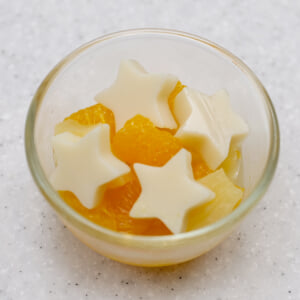
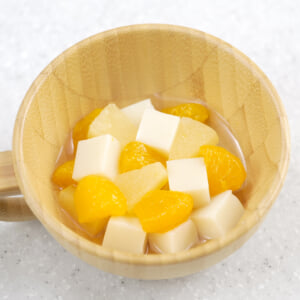
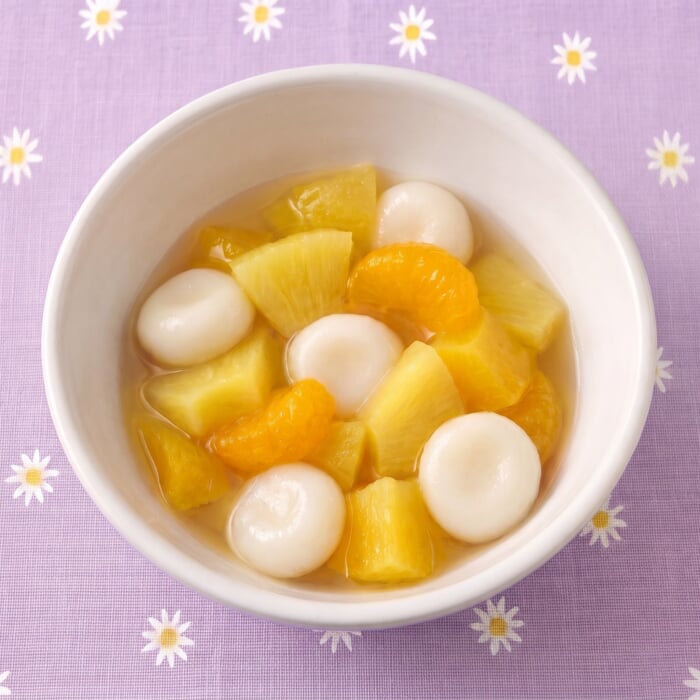
Fruit punch is one of the best-loved desserts on Japanese school lunch menus, and this version adds chewy little shiratama dango to the mix. Canned pineapple, mandarin oranges and yellow peaches sit in a lightly sweet syrup, and everything is chilled well so it tastes extra refreshing. The dango are made with silken tofu kneaded right into the shiratamako, which keeps them tender with a clean bite that children enjoy. Made without egg, milk or wheat, it is a dessert the whole lunchroom looks forward to.
Toddlers to adults. The whole family can eat this exactly as written.
Added. Open the recipe helper (bottom right) → ☰ Menu → 🛒 Shopping list to see the ingredients for your family size.
Printing uses the number of adults and children set under Ingredients, so set those first.
Ingredients
Amounts for 1 child (1 serving). An adult counts as 2 servings.
One serving here is 1.5× the portion served to a child in a Japanese elementary school, sized for Western appetites. An adult counts as two servings. Tap an ingredient to check it off.
Ingredients
- 30 gcanned pineapple
- 30 gcanned mandarin oranges
- 30 gcanned yellow peaches
Syrup
- 45 mlwater
- 9 gsugar
Shiratama Dango (Rice Flour Dumplings)
- 19.5 gshiratamako (glutinous rice flour)A fine Japanese glutinous rice flour used to make soft, chewy shiratama dumplings. Substitute: Mochiko or other glutinous (sweet) rice flour.
- 19.5 gsilken tofu
- 3 mlwater
About the Japanese ingredients in this recipe
- shiratamako (glutinous rice flour) (白玉粉)
- A fine Japanese glutinous rice flour used to make soft, chewy shiratama dumplings. Substitute: Mochiko or other glutinous (sweet) rice flour.
Directions
Video is in Japanese — the steps below are synced to it, so tap ▶ on a step to jump to that moment.
- 1
Drain the canned fruit, cut it into bite-size pieces, put it in a bowl, and chill in the refrigerator.
- 2
Make the syrup. Put the water and sugar in a pot and bring to a boil; once the sugar has dissolved, turn off the heat. Let it cool, then chill in the refrigerator. (For a small amount, you can also make it by putting the water and sugar in a heatproof container and microwaving at 1200W for about 1 minute 30 seconds (3 minutes at 600W).)
- 3
Put the shiratamako in a bowl, add the tofu without draining it, and mix while mashing the tofu in. Add the water a little at a time and knead well until the dough is about as soft as an earlobe and no longer sticks to your hands. Roll into balls about 1.5 cm across and press the center of each lightly. (Pressing the center helps the heat reach the middle so the dango cook evenly.)
- 4
Drop the dango from step 3 into plenty of boiling water. Once they have all floated to the surface, boil for about 1 minute more. Transfer to ice water to cool, then drain in a colander.
- 5
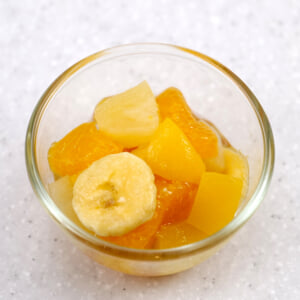
Combine the fruit from step 1, the syrup from step 2, and the dango from step 4. (Chew the shiratama dango well. For toddlers, it is best to make this without the dango.)
Tips for Making It Well
- Adding tofu to the shiratamako gives the dango a clean, pleasant bite. Keep the dango small so they mingle nicely with the fruit.
- The colder the fruit and syrup, the better it tastes. It is also delicious made with lemon-lime soda in place of the syrup.
Freezing and Storage
This does not freeze well, so keep it in the refrigerator and finish it by the next day.
Nutrition
| Per | 1 serving | 1 adult serving | Your total |
|---|---|---|---|
| Energy | 180 kcal | 360 kcal | 180 kcal |
| Protein | 2.7 g | 5.4 g | 2.7 g |
| Fat | 0.9 g | 1.8 g | 0.9 g |
| Carbohydrates | 41.8 g | 83.7 g | 41.8 g |
| Fiber | 1 g | 2.1 g | 1 g |
| Salt equivalent | 0 g | 0 g | 0 g |
| Calcium | 21 mg | 42 mg | 21 mg |
| Iron | 0.8 mg | 1.5 mg | 0.8 mg |
| Potassium | 112.5 mg | 225 mg | 112.5 mg |
| Phosphorus | 28.5 mg | 57 mg | 28.5 mg |
| Energy | Protein | Fat | Carbs | Fiber | Salt equiv. | Calcium | Iron | Potassium | Phosphorus | |
|---|---|---|---|---|---|---|---|---|---|---|
| 1 serving | 180 kcal | 2.7 g | 0.9 g | 41.8 g | 1 g | 0 g | 21 mg | 0.8 mg | 112.5 mg | 28.5 mg |
| 1 adult serving | 360 kcal | 5.4 g | 1.8 g | 83.7 g | 2.1 g | 0 g | 42 mg | 1.5 mg | 225 mg | 57 mg |
Values are per serving (1.5× the Japanese elementary-school portion); an adult serving is double. They were calculated by a licensed Japanese nutritionist using the Standard Tables of Food Composition in Japan. "Salt equivalent" is sodium × 2.54, the standard Japanese measure. Allergen flags cover egg, milk and wheat only and come from the nutritionist's records. Soy sauce and miso are made with wheat but are usually allowed on Japanese wheat-free school menus, so check with your doctor.