Okazu Mushipan (Savory Steamed Bread)
おかず蒸しパン(乳なし) · Okazu Mushipan
 By Aoi, licensed nutritionist · From a Japanese preschool lunch menu
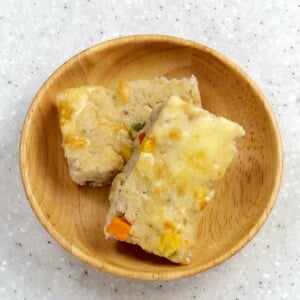
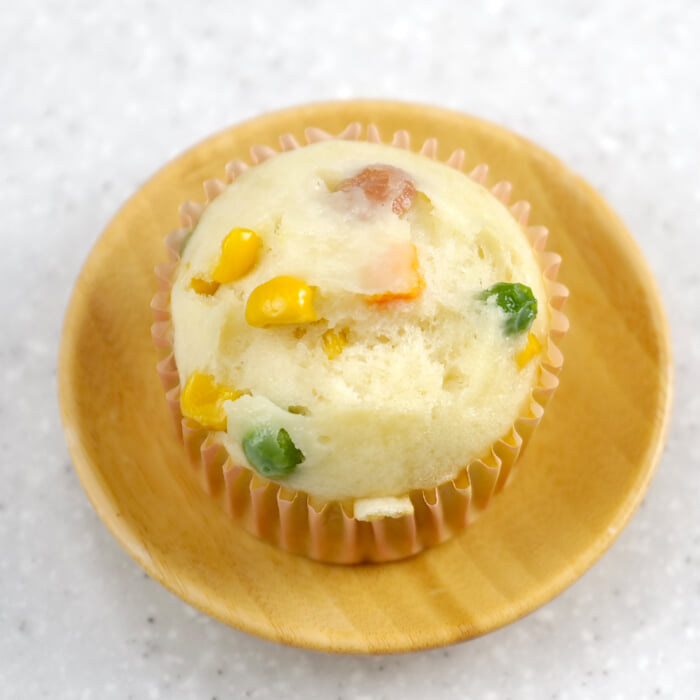
Mushipan is a soft, fluffy steamed bread that is a familiar snack in Japan, and this savory version swaps the usual sweetness for little pieces of sausage and colorful mixed vegetables. The batter comes together in minutes with pancake mix and soy milk, and the steamer does the rest. Children take to it because it is light, slightly springy and easy to hold in small hands, and the vegetables are tucked right into the bread so even picky eaters polish it off.
Added. Open the recipe helper (bottom right) → ☰ Menu → 🛒 Shopping list to see the ingredients for your family size.
Printing uses the number of adults and children set under Ingredients, so set those first.
Ingredients
Amounts for 1 child (1 serving). An adult counts as 2 servings.
One serving here is 1.5× the portion served to a child in a Japanese preschool, sized for Western appetites. An adult counts as two servings. Tap an ingredient to check it off.
Ingredients
- 30 gpancake mix (milk-free)Japanese hotcake mix is a sweetened pancake mix with baking powder already added; this version contains no milk ingredients. Substitute: A milk-free pancake mix with a little sugar added, checking the label for milk powder.
- 9 gskinless sausages (milk-free)Small skinless pork sausages, similar to mini hot dogs, that are made without any milk ingredients and are popular for children's meals in Japan. Substitute: Any small cooked sausage or hot dog with no milk ingredients; check the label.
- 22.5 gfrozen mixed vegetables
Seasonings
- 33 gsweetened soy milk (Japanese chosei tonyu)Japanese 'prepared' soy milk that is lightly sweetened and flavored to taste milder than plain soy milk. Substitute: Regular (original, lightly sweetened) soy milk from the supermarket.
- 1.5 gvegetable oil
About the Japanese ingredients in this recipe
- pancake mix (milk-free) (ホットケーキミックス(乳不使用))
- Japanese hotcake mix is a sweetened pancake mix with baking powder already added; this version contains no milk ingredients. Substitute: A milk-free pancake mix with a little sugar added, checking the label for milk powder.
- sweetened soy milk (Japanese chosei tonyu) (調製豆乳)
- Japanese 'prepared' soy milk that is lightly sweetened and flavored to taste milder than plain soy milk. Substitute: Regular (original, lightly sweetened) soy milk from the supermarket.
- skinless sausages (milk-free) (皮なしウインナー(乳不使用))
- Small skinless pork sausages, similar to mini hot dogs, that are made without any milk ingredients and are popular for children's meals in Japan. Substitute: Any small cooked sausage or hot dog with no milk ingredients; check the label.
Directions
- 1
Cut the sausages in half lengthwise, then into thin slices. Heat the oil in a frying pan and stir-fry the sausages well together with the thawed mixed vegetables.
- 2
Stir the soy milk into the pancake mix, then stir in the sausage and vegetable mixture from step 1.
- 3
Pour the batter into a tray or cups, arrange them in a steamer, cover, and steam over high heat for about 10 minutes.
Stir-frying the sausage and vegetables well in step 1 makes the vegetables easier for children to eat.
Nutrition
| Per | 1 serving | 1 adult serving | Your total |
|---|---|---|---|
| Energy | 177 kcal | 354 kcal | 177 kcal |
| Protein | 5.4 g | 10.8 g | 5.4 g |
| Fat | 5.7 g | 11.4 g | 5.7 g |
| Carbohydrates | 27.9 g | 55.8 g | 27.9 g |
| Fiber | 2.3 g | 4.5 g | 2.3 g |
| Salt equivalent | 0.5 g | 0.9 g | 0.5 g |
| Calcium | 79.5 mg | 159 mg | 79.5 mg |
| Iron | 0.8 mg | 1.5 mg | 0.8 mg |
| Potassium | 174 mg | 348 mg | 174 mg |
| Energy | Protein | Fat | Carbs | Fiber | Salt equiv. | Calcium | Iron | Potassium | |
|---|---|---|---|---|---|---|---|---|---|
| 1 serving | 177 kcal | 5.4 g | 5.7 g | 27.9 g | 2.3 g | 0.5 g | 79.5 mg | 0.8 mg | 174 mg |
| 1 adult serving | 354 kcal | 10.8 g | 11.4 g | 55.8 g | 4.5 g | 0.9 g | 159 mg | 1.5 mg | 348 mg |
Values are per serving (1.5× the Japanese preschool portion); an adult serving is double. They were calculated by a licensed Japanese nutritionist using the Standard Tables of Food Composition in Japan. "Salt equivalent" is sodium × 2.54, the standard Japanese measure. Allergen flags cover egg, milk and wheat only and come from the nutritionist's records. Soy sauce and miso are made with wheat but are usually allowed on Japanese wheat-free school menus, so check with your doctor.