Panko-Baked Chicken
鶏肉のパン粉焼き · Toriniku no Pankoyaki
 By Aoi, licensed nutritionist · From a Japanese preschool lunch menu
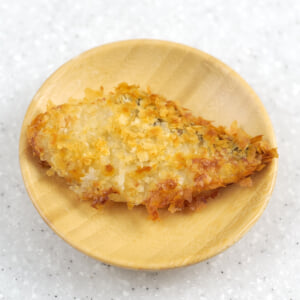
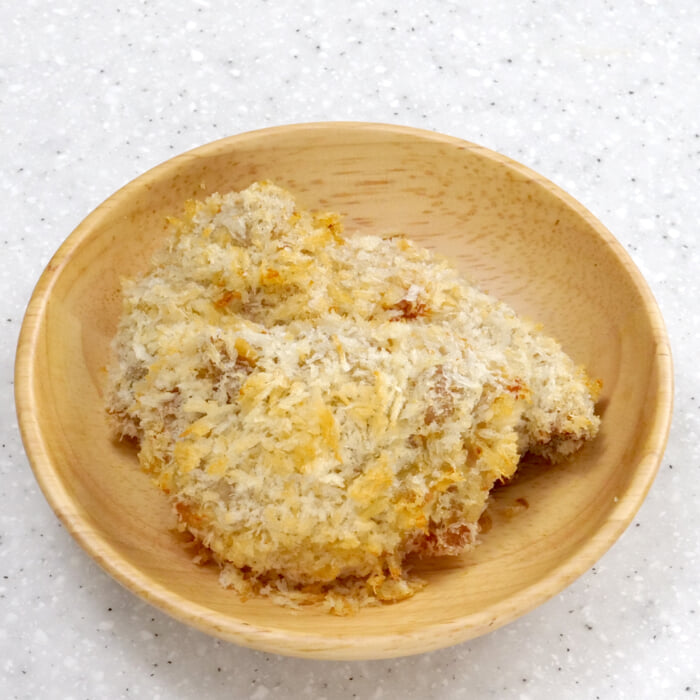
This is a preschool lunch favorite: bite-sized pieces of chicken breast tossed in egg-free mayonnaise, rolled in panko and baked until the crumbs turn lightly golden. The mayonnaise keeps the lean breast meat juicy and helps the panko cling, so you get a crisp, karaage-like coating with no deep-frying and no beaten egg. We use Mayodore, an egg-free Japanese mayonnaise. Store-bought products differ by brand, so please check the label. The pieces are cut small on purpose so they are easy for little hands and mouths to manage.
Added. Open the recipe helper (bottom right) → ☰ Menu → 🛒 Shopping list to see the ingredients for your family size.
Printing uses the number of adults and children set under Ingredients, so set those first.
Ingredients
Amounts for 1 child (1 serving). An adult counts as 2 servings.
One serving here is 1.5× the portion served to a child in a Japanese preschool, sized for Western appetites. An adult counts as two servings. Tap an ingredient to check it off.
Ingredients
- 75 gchicken breast
Seasonings
- 0.1 gsalt
- to tastepepper
- 7.5 gegg-free mayonnaise (Mayodore)A Japanese egg-free mayonnaise-style dressing. Substitute: Any egg-free or vegan mayonnaise.
- 7.5 gpanko
- 1.5 gvegetable oil
About the Japanese ingredients in this recipe
- egg-free mayonnaise (Mayodore) (マヨドレ)
- A Japanese egg-free mayonnaise-style dressing. Substitute: Any egg-free or vegan mayonnaise.
Directions
- 1
Cut the chicken into 20 g pieces.
- 2
Rub the salt and pepper into the chicken to season it.
- 3
Coat the chicken in the mayonnaise (Mayodore), then dredge it in panko.
- 4
Arrange the pieces on a baking sheet brushed with oil and bake in an oven preheated to 200°C (400°F) for about 30 minutes, until the surface is lightly golden.
Nutrition
| Per | 1 serving | 1 adult serving | Your total |
|---|---|---|---|
| Energy | 160.5 kcal | 321 kcal | 160.5 kcal |
| Protein | 18.6 g | 37.2 g | 18.6 g |
| Fat | 7.7 g | 15.3 g | 7.7 g |
| Carbohydrates | 5.9 g | 11.7 g | 5.9 g |
| Fiber | 0.5 g | 0.9 g | 0.5 g |
| Salt equivalent | 0.6 g | 1.2 g | 0.6 g |
| Calcium | 4.5 mg | 9 mg | 4.5 mg |
| Iron | 0.5 mg | 0.9 mg | 0.5 mg |
| Potassium | 291 mg | 582 mg | 291 mg |
| Energy | Protein | Fat | Carbs | Fiber | Salt equiv. | Calcium | Iron | Potassium | |
|---|---|---|---|---|---|---|---|---|---|
| 1 serving | 160.5 kcal | 18.6 g | 7.7 g | 5.9 g | 0.5 g | 0.6 g | 4.5 mg | 0.5 mg | 291 mg |
| 1 adult serving | 321 kcal | 37.2 g | 15.3 g | 11.7 g | 0.9 g | 1.2 g | 9 mg | 0.9 mg | 582 mg |
Values are per serving (1.5× the Japanese preschool portion); an adult serving is double. They were calculated by a licensed Japanese nutritionist using the Standard Tables of Food Composition in Japan. "Salt equivalent" is sodium × 2.54, the standard Japanese measure. Allergen flags cover egg, milk and wheat only and come from the nutritionist's records. Soy sauce and miso are made with wheat but are usually allowed on Japanese wheat-free school menus, so check with your doctor.