Nikuman (Japanese Steamed Pork Buns)
肉まん · Nikuman
 By Aoi, licensed nutritionist · From a Japanese preschool lunch menu
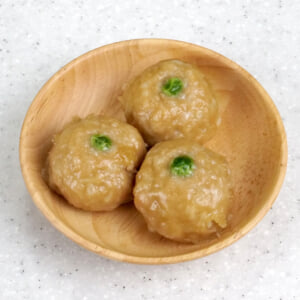
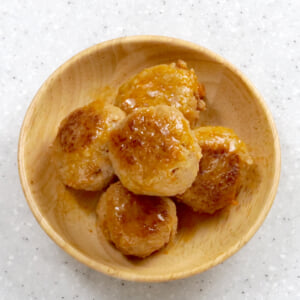
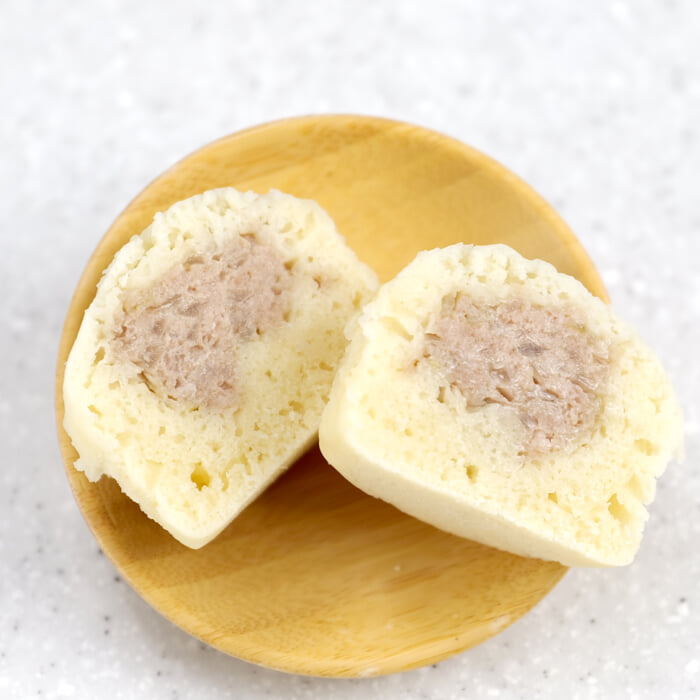
Nikuman are Japan's soft, pillowy steamed buns with a savory pork filling - the kind that fill convenience store steamers all winter. This preschool version skips the yeast dough entirely: pancake mix and soy milk make a quick batter that steams up light and fluffy in little ramekins, so there is no kneading or proofing to wait through. The gingery pork filling is sealed inside the batter, which keeps the buns tidy for small hands and makes them a favorite afternoon snack. Steaming right in a lidded frying pan means you do not need a steamer, either.
Added. Open the recipe helper (bottom right) → ☰ Menu → 🛒 Shopping list to see the ingredients for your family size.
Printing uses the number of adults and children set under Ingredients, so set those first.
Ingredients
Amounts for 1 child (1 serving). An adult counts as 2 servings.
One serving here is 1.5× the portion served to a child in a Japanese preschool, sized for Western appetites. An adult counts as two servings. Tap an ingredient to check it off.
Ingredients
- 12 gonion
- 15 gground pork
- 30 gpancake mixJapanese 'hotcake mix' is a sweetened pancake mix of flour, sugar, and leavening, often used as a shortcut baking mix. Brands differ, and some contain milk or egg, so check the label if you are cooking for a food allergy. Substitute: Sweetened pancake mix, or self-rising flour plus about 2 tablespoons sugar per 100 g.
- 27 gsweetened soy milk (Japanese chosei tonyu)Japanese 'prepared' soy milk that is lightly sweetened and flavored to taste milder than plain soy milk. Substitute: Regular (original, lightly sweetened) soy milk from the supermarket.
Seasonings
- 0.1 gginger paste (tube)Grated ginger sold ready to use in a squeeze tube, a staple in Japanese kitchens. Japanese school lunch kitchens grate fresh ginger for its aroma, but for cooking at home Aoi says the tube works just fine. Tube pastes often contain added salt, oil and other ingredients, so check the label. Substitute: Use freshly grated ginger in the same amount. 1 teaspoon of paste is about 5 g.
- 0.5 gsoy sauce
- 0.1 gsalt
- 0.5 gsakeSake (Japanese rice wine) is used in small amounts to soften the smell of fish and meat and add depth. Japanese "cooking sake" often contains added salt. Some alcohol can remain after short cooking. If you prefer no alcohol for children, use the substitute. Substitute: The same amount of water (the taste will be a little simpler), or dry white wine.
- 1.5 gpotato starch (katakuriko)Japanese potato starch used for thickening sauces and coating fried foods. Substitute: Cornstarch: start with the same amount and add a little more if it is still thin. It thickens a little less than potato starch and needs a couple of minutes at a gentle bubble to reach full thickness.
About the Japanese ingredients in this recipe
- ginger paste (tube) (しょうがチューブ)
- Grated ginger sold ready to use in a squeeze tube, a staple in Japanese kitchens. Japanese school lunch kitchens grate fresh ginger for its aroma, but for cooking at home Aoi says the tube works just fine. Tube pastes often contain added salt, oil and other ingredients, so check the label. Substitute: Use freshly grated ginger in the same amount. 1 teaspoon of paste is about 5 g.
- sake (酒)
- Sake (Japanese rice wine) is used in small amounts to soften the smell of fish and meat and add depth. Japanese "cooking sake" often contains added salt. Some alcohol can remain after short cooking. If you prefer no alcohol for children, use the substitute. Substitute: The same amount of water (the taste will be a little simpler), or dry white wine.
- potato starch (katakuriko) (かたくり粉)
- Japanese potato starch used for thickening sauces and coating fried foods. Substitute: Cornstarch: start with the same amount and add a little more if it is still thin. It thickens a little less than potato starch and needs a couple of minutes at a gentle bubble to reach full thickness. Read the guide: Katakuriko (Japanese Potato Starch) and What to Use Instead → Guide: japanese-school-lunch.com/articles/katakuriko-potato-starch/
- pancake mix (ホットケーキミックス)
- Japanese 'hotcake mix' is a sweetened pancake mix of flour, sugar, and leavening, often used as a shortcut baking mix. Brands differ, and some contain milk or egg, so check the label if you are cooking for a food allergy. Substitute: Sweetened pancake mix, or self-rising flour plus about 2 tablespoons sugar per 100 g.
- sweetened soy milk (Japanese chosei tonyu) (調製豆乳)
- Japanese 'prepared' soy milk that is lightly sweetened and flavored to taste milder than plain soy milk. Substitute: Regular (original, lightly sweetened) soy milk from the supermarket.
Directions
- 1
Finely chop the onion. In a bowl, combine the onion, ground pork, ginger, soy sauce, salt, sake and potato starch and mix well to make the filling.
- 2
In a separate bowl, mix the pancake mix and soy milk together to make the batter.
- 3
Line ramekins with aluminum foil or paper cups, pour in some of the batter from step 2, then place the filling from step 1 on top. Pour more of the batter over so it covers the filling.
- 4
Pour hot water into a frying pan to a depth of about 3 cm and arrange the ramekins from step 3 in it. Cover with a lid and steam over high heat for about 15 minutes.
Nutrition
| Per | 1 serving | 1 adult serving | Your total |
|---|---|---|---|
| Energy | 165 kcal | 330 kcal | 165 kcal |
| Protein | 6.1 g | 12.3 g | 6.1 g |
| Fat | 4.7 g | 9.3 g | 4.7 g |
| Carbohydrates | 26 g | 51.9 g | 26 g |
| Fiber | 1 g | 2.1 g | 1 g |
| Salt equivalent | 0.5 g | 0.9 g | 0.5 g |
| Calcium | 42 mg | 84 mg | 42 mg |
| Iron | 0.6 mg | 1.2 mg | 0.6 mg |
| Potassium | 178.5 mg | 357 mg | 178.5 mg |
| Energy | Protein | Fat | Carbs | Fiber | Salt equiv. | Calcium | Iron | Potassium | |
|---|---|---|---|---|---|---|---|---|---|
| 1 serving | 165 kcal | 6.1 g | 4.7 g | 26 g | 1 g | 0.5 g | 42 mg | 0.6 mg | 178.5 mg |
| 1 adult serving | 330 kcal | 12.3 g | 9.3 g | 51.9 g | 2.1 g | 0.9 g | 84 mg | 1.2 mg | 357 mg |
Values are per serving (1.5× the Japanese preschool portion); an adult serving is double. They were calculated by a licensed Japanese nutritionist using the Standard Tables of Food Composition in Japan. "Salt equivalent" is sodium × 2.54, the standard Japanese measure. Allergen flags cover egg, milk and wheat only and come from the nutritionist's records. Soy sauce and miso are made with wheat but are usually allowed on Japanese wheat-free school menus, so check with your doctor.