Shumai (Steamed Pork Dumplings) (Egg-Free)
シューマイ(卵なし) · Shumai
 By Aoi, licensed nutritionist · From a Japanese preschool lunch menu
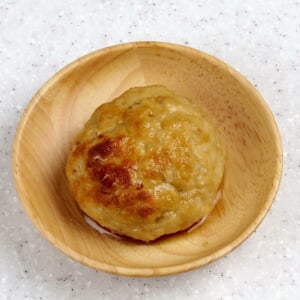
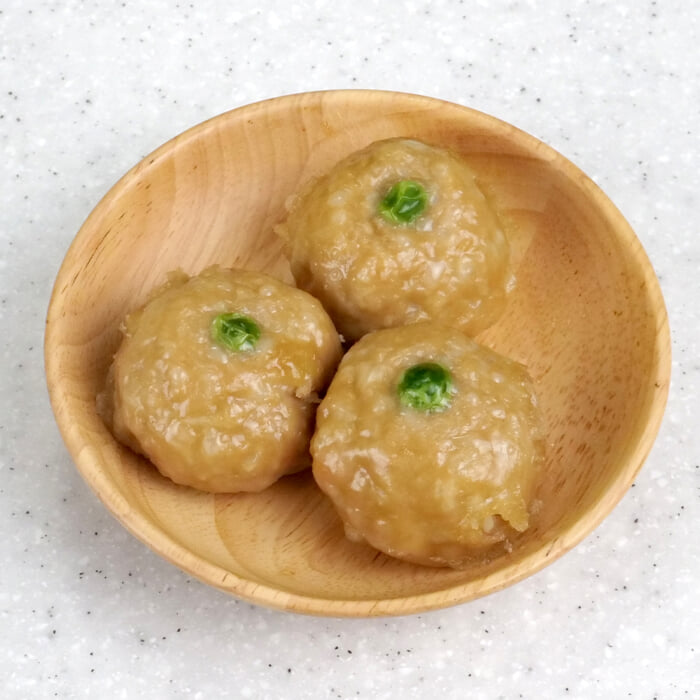
Shumai are open-topped steamed dumplings that came to Japan from Chinese cooking and are now a fixture of Japanese-style Chinese food, right down to the little green pea pressed on top. This preschool version skips the wrappers altogether: the balls are simply dusted in potato starch, which turns silky and glossy in the steamer and holds each dumpling together. Mashing firm tofu into the ground pork keeps the texture soft and light, so even toddlers can manage them easily, while a little ginger and soy sauce give a gentle, savory flavor that children love.
Wheat-free, but uses soy sauce (made with wheat). Japanese school-lunch allergy menus usually allow it, so check with your doctor. How to read the labels
Added. Open the recipe helper (bottom right) → ☰ Menu → 🛒 Shopping list to see the ingredients for your family size.
Printing uses the number of adults and children set under Ingredients, so set those first.
Ingredients
Amounts for 1 child (1 serving). An adult counts as 2 servings.
One serving here is 1.5× the portion served to a child in a Japanese preschool, sized for Western appetites. An adult counts as two servings. Tap an ingredient to check it off.
Ingredients
- 22.5 gonion
- 60 gground pork
- 8.6 gfirm tofu
- 1.7 gfrozen green peas
Seasonings
- 1.5 gvegetable oil
- 4.5 gpotato starch (for the mixture)
- 1.7 gsoy sauce
- 0.3 gsalt
- 0.3 gginger paste (tube)Grated ginger sold ready to use in a squeeze tube, a staple in Japanese kitchens. Japanese school lunch kitchens grate fresh ginger for its aroma, but for cooking at home Aoi says the tube works just fine. Tube pastes often contain added salt, oil and other ingredients, so check the label. Substitute: Use freshly grated ginger in the same amount. 1 teaspoon of paste is about 5 g.
- 9 gpotato starch (for coating)
About the Japanese ingredients in this recipe
- ginger paste (tube) (しょうがチューブ)
- Grated ginger sold ready to use in a squeeze tube, a staple in Japanese kitchens. Japanese school lunch kitchens grate fresh ginger for its aroma, but for cooking at home Aoi says the tube works just fine. Tube pastes often contain added salt, oil and other ingredients, so check the label. Substitute: Use freshly grated ginger in the same amount. 1 teaspoon of paste is about 5 g.
Directions
- 1
Finely chop the onion and cook it well in a frying pan with the oil.
- 2
Add the cooked onion, the drained tofu (no need to pre-boil it), the potato starch for the mixture, soy sauce, salt, and ginger to the ground pork. Knead, mashing the tofu as you go, until the mixture becomes sticky.
- 3
Roll the mixture into bite-size balls, coat each one in the potato starch for coating, and set a green pea on top. Press the pea in slightly, because the dumplings puff up as they cook and the peas fall off easily otherwise.
- 4
Arrange the dumplings in a steamer lined with parchment paper and steam over high heat for about 10 minutes, until cooked through.
Nutrition
| Per | 1 serving | 1 adult serving | Your total |
|---|---|---|---|
| Energy | 201 kcal | 402 kcal | 201 kcal |
| Protein | 11.9 g | 23.7 g | 11.9 g |
| Fat | 12.3 g | 24.6 g | 12.3 g |
| Carbohydrates | 13.5 g | 27 g | 13.5 g |
| Fiber | 0.6 g | 1.2 g | 0.6 g |
| Salt equivalent | 0.6 g | 1.2 g | 0.6 g |
| Calcium | 16.5 mg | 33 mg | 16.5 mg |
| Iron | 0.8 mg | 1.5 mg | 0.8 mg |
| Potassium | 232.5 mg | 465 mg | 232.5 mg |
| Energy | Protein | Fat | Carbs | Fiber | Salt equiv. | Calcium | Iron | Potassium | |
|---|---|---|---|---|---|---|---|---|---|
| 1 serving | 201 kcal | 11.9 g | 12.3 g | 13.5 g | 0.6 g | 0.6 g | 16.5 mg | 0.8 mg | 232.5 mg |
| 1 adult serving | 402 kcal | 23.7 g | 24.6 g | 27 g | 1.2 g | 1.2 g | 33 mg | 1.5 mg | 465 mg |
Values are per serving (1.5× the Japanese preschool portion); an adult serving is double. They were calculated by a licensed Japanese nutritionist using the Standard Tables of Food Composition in Japan. "Salt equivalent" is sodium × 2.54, the standard Japanese measure. Allergen flags cover egg, milk and wheat only and come from the nutritionist's records. Soy sauce and miso are made with wheat but are usually allowed on Japanese wheat-free school menus, so check with your doctor.