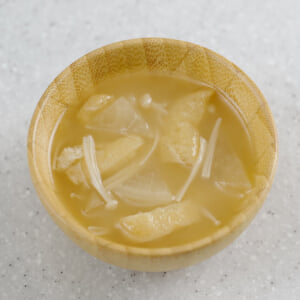
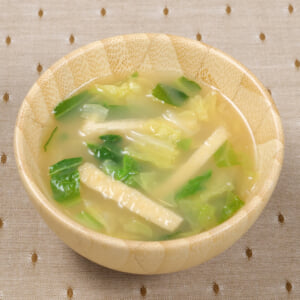
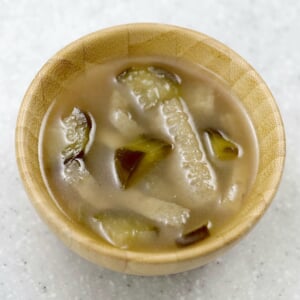
Miso Soup with Turnip and Aburaage
みそ汁(かぶ・油揚げ) · Kabu to Aburaage no Misoshiru
 By Aoi, licensed nutritionist · From a Japanese preschool lunch menu
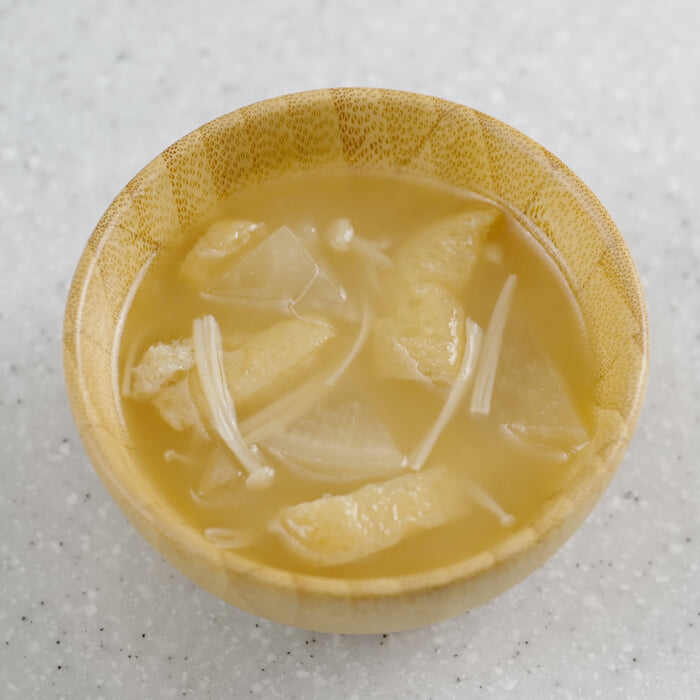
Turnips cook down soft and sweet in dashi, which makes them one of the easiest vegetables to slip into a young child's bowl. Here they simmer with strips of aburaage (thin fried tofu) that soak up the broth, and the turnip greens go in right before serving so they keep their bright color and a little bite. It is a simple everyday miso soup from the preschool kitchen: mild, warm, and a good way to use the whole turnip, leaves and all.
Added. Open the recipe helper (bottom right) → ☰ Menu → 🛒 Shopping list to see the ingredients for your family size.
Printing uses the number of adults and children set under Ingredients, so set those first.
Ingredients
Amounts for 1 child (1 serving). An adult counts as 2 servings.
One serving here is 1.5× the portion served to a child in a Japanese preschool, sized for Western appetites. An adult counts as two servings. Tap an ingredient to check it off.
Ingredients
- 60 gturnip
- 3 gaburaage (fried tofu pouch)Thin slices of tofu deep-fried until puffy and golden, sold in packs in the refrigerated section of Japanese and Asian markets. Substitute: Firm tofu, thinly sliced and pan-fried until golden.
Seasonings
- 180 gbonito and kombu dashiJapanese soup stock made from dried bonito flakes and kombu kelp, the everyday base for soups and simmered dishes. Substitute: Instant dashi granules dissolved in water, or a light vegetable or chicken stock.
- 7.2 glight rice misoA pale, salty rice miso, the standard everyday miso in Japan. Substitute: Any light, white, or awase (blended) miso.
About the Japanese ingredients in this recipe
- aburaage (fried tofu pouch) (油揚げ)
- Thin slices of tofu deep-fried until puffy and golden, sold in packs in the refrigerated section of Japanese and Asian markets. Substitute: Firm tofu, thinly sliced and pan-fried until golden.
- bonito and kombu dashi (かつお・昆布だし汁)
- Japanese soup stock made from dried bonito flakes and kombu kelp, the everyday base for soups and simmered dishes. Substitute: Instant dashi granules dissolved in water, or a light vegetable or chicken stock.
- light rice miso (米みそ(淡色辛みそ))
- A pale, salty rice miso, the standard everyday miso in Japan. Substitute: Any light, white, or awase (blended) miso.
Directions
- 1
Cut the turnip into thick quarter-rounds (ichogiri). Cut the turnip leaves into 2 cm lengths and boil them; set aside. Pour boiling water over the aburaage to remove excess oil, then cut it into short, thin strips.
- 2
Simmer the turnip and aburaage in the dashi until the turnip is soft, then dissolve in the miso. Add the turnip leaves just before serving.
Nutrition
| Per | 1 serving | 1 adult serving | Your total |
|---|---|---|---|
| Energy | 39 kcal | 78 kcal | 39 kcal |
| Protein | 3.8 g | 7.5 g | 3.8 g |
| Fat | 1.5 g | 3 g | 1.5 g |
| Carbohydrates | 3 g | 6 g | 3 g |
| Salt equivalent | 1.2 g | 2.4 g | 1.2 g |
| Calcium | 174 mg | 348 mg | 174 mg |
| Iron | 1.7 mg | 3.3 mg | 1.7 mg |
| Energy | Protein | Fat | Carbs | Salt equiv. | Calcium | Iron | |
|---|---|---|---|---|---|---|---|
| 1 serving | 39 kcal | 3.8 g | 1.5 g | 3 g | 1.2 g | 174 mg | 1.7 mg |
| 1 adult serving | 78 kcal | 7.5 g | 3 g | 6 g | 2.4 g | 348 mg | 3.3 mg |
Values are per serving (1.5× the Japanese preschool portion); an adult serving is double. They were calculated by a licensed Japanese nutritionist using the Standard Tables of Food Composition in Japan. "Salt equivalent" is sodium × 2.54, the standard Japanese measure. Allergen flags cover egg, milk and wheat only and come from the nutritionist's records. Soy sauce and miso are made with wheat but are usually allowed on Japanese wheat-free school menus, so check with your doctor.