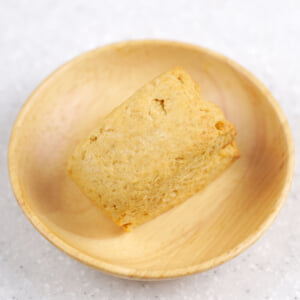
Kinako Steamed Bread
きな粉入り蒸しパン · Kinako Iri Mushipan
 By Aoi, licensed nutritionist · From a Japanese preschool lunch menu
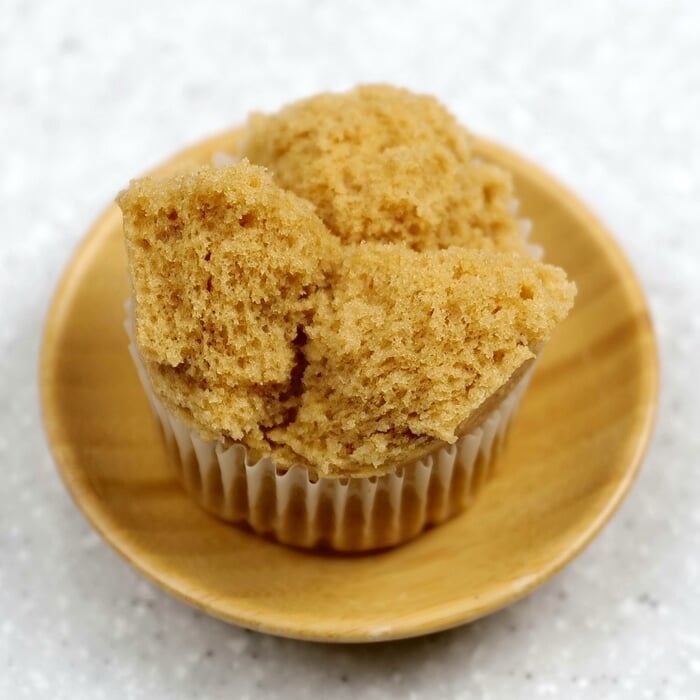
Mushipan is a fluffy Japanese steamed bread that turns up often at snack time in preschool kitchens, because it needs no oven and comes out soft enough for even the youngest children to eat. This version folds in kinako, roasted soybean flour, which gives the bread a warm, nutty flavor that children love and adds a little extra protein. The batter comes together in minutes with just a whisk and a sifter, and the kitchen fills with a toasty, comforting smell as it steams. Keep the mixing light so the bread stays tender and airy.
Added. Open the recipe helper (bottom right) → ☰ Menu → 🛒 Shopping list to see the ingredients for your family size.
Printing uses the number of adults and children set under Ingredients, so set those first.
Ingredients
Amounts for 1 child (1 serving). An adult counts as 2 servings.
One serving here is 1.5× the portion served to a child in a Japanese preschool, sized for Western appetites. An adult counts as two servings. Tap an ingredient to check it off.
Ingredients
- 24.8 gflour
- 8.3 gkinako (roasted soybean flour)A nutty, lightly sweet powder made from roasted ground soybeans, often dusted over mochi or rice. Substitute: No close substitute - look for kinako (sometimes sold as roasted soybean flour) at a Japanese or Asian grocery, or online.
Seasonings
- 1.5 gbaking powder
- 8.3 gsugar
- 5.3 gskim milk powderMilk with the fat and water removed. Substitute: No skim milk powder? Leave it out and use milk in place of the water it is dissolved in, in the same amount (for example, 30 g skim milk powder + 130 g water becomes 130 g milk). Milk still contains milk, so this swap is not for a milk allergy.
- 33 gwater
About the Japanese ingredients in this recipe
- kinako (roasted soybean flour) (きな粉)
- A nutty, lightly sweet powder made from roasted ground soybeans, often dusted over mochi or rice. Substitute: No close substitute - look for kinako (sometimes sold as roasted soybean flour) at a Japanese or Asian grocery, or online.
- skim milk powder (スキムミルク)
- Milk with the fat and water removed. Substitute: No skim milk powder? Leave it out and use milk in place of the water it is dissolved in, in the same amount (for example, 30 g skim milk powder + 130 g water becomes 130 g milk). Milk still contains milk, so this swap is not for a milk allergy.
Directions
- 1
Sift the flour, kinako, and baking powder together.
- 2
Dissolve the skim milk powder in lukewarm water and mix in the sugar, then add the sifted dry ingredients from step 1 and fold lightly until just combined.
- 3
Pour the batter from step 2 into a shallow metal tray or foil baking cups and steam in a steamer for about 15 to 20 minutes.
Nutrition
| Per | 1 serving | 1 adult serving | Your total |
|---|---|---|---|
| Energy | 177 kcal | 354 kcal | 177 kcal |
| Protein | 6.9 g | 13.8 g | 6.9 g |
| Fat | 2.7 g | 5.4 g | 2.7 g |
| Carbohydrates | 34.5 g | 69 g | 34.5 g |
| Salt equivalent | 0.3 g | 0.6 g | 0.3 g |
| Calcium | 114 mg | 228 mg | 114 mg |
| Iron | 0.8 mg | 1.5 mg | 0.8 mg |
| Energy | Protein | Fat | Carbs | Salt equiv. | Calcium | Iron | |
|---|---|---|---|---|---|---|---|
| 1 serving | 177 kcal | 6.9 g | 2.7 g | 34.5 g | 0.3 g | 114 mg | 0.8 mg |
| 1 adult serving | 354 kcal | 13.8 g | 5.4 g | 69 g | 0.6 g | 228 mg | 1.5 mg |
Values are per serving (1.5× the Japanese preschool portion); an adult serving is double. They were calculated by a licensed Japanese nutritionist using the Standard Tables of Food Composition in Japan. "Salt equivalent" is sodium × 2.54, the standard Japanese measure. Allergen flags cover egg, milk and wheat only and come from the nutritionist's records. Soy sauce and miso are made with wheat but are usually allowed on Japanese wheat-free school menus, so check with your doctor.