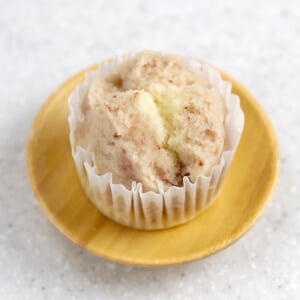
Kinako Scones
きな粉スコーン · Kinako Scones
 By Aoi, licensed nutritionist · From a Japanese preschool lunch menu
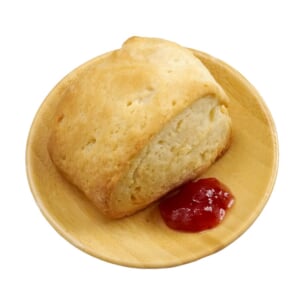
Kinako is roasted soybean flour, a nutty, slightly sweet powder that Japanese children know from classic treats like kinako mochi and dango. Here it goes into a simple scone made with oil instead of butter and no egg, so the batch comes together in one bowl with just a whisk and a spatula. The kinako gives the scones a warm, toasty flavor that kids take to right away, and they are gently sweet, which makes them a favorite afternoon snack in preschool kitchens. Because oven toasters are common in Japanese homes, the recipe works in either an oven toaster or a preheated oven.
Added. Open the recipe helper (bottom right) → ☰ Menu → 🛒 Shopping list to see the ingredients for your family size.
Printing uses the number of adults and children set under Ingredients, so set those first.
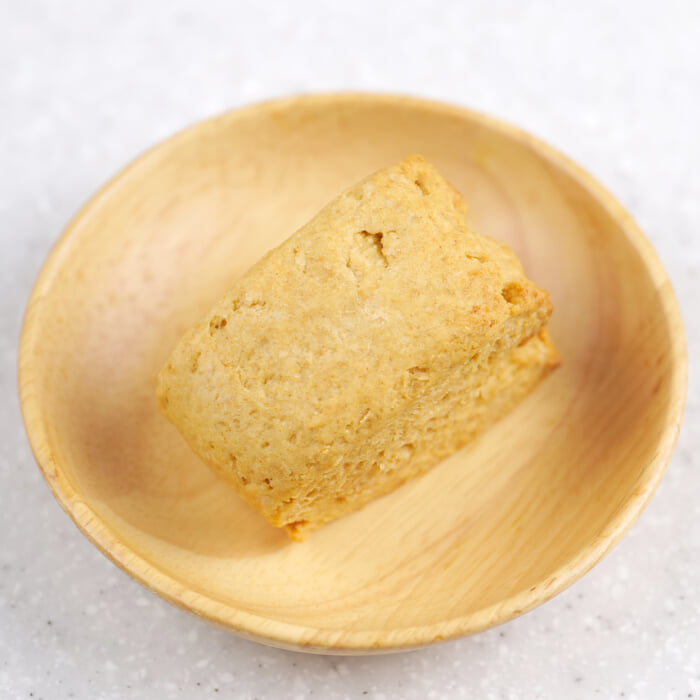
Ingredients
Amounts for 1 child (1 serving). An adult counts as 2 servings.
One serving here is 1.5× the portion served to a child in a Japanese preschool, sized for Western appetites. An adult counts as two servings. Tap an ingredient to check it off.
Ingredients
- 37.5 gflour
- 8.4 gkinako (roasted soybean flour)A nutty, lightly sweet powder made from roasted ground soybeans, often dusted over mochi or rice. Substitute: No close substitute - look for kinako (sometimes sold as roasted soybean flour) at a Japanese or Asian grocery, or online.
- 17.1 gmilk
Seasonings
- 1.4 gbaking powder
- 9 gsugar
- 10.2 gvegetable oil
About the Japanese ingredients in this recipe
- kinako (roasted soybean flour) (きな粉)
- A nutty, lightly sweet powder made from roasted ground soybeans, often dusted over mochi or rice. Substitute: No close substitute - look for kinako (sometimes sold as roasted soybean flour) at a Japanese or Asian grocery, or online.
Directions
- 1
Put the flour, kinako, baking powder, and sugar in a bowl and mix them together with a whisk.
- 2
Add the vegetable oil and mix lightly with a rubber spatula. Add the milk and mix lightly until just combined.
- 3
Once the dough comes together in one mass, press it out flat, then fold it over by hand three times, turning the dough in a different direction each time. Cut it into pieces with a knife and arrange them on a baking sheet lined with parchment paper.
- 4
Bake in an oven toaster (or an oven preheated to 200°C / 400°F) for about 15 minutes.
Nutrition
| Per | 1 serving | 1 adult serving | Your total |
|---|---|---|---|
| Energy | 304.5 kcal | 609 kcal | 304.5 kcal |
| Protein | 6.9 g | 13.8 g | 6.9 g |
| Fat | 13.5 g | 27 g | 13.5 g |
| Carbohydrates | 41.1 g | 82.2 g | 41.1 g |
| Fiber | 2.4 g | 4.8 g | 2.4 g |
| Salt equivalent | 0.3 g | 0.6 g | 0.3 g |
| Calcium | 76.5 mg | 153 mg | 76.5 mg |
| Iron | 0.8 mg | 1.5 mg | 0.8 mg |
| Potassium | 288 mg | 576 mg | 288 mg |
| Energy | Protein | Fat | Carbs | Fiber | Salt equiv. | Calcium | Iron | Potassium | |
|---|---|---|---|---|---|---|---|---|---|
| 1 serving | 304.5 kcal | 6.9 g | 13.5 g | 41.1 g | 2.4 g | 0.3 g | 76.5 mg | 0.8 mg | 288 mg |
| 1 adult serving | 609 kcal | 13.8 g | 27 g | 82.2 g | 4.8 g | 0.6 g | 153 mg | 1.5 mg | 576 mg |
Values are per serving (1.5× the Japanese preschool portion); an adult serving is double. They were calculated by a licensed Japanese nutritionist using the Standard Tables of Food Composition in Japan. "Salt equivalent" is sodium × 2.54, the standard Japanese measure. Allergen flags cover egg, milk and wheat only and come from the nutritionist's records. Soy sauce and miso are made with wheat but are usually allowed on Japanese wheat-free school menus, so check with your doctor.