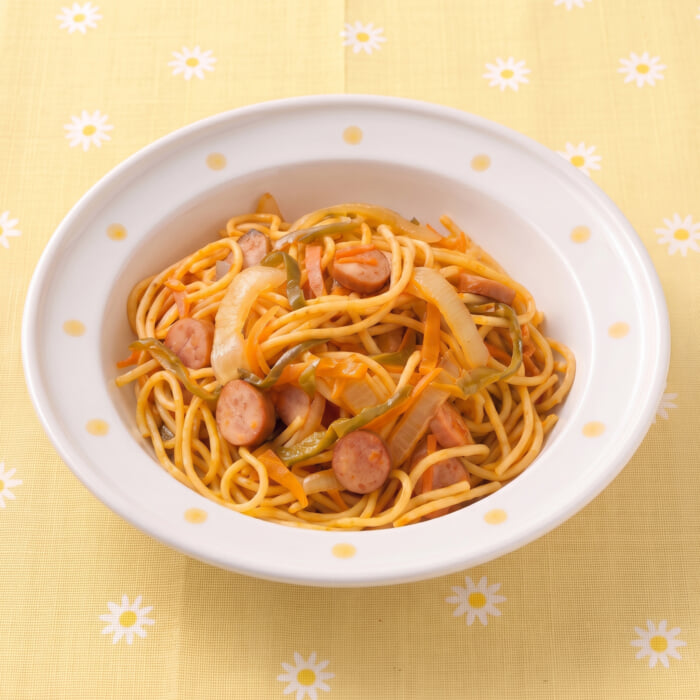
Hot Cook Napolitan (Ketchup Spaghetti)
ナポリタン【ホットクック】 · Naporitan
 By Aoi, licensed nutritionist · From a Japanese preschool lunch menu
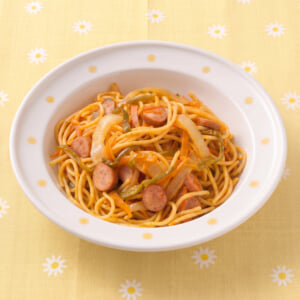
Napolitan is Japan's own take on spaghetti: a postwar yoshoku classic in which the noodles are tossed with ketchup, onion, green bell pepper and ham rather than a tomato sauce from Italy. Its gentle sweetness makes it a reliable hit with children, and even the bell pepper tends to disappear when it is coated in ketchup. This version uses the Sharp Hot Cook automatic cooker, which sautes the vegetables and cooks the pasta for you, so the whole dish comes together in one pot with almost no stirring. Slowly cooked vegetables and a short simmer at the end are the secrets to a rich, mellow flavor without heavy seasoning.
Added. Open the recipe helper (bottom right) → ☰ Menu → 🛒 Shopping list to see the ingredients for your family size.
Printing uses the number of adults and children set under Ingredients, so set those first.
Ingredients
Amounts for 1 child (1 serving). An adult counts as 2 servings.
One serving here is 1.5× the portion served to a child in a Japanese preschool, sized for Western appetites. An adult counts as two servings. Tap an ingredient to check it off.
Ingredients
- 52.5 gspaghetti
- 27 gcarrot
- 27 gonion
- 30 ggreen bell pepper
- 22.5 gham
Seasonings
- 2.3 gvegetable oil
- 26.4 gketchup
- 0.7 gsalt
- to tastepepper
Directions
- 1
Slice the onion thinly, then cut the slices in half so they are half the length. Cut the carrot and green bell pepper into thin strips about 4 cm long. Cut the ham in half, then into thin strips about 5 mm wide.
- 2
Put the carrot, onion, green bell pepper and vegetable oil in the inner pot and heat for 10 minutes using [Manual Cooking → Stir-fry].
- 3
Add the ham, spaghetti, water and seasonings, then start cooking with [Select Menu → Search by Category → Noodles → Napolitan-style Pasta].
- 4
Because the spaghetti is still too firm for children and to cook off the acidity for a mellower flavor, run [Manual Cooking → Simmer/Reduce] for about 5 minutes as a guide, stirring partway through, until the liquid has cooked off.
- 5
Leave it to cool as it is so the flavors meld. Ketchup-based dishes settle and develop their flavor as they cool.
Cooking the vegetables slowly and thoroughly, then simmering briefly after adding the ketchup to cook off its acidity, gives the dish a sweet, rich flavor even with light seasoning.
Nutrition
| Per | 1 serving | 1 adult serving | Your total |
|---|---|---|---|
| Energy | 300 kcal | 600 kcal | 300 kcal |
| Protein | 12.1 g | 24.3 g | 12.1 g |
| Fat | 6.5 g | 12.9 g | 6.5 g |
| Carbohydrates | 52.5 g | 105 g | 52.5 g |
| Fiber | 5.3 g | 10.5 g | 5.3 g |
| Salt equivalent | 1.8 g | 3.6 g | 1.8 g |
| Calcium | 30 mg | 60 mg | 30 mg |
| Iron | 1.4 mg | 2.7 mg | 1.4 mg |
| Potassium | 450 mg | 900 mg | 450 mg |
| Energy | Protein | Fat | Carbs | Fiber | Salt equiv. | Calcium | Iron | Potassium | |
|---|---|---|---|---|---|---|---|---|---|
| 1 serving | 300 kcal | 12.1 g | 6.5 g | 52.5 g | 5.3 g | 1.8 g | 30 mg | 1.4 mg | 450 mg |
| 1 adult serving | 600 kcal | 24.3 g | 12.9 g | 105 g | 10.5 g | 3.6 g | 60 mg | 2.7 mg | 900 mg |
Values are per serving (1.5× the Japanese preschool portion); an adult serving is double. They were calculated by a licensed Japanese nutritionist using the Standard Tables of Food Composition in Japan. "Salt equivalent" is sodium × 2.54, the standard Japanese measure. Allergen flags cover egg, milk and wheat only and come from the nutritionist's records. Soy sauce and miso are made with wheat but are usually allowed on Japanese wheat-free school menus, so check with your doctor.