Hiyashi Ramen (Chilled Ramen)
冷やしラーメン · Hiyashi Ramen
 By Aoi, licensed nutritionist · From a Japanese elementary school lunch menu
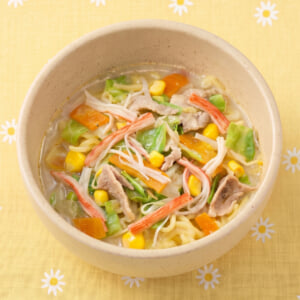
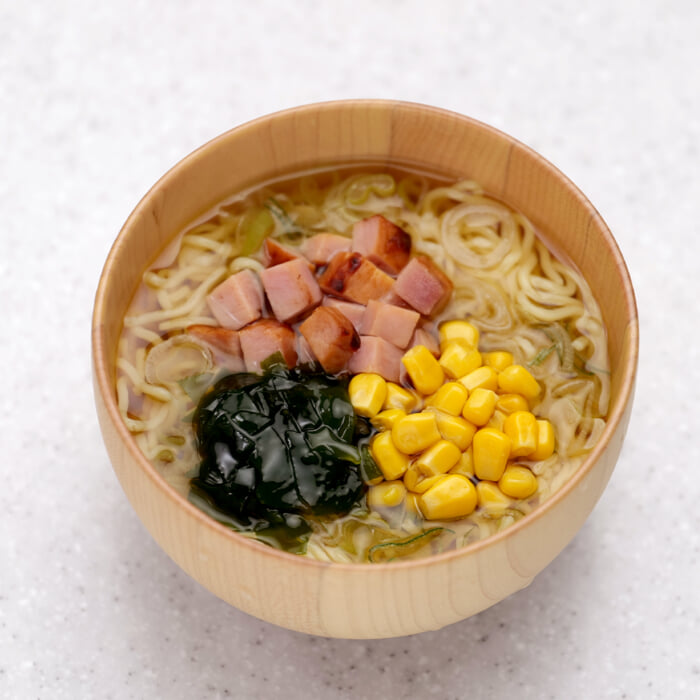
Hiyashi ramen is ramen served cold: chilled noodles in a cooled, lightly seasoned soy broth, topped with diced chashu, sweet corn and wakame. In Japan it is a summer favorite, and Yamagata Prefecture is famous for it. School kitchens love it on hot days because even children with no appetite will happily slurp up cool noodles. The toppings are cut small so they are easy for little mouths, and the noodles are rinsed well to wash away excess salt.
Added. Open the recipe helper (bottom right) → ☰ Menu → 🛒 Shopping list to see the ingredients for your family size.
Printing uses the number of adults and children set under Ingredients, so set those first.
Ingredients
Amounts for 1 child (1 serving). An adult counts as 2 servings.
One serving here is 1.5× the portion served to a child in a Japanese elementary school, sized for Western appetites. An adult counts as two servings. Tap an ingredient to check it off.
Ingredients
- 150 gfresh ramen noodlesFresh Chinese-style wheat noodles sold refrigerated in Japan for ramen and stir-fried noodles. Substitute: Dried ramen noodles (discard the seasoning packet) or thin spaghetti.
- 0.5 gdried cut wakameSmall pieces of dried wakame seaweed that rehydrate in a few minutes and are used in soups and salads. Substitute: Any dried seaweed for soup, or omit.
- 27 gchashu (Japanese roast pork)Soy-marinated roasted pork sold in sliced or block form at Japanese grocers, often used as a ramen topping. Substitute: Sliced ham or leftover roast pork.
- 18 gonion
- 13.5 gwhole kernel corn (canned or frozen)
Seasonings
- 270 mlwater
- 5.1 gsoy sauce
- 0.3 gsalt
- 1.5 gchicken stock powder (Chinese-style)Japanese granulated chicken bone soup base used for Chinese-style soups and stir-fries. Substitute: Chicken bouillon granules or powder.
About the Japanese ingredients in this recipe
- fresh ramen noodles (生中華めん)
- Fresh Chinese-style wheat noodles sold refrigerated in Japan for ramen and stir-fried noodles. Substitute: Dried ramen noodles (discard the seasoning packet) or thin spaghetti.
- dried cut wakame (カットわかめ)
- Small pieces of dried wakame seaweed that rehydrate in a few minutes and are used in soups and salads. Substitute: Any dried seaweed for soup, or omit.
- chashu (Japanese roast pork) (焼き豚)
- Soy-marinated roasted pork sold in sliced or block form at Japanese grocers, often used as a ramen topping. Substitute: Sliced ham or leftover roast pork.
- chicken stock powder (Chinese-style) (鶏ガラスープの素)
- Japanese granulated chicken bone soup base used for Chinese-style soups and stir-fries. Substitute: Chicken bouillon granules or powder.
Directions
Video is in Japanese and may show a different version of this dish (other ingredients or steps). Follow the ingredients and steps on this page, especially when cooking for allergies.
- 1
Soak the wakame in water to rehydrate it, chop it finely, then boil it and rinse under running water to cool. Slice the onion thinly and cut the slices in half so they are half as long.
- 2
Cut the chashu into 5 mm dice and stir-fry it in a frying pan. Briefly boil the corn, then rinse under running water to cool.
- 3
Put the water in a pot and bring to a boil. Add the onion and the seasonings and simmer until the onion is soft. Set the broth aside to cool.
- 4
Cut the noodles into quarters with a cross cut and boil them. Rinse under running water to wash off the saltiness.
- 5
Place the noodles in bowls, pour the broth over them, and arrange the toppings on top.
Nutrition
| Per | 1 serving | 1 adult serving | Your total |
|---|---|---|---|
| Energy | 441 kcal | 882 kcal | 441 kcal |
| Protein | 19.2 g | 38.4 g | 19.2 g |
| Fat | 4.1 g | 8.1 g | 4.1 g |
| Carbohydrates | 89.4 g | 178.8 g | 89.4 g |
| Fiber | 9 g | 18 g | 9 g |
| Salt equivalent | 3.3 g | 6.6 g | 3.3 g |
| Calcium | 43.5 mg | 87 mg | 43.5 mg |
| Iron | 1 mg | 2.1 mg | 1 mg |
| Potassium | 670.5 mg | 1341 mg | 670.5 mg |
| Energy | Protein | Fat | Carbs | Fiber | Salt equiv. | Calcium | Iron | Potassium | |
|---|---|---|---|---|---|---|---|---|---|
| 1 serving | 441 kcal | 19.2 g | 4.1 g | 89.4 g | 9 g | 3.3 g | 43.5 mg | 1 mg | 670.5 mg |
| 1 adult serving | 882 kcal | 38.4 g | 8.1 g | 178.8 g | 18 g | 6.6 g | 87 mg | 2.1 mg | 1341 mg |
Values are per serving (1.5× the Japanese elementary-school portion); an adult serving is double. They were calculated by a licensed Japanese nutritionist using the Standard Tables of Food Composition in Japan. "Salt equivalent" is sodium × 2.54, the standard Japanese measure. Allergen flags cover egg, milk and wheat only and come from the nutritionist's records. Soy sauce and miso are made with wheat but are usually allowed on Japanese wheat-free school menus, so check with your doctor.