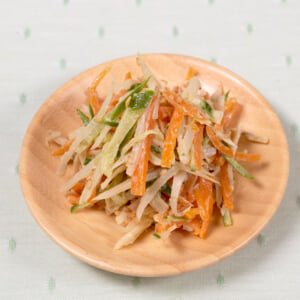
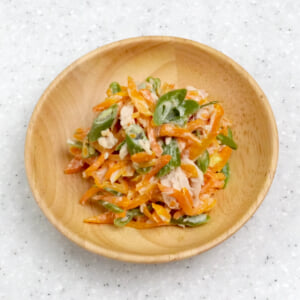
Daikon and Tuna Salad
大根のツナサラダ · Daikon no Tsuna Sarada
 By Aoi, licensed nutritionist · From a Japanese preschool lunch menu
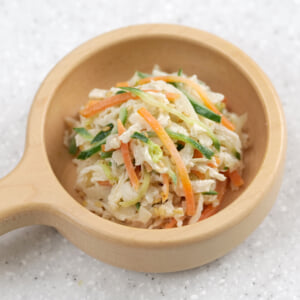
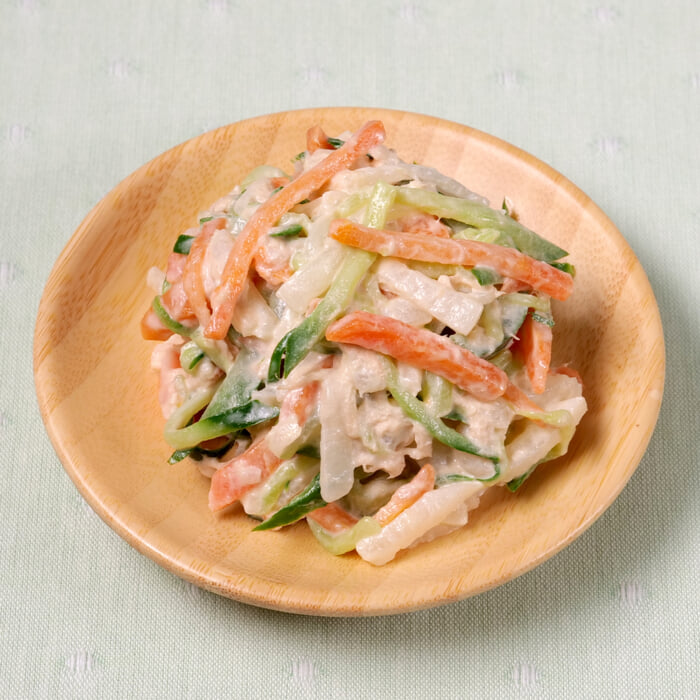
This simple side salad pairs julienned daikon radish, carrot and cucumber with canned tuna and a light coating of egg-free mayonnaise. Blanching the vegetables briefly softens their bite so young children can chew them easily, while the cool, crisp texture and savory tuna make even raw-vegetable skeptics reach for seconds. The dressing is Mayodore, an egg-free mayonnaise-style dressing (regular mayonnaise contains egg). The salad is made without egg, milk or wheat.
Added. Open the recipe helper (bottom right) → ☰ Menu → 🛒 Shopping list to see the ingredients for your family size.
Printing uses the number of adults and children set under Ingredients, so set those first.
Ingredients
Amounts for 1 child (1 serving). An adult counts as 2 servings.
One serving here is 1.5× the portion served to a child in a Japanese preschool, sized for Western appetites. An adult counts as two servings. Tap an ingredient to check it off.
Ingredients
- 45 gdaikon radish
- 9 gcarrot
- 22.5 gcucumber
- 7.5 gcanned tuna (in oil)
Seasonings
- 9 gegg-free mayonnaise (Mayodore)A Japanese egg-free mayonnaise-style dressing. Substitute: Any egg-free or vegan mayonnaise.
About the Japanese ingredients in this recipe
- egg-free mayonnaise (Mayodore) (マヨドレ)
- A Japanese egg-free mayonnaise-style dressing. Substitute: Any egg-free or vegan mayonnaise.
Directions
- 1
Cut the daikon radish, carrot and cucumber into short, thin matchsticks.
- 2
Boil each vegetable from step 1 separately, then rinse under cold running water to cool.
- 3
Drain the oil from the canned tuna.
- 4
Squeeze the vegetables from step 2 to remove excess water, then toss with the tuna from step 3 and the egg-free mayonnaise.
Nutrition
| Per | 1 serving | 1 adult serving | Your total |
|---|---|---|---|
| Energy | 82.5 kcal | 165 kcal | 82.5 kcal |
| Protein | 2 g | 3.9 g | 2 g |
| Fat | 6.9 g | 13.8 g | 6.9 g |
| Carbohydrates | 4.1 g | 8.1 g | 4.1 g |
| Fiber | 1.2 g | 2.4 g | 1.2 g |
| Salt equivalent | 0.3 g | 0.6 g | 0.3 g |
| Calcium | 19.5 mg | 39 mg | 19.5 mg |
| Iron | 0.2 mg | 0.3 mg | 0.2 mg |
| Potassium | 195 mg | 390 mg | 195 mg |
| Energy | Protein | Fat | Carbs | Fiber | Salt equiv. | Calcium | Iron | Potassium | |
|---|---|---|---|---|---|---|---|---|---|
| 1 serving | 82.5 kcal | 2 g | 6.9 g | 4.1 g | 1.2 g | 0.3 g | 19.5 mg | 0.2 mg | 195 mg |
| 1 adult serving | 165 kcal | 3.9 g | 13.8 g | 8.1 g | 2.4 g | 0.6 g | 39 mg | 0.3 mg | 390 mg |
Values are per serving (1.5× the Japanese preschool portion); an adult serving is double. They were calculated by a licensed Japanese nutritionist using the Standard Tables of Food Composition in Japan. "Salt equivalent" is sodium × 2.54, the standard Japanese measure. Allergen flags cover egg, milk and wheat only and come from the nutritionist's records. Soy sauce and miso are made with wheat but are usually allowed on Japanese wheat-free school menus, so check with your doctor.