Cocoa & Matcha Fried Bread (Elementary School Portion)
ココア&抹茶揚げパン · Agepan
 By Aoi, licensed nutritionist · From a Japanese elementary school lunch menu
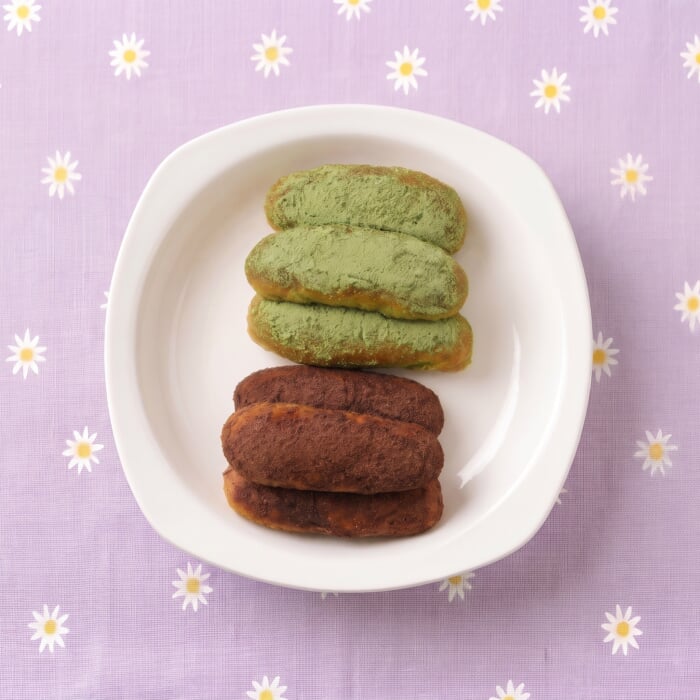
Agepan - soft dinner rolls fried quickly until golden and tossed in sweet powder - is one of the most nostalgic dishes in Japanese school lunch, and it still tops the request list in school cafeterias today. This version gives you two coatings to choose from: a rich cocoa-sugar mix, and a mellow matcha-kinako mix in which the roasted soybean flour softens the bitterness of the green tea. The rolls are fried hot and fast so they stay light rather than greasy, then coated while still warm so every bit of powder clings. Made without egg or dairy, it is a treat that is easy to share.
Toddlers to adults. The whole family can eat this exactly as written.
Added. Open the recipe helper (bottom right) → ☰ Menu → 🛒 Shopping list to see the ingredients for your family size.
Printing uses the number of adults and children set under Ingredients, so set those first.
Ingredients
Amounts for 1 child (1 serving). An adult counts as 2 servings.
One serving here is 1.5× the portion served to a child in a Japanese elementary school, sized for Western appetites. An adult counts as two servings. Tap an ingredient to check it off.
Ingredients
- 3 piece(s)dinner rolls
- to tasteoil for deep-frying
Cocoa Flavor
- 1.7 gunsweetened cocoa powder
- 6.6 gsugar
- to tastesalt
Matcha Flavor
- 0.8 gmatcha (green tea powder)
- 2.6 gkinako (roasted soybean flour)A nutty, lightly sweet powder made from roasted ground soybeans, often dusted over mochi or rice. Substitute: No close substitute - look for kinako (sometimes sold as roasted soybean flour) at a Japanese or Asian grocery, or online.
- 6 gsugar
- to tastesalt
About the Japanese ingredients in this recipe
- kinako (roasted soybean flour) (きな粉)
- A nutty, lightly sweet powder made from roasted ground soybeans, often dusted over mochi or rice. Substitute: No close substitute - look for kinako (sometimes sold as roasted soybean flour) at a Japanese or Asian grocery, or online.
Directions
Video is in Japanese — the steps below are synced to it, so tap ▶ on a step to jump to that moment.
- 1
In a bowl, combine the unsweetened cocoa powder, sugar and salt and mix until there are no lumps. (Adding a little salt to the sugar makes the sweetness stand out by contrast.)
- 2
In a separate bowl, combine the matcha, kinako, sugar and salt and mix in the same way. (Mixing in kinako softens the bitterness of the matcha and keeps the color a pretty green.)
- 3
Heat the oil to 180°C (350°F), add the dinner rolls and fry, turning them over, about 30 seconds per side and about 1 minute in total, then drain off the oil. (Pressing the rolls down lightly as you turn them keeps them from rolling around. Frying slowly over low heat makes them soak up oil, so fry them quickly at a high temperature.)
- 4
While the rolls are still warm, coat half of them in the cocoa mixture from step 1 and the other half in the matcha mixture from step 2. (Coating them while warm helps the powder stick firmly.)
Tips for Best Results
- Use cocoa and matcha with no added sugar. The bitterness of matcha varies by type, so taste a little once mixed and adjust the amount of sugar.
- Matcha contains a lot of caffeine, so for little ones the cocoa flavor is recommended.
How to Freeze
Before coating with the powder, let the rolls cool, then wrap each one individually in plastic wrap, place in a freezer bag and freeze. To eat, reheat in the microwave and coat with the powder fresh each time.
Keeps for about 2 weeks (best eaten as soon as possible).
Nutrition
| Per | 1 serving | 1 adult serving | Your total |
|---|---|---|---|
| Energy | 472.5 kcal | 945 kcal | 472.5 kcal |
| Protein | 12 g | 24 g | 12 g |
| Fat | 19.5 g | 39 g | 19.5 g |
| Carbohydrates | 65.1 g | 130.2 g | 65.1 g |
| Fiber | 3.3 g | 6.6 g | 3.3 g |
| Salt equivalent | 1.4 g | 2.7 g | 1.4 g |
| Calcium | 57 mg | 114 mg | 57 mg |
| Iron | 1.4 mg | 2.7 mg | 1.4 mg |
| Potassium | 232.5 mg | 465 mg | 232.5 mg |
| Phosphorus | 132 mg | 264 mg | 132 mg |
| Energy | Protein | Fat | Carbs | Fiber | Salt equiv. | Calcium | Iron | Potassium | Phosphorus | |
|---|---|---|---|---|---|---|---|---|---|---|
| 1 serving | 472.5 kcal | 12 g | 19.5 g | 65.1 g | 3.3 g | 1.4 g | 57 mg | 1.4 mg | 232.5 mg | 132 mg |
| 1 adult serving | 945 kcal | 24 g | 39 g | 130.2 g | 6.6 g | 2.7 g | 114 mg | 2.7 mg | 465 mg | 264 mg |
Values are per serving (1.5× the Japanese elementary-school portion); an adult serving is double. They were calculated by a licensed Japanese nutritionist using the Standard Tables of Food Composition in Japan. "Salt equivalent" is sodium × 2.54, the standard Japanese measure. Allergen flags cover egg, milk and wheat only and come from the nutritionist's records. Soy sauce and miso are made with wheat but are usually allowed on Japanese wheat-free school menus, so check with your doctor.