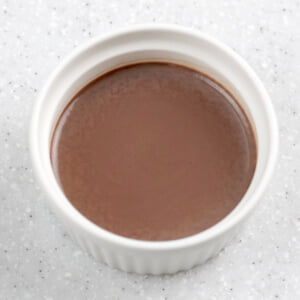
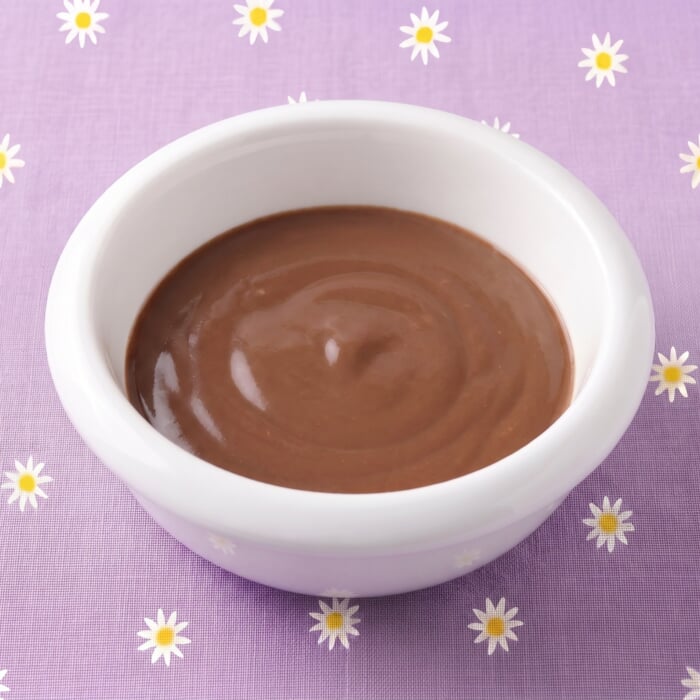
Chocolate Pudding (Elementary School Portion)
チョコプリン
 By Aoi, licensed nutritionist · From a Japanese elementary school lunch menu
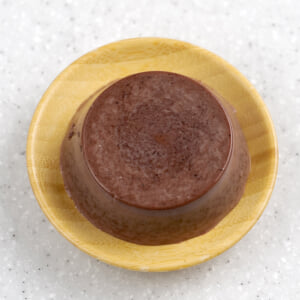
This is a simple chocolate pudding made with unsweetened cocoa powder and milk, set with gelatin so it turns out silky and gently sweet. Because it is made with cocoa rather than chocolate, you can keep the sweetness in check while still giving kids a good serving of milk, which is why it works so well as a school lunch dessert. It contains no egg and no wheat, and the few key points in the steps, like not letting the milk boil, are what keep the texture smooth. Chill it well and watch the plates come back empty.
Toddlers to adults. The whole family can eat this exactly as written.
Added. Open the recipe helper (bottom right) → ☰ Menu → 🛒 Shopping list to see the ingredients for your family size.
Printing uses the number of adults and children set under Ingredients, so set those first.
Ingredients
Amounts for 1 child (1 serving). An adult counts as 2 servings.
One serving here is 1.5× the portion served to a child in a Japanese elementary school, sized for Western appetites. An adult counts as two servings. Tap an ingredient to check it off.
- 3 gunsweetened cocoa powder
- 13.5 gsugar
- 90 mlmilk
- 2.3 gpowdered gelatin
- 18 mlcold water
Directions
Video is in Japanese — the steps below are synced to it, so tap ▶ on a step to jump to that moment.
- 1
Sprinkle the powdered gelatin over the cold water and stir well until it thickens. (The order matters: sprinkle the gelatin into the water, not the water onto the gelatin. If it clumps, warm it uncovered in the microwave at 1200W in 5-second bursts (10 seconds at 600W), without letting it boil, until it dissolves.)
- 2
Put the cocoa and sugar in a bowl, then add half of the milk in two additions, mixing well after each. (Mixing thoroughly in the bowl first keeps the cocoa from clumping.)
- 3
Transfer to a saucepan and heat over medium heat, stirring. When small bubbles start to appear around the edge of the pan, turn off the heat just before it comes to a boil. (If it boils, the pudding may not set smoothly and a skin may form on the surface.)
- 4
Add the gelatin from step 1 and stir well until dissolved, then add the remaining milk and let it cool to about body temperature. (Lowering the temperature here shortens the time it takes to set.)
- 5
Stirring so the cocoa doesn't settle, pour the mixture into pudding cups. Once it is no longer hot, cover with plastic wrap so the surface doesn't dry out, and chill in the refrigerator for about 2 to 4 hours until set.
Tips for Best Results
• Because this is made with unsweetened (pure) cocoa powder rather than chocolate, it's easy to adjust the sweetness, and kids get plenty of milk.
• Cocoa tends to sink, so dissolve it thoroughly while heating for a smooth, silky texture.
Freezing and Storage
This pudding doesn't freeze well. Keep it in the refrigerator and eat it by the next day.
Nutrition
| Per | 1 serving | 1 adult serving | Your total |
|---|---|---|---|
| Energy | 127.5 kcal | 255 kcal | 127.5 kcal |
| Protein | 5.6 g | 11.1 g | 5.6 g |
| Fat | 4.1 g | 8.1 g | 4.1 g |
| Carbohydrates | 19 g | 38.1 g | 19 g |
| Fiber | 0.8 g | 1.5 g | 0.8 g |
| Salt equivalent | 0.2 g | 0.3 g | 0.2 g |
| Calcium | 103.5 mg | 207 mg | 103.5 mg |
| Iron | 0.5 mg | 0.9 mg | 0.5 mg |
| Potassium | 219 mg | 438 mg | 219 mg |
| Phosphorus | 103.5 mg | 207 mg | 103.5 mg |
| Energy | Protein | Fat | Carbs | Fiber | Salt equiv. | Calcium | Iron | Potassium | Phosphorus | |
|---|---|---|---|---|---|---|---|---|---|---|
| 1 serving | 127.5 kcal | 5.6 g | 4.1 g | 19 g | 0.8 g | 0.2 g | 103.5 mg | 0.5 mg | 219 mg | 103.5 mg |
| 1 adult serving | 255 kcal | 11.1 g | 8.1 g | 38.1 g | 1.5 g | 0.3 g | 207 mg | 0.9 mg | 438 mg | 207 mg |
Values are per serving (1.5× the Japanese elementary-school portion); an adult serving is double. They were calculated by a licensed Japanese nutritionist using the Standard Tables of Food Composition in Japan. "Salt equivalent" is sodium × 2.54, the standard Japanese measure. Allergen flags cover egg, milk and wheat only and come from the nutritionist's records. Soy sauce and miso are made with wheat but are usually allowed on Japanese wheat-free school menus, so check with your doctor.