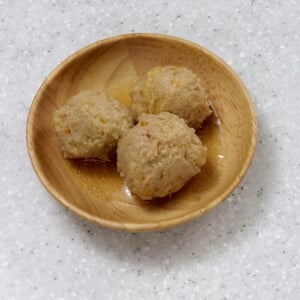
Chicken and Cheese Rolls
チキンのチーズ巻き
 By Aoi, licensed nutritionist · From a Japanese preschool lunch menu
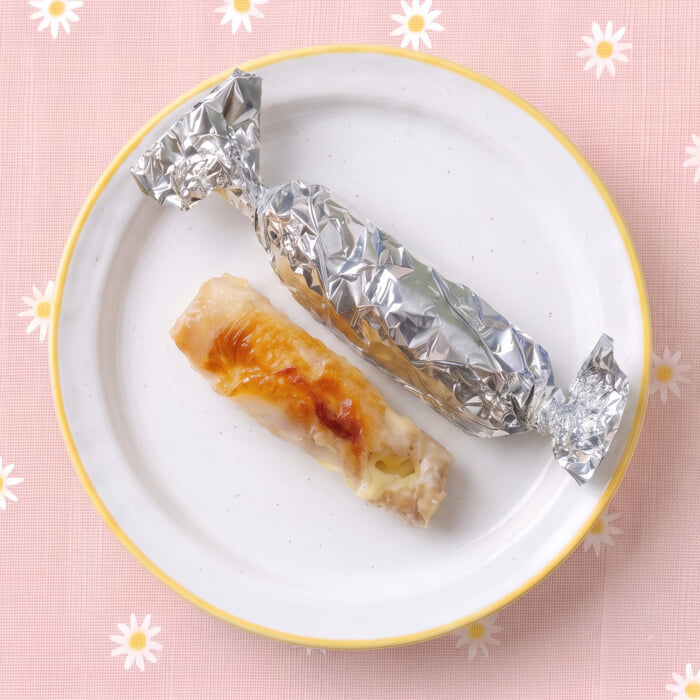
These little rolls are chicken thigh wrapped snugly around a stick of cheese and baked in a foil parcel, so the meat stays juicy and the cheese melts inside. Cutting the chicken into small pieces before rolling makes each one just the right size for little hands and mouths, and the mild seasoning of sake, salt and pepper lets the chicken and cheese speak for themselves. Twisting the foil like a candy wrapper is the trick: even a lopsided roll comes out of the oven neat and round.
Toddlers to adults. The whole family can eat this exactly as written.
Added. Open the recipe helper (bottom right) → ☰ Menu → 🛒 Shopping list to see the ingredients for your family size.
Printing uses the number of adults and children set under Ingredients, so set those first.
Ingredients
Amounts for 1 child (1 serving). An adult counts as 2 servings.
One serving here is 1.5× the portion served to a child in a Japanese preschool, sized for Western appetites. An adult counts as two servings. Tap an ingredient to check it off.
- 93.8 gchicken thigh
- 4.7 gsakeSake (Japanese rice wine) is used in small amounts to soften the smell of fish and meat and add depth. Japanese "cooking sake" often contains added salt. Some alcohol can remain after short cooking. If you prefer no alcohol for children, use the substitute. Substitute: The same amount of water (the taste will be a little simpler), or dry white wine.
- 0.2 gsalt
- to tastepepper
- 26.3 gcheese sticksStick-shaped processed cheese sold in Japan for kids' snacks and lunches. Substitute: String cheese, or a block of mild cheese cut into sticks.
About the Japanese ingredients in this recipe
- sake (酒)
- Sake (Japanese rice wine) is used in small amounts to soften the smell of fish and meat and add depth. Japanese "cooking sake" often contains added salt. Some alcohol can remain after short cooking. If you prefer no alcohol for children, use the substitute. Substitute: The same amount of water (the taste will be a little simpler), or dry white wine.
- cheese sticks (棒チーズ)
- Stick-shaped processed cheese sold in Japan for kids' snacks and lunches. Substitute: String cheese, or a block of mild cheese cut into sticks.
Directions
Video is in Japanese — the steps below are synced to it, so tap ▶ on a step to jump to that moment.
- 1
Preheat the oven to 250°C (480°F). If your oven does not go up to 250°C, preheat it to its highest setting.
- 2
Lay the chicken skin-side down. Make cuts into the thicker parts with a knife and open them out with your hands so the whole piece is an even thickness.
- 3
Rub in the sake first, then the salt and pepper, in that order. Cut each thigh into 4 pieces. You can also leave it whole, roll it up large, bake it and slice it afterward.
- 4
Place a cheese stick on the edge of the chicken nearest you and roll it up tightly from that edge. Brush a piece of aluminum foil lightly with oil (not included in the ingredient amounts), wrap the chicken tightly in it and twist both ends like a candy wrapper. Even if the roll looks lopsided now, it will come out of the oven in a neat shape.
- 5
Place the rolls seam-side down on a baking sheet and bake in the 250°C (480°F) oven for about 20 to 25 minutes.
Rubbing in the sake first and then the salt and pepper takes away any gamey smell while keeping the juices locked in. If you are using a toaster oven, there is no need to preheat; bake at 1000W for about 15 to 20 minutes as a guide. To freeze, remove the foil, let the rolls cool, wrap each one individually in plastic wrap, place them in a freezer bag and freeze; reheat in the microwave when ready to eat. Crisping the surface briefly in a toaster oven afterward makes them even tastier. They keep for about 2 weeks in the freezer, but try to enjoy them as soon as you can.
Nutrition
| Per | 1 serving | 1 adult serving | Your total |
|---|---|---|---|
| Energy | 250.5 kcal | 501 kcal | 250.5 kcal |
| Protein | 19.4 g | 38.7 g | 19.4 g |
| Fat | 19.8 g | 39.6 g | 19.8 g |
| Carbohydrates | 0.6 g | 1.2 g | 0.6 g |
| Fiber | 0 g | 0 g | 0 g |
| Salt equivalent | 1 g | 2.1 g | 1 g |
| Calcium | 204 mg | 408 mg | 204 mg |
| Iron | 0.6 mg | 1.2 mg | 0.6 mg |
| Potassium | 240 mg | 480 mg | 240 mg |
| Phosphorus | 262.5 mg | 525 mg | 262.5 mg |
| Energy | Protein | Fat | Carbs | Fiber | Salt equiv. | Calcium | Iron | Potassium | Phosphorus | |
|---|---|---|---|---|---|---|---|---|---|---|
| 1 serving | 250.5 kcal | 19.4 g | 19.8 g | 0.6 g | 0 g | 1 g | 204 mg | 0.6 mg | 240 mg | 262.5 mg |
| 1 adult serving | 501 kcal | 38.7 g | 39.6 g | 1.2 g | 0 g | 2.1 g | 408 mg | 1.2 mg | 480 mg | 525 mg |
Values are per serving (1.5× the Japanese preschool portion); an adult serving is double. They were calculated by a licensed Japanese nutritionist using the Standard Tables of Food Composition in Japan. "Salt equivalent" is sodium × 2.54, the standard Japanese measure. Allergen flags cover egg, milk and wheat only and come from the nutritionist's records. Soy sauce and miso are made with wheat but are usually allowed on Japanese wheat-free school menus, so check with your doctor.
Ingredients in this recipe
You might also like
All recipes →
Salt Karaage (Japanese Fried Chicken with Salt Marinade)
Cornflake-Crusted Baked Chicken
Tangy Simmered Chicken (Wheat-Free)
Tangy Simmered Chicken (Wheat-Free)
Chicken Simmered in Tomato Sauce