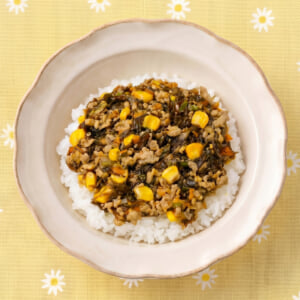
Chahan (Japanese Fried Rice) (Elementary School Portion)
チャーハン · Chahan
 By Aoi, licensed nutritionist · From a Japanese elementary school lunch menu
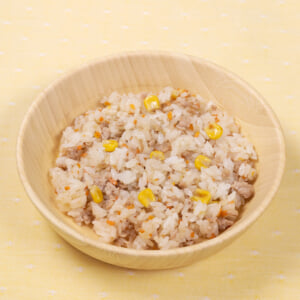
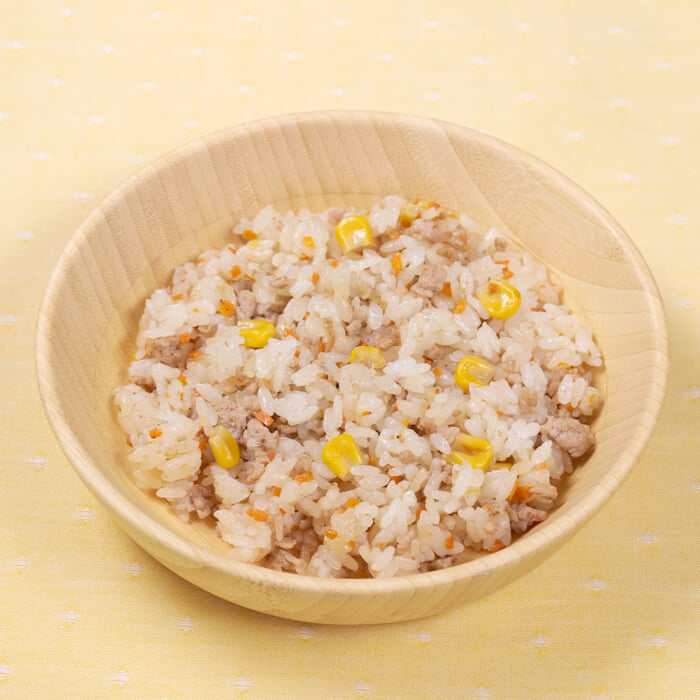
Chahan is Japan's take on Chinese fried rice, and it is a lunch that elementary school kids happily finish. This school-kitchen version keeps things simple: ground pork, finely minced carrot and onion, and sweet corn, seasoned with just a little soy sauce, salt and pepper. Instead of tossing the rice in a wok, we stir-fry the filling first and then mix in the cooked rice off the heat, which is how large batches are made in school kitchens and keeps the rice fluffy rather than greasy. The vegetables are chopped fine so they blend right in, even for kids who usually pick them out.
Wheat-free, but uses soy sauce (made with wheat). Japanese school-lunch allergy menus usually allow it, so check with your doctor. How to read the labels
Added. Open the recipe helper (bottom right) → ☰ Menu → 🛒 Shopping list to see the ingredients for your family size.
Printing uses the number of adults and children set under Ingredients, so set those first.
Ingredients
Amounts for 1 child (1 serving). An adult counts as 2 servings.
One serving here is 1.5× the portion served to a child in a Japanese elementary school, sized for Western appetites. An adult counts as two servings. Tap an ingredient to check it off.
Ingredients
- 75 griceJapanese short-grain white rice (japonica), which cooks up soft and slightly sticky. The amount listed is for uncooked rice. Substitute: Sushi rice, or another short-grain or medium-grain rice such as Calrose.
- 13.5 gcarrot
- 13.5 gonion
- 45 gground pork
- 12 gwhole kernel corn (canned or frozen)
Seasonings
- 3 gvegetable oil
- 3 gsoy sauce
- 0.5 gsalt
- to tastepepper
About the Japanese ingredients in this recipe
- rice (米)
- Japanese short-grain white rice (japonica), which cooks up soft and slightly sticky. The amount listed is for uncooked rice. Substitute: Sushi rice, or another short-grain or medium-grain rice such as Calrose.
Directions
- 1
Finely mince the carrot and onion.
- 2
Heat the vegetable oil in a frying pan, add the vegetables from step 1 and stir-fry well. Add the ground pork and corn (if not using frozen, drain it first) and continue stir-frying.
- 3
Season with the soy sauce, salt and pepper, then turn off the heat.
- 4
Add the cooked rice and mix well.
Nutrition
| Per | 1 serving | 1 adult serving | Your total |
|---|---|---|---|
| Energy | 399 kcal | 798 kcal | 399 kcal |
| Protein | 13.5 g | 27 g | 13.5 g |
| Fat | 11.6 g | 23.1 g | 11.6 g |
| Carbohydrates | 63 g | 126 g | 63 g |
| Fiber | 1.5 g | 3 g | 1.5 g |
| Salt equivalent | 0.9 g | 1.8 g | 0.9 g |
| Calcium | 16.5 mg | 33 mg | 16.5 mg |
| Iron | 1 mg | 2.1 mg | 1 mg |
| Potassium | 286.5 mg | 573 mg | 286.5 mg |
| Energy | Protein | Fat | Carbs | Fiber | Salt equiv. | Calcium | Iron | Potassium | |
|---|---|---|---|---|---|---|---|---|---|
| 1 serving | 399 kcal | 13.5 g | 11.6 g | 63 g | 1.5 g | 0.9 g | 16.5 mg | 1 mg | 286.5 mg |
| 1 adult serving | 798 kcal | 27 g | 23.1 g | 126 g | 3 g | 1.8 g | 33 mg | 2.1 mg | 573 mg |
Values are per serving (1.5× the Japanese elementary-school portion); an adult serving is double. They were calculated by a licensed Japanese nutritionist using the Standard Tables of Food Composition in Japan. "Salt equivalent" is sodium × 2.54, the standard Japanese measure. Allergen flags cover egg, milk and wheat only and come from the nutritionist's records. Soy sauce and miso are made with wheat but are usually allowed on Japanese wheat-free school menus, so check with your doctor.