Cabbage Pork Meatballs
キャベツ入り肉団子 · Kyabetsu-iri Nikudango
 By Aoi, licensed nutritionist · From a Japanese preschool lunch menu
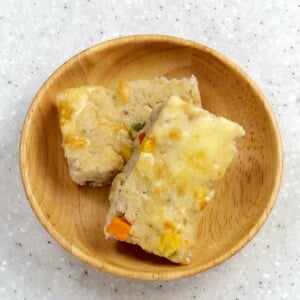
These little pork meatballs are packed with finely chopped cabbage, which makes them light, juicy and a sneaky way to get extra vegetables onto a child's plate. Salting the cabbage first and squeezing it well draws out the water, so the balls hold together instead of falling apart in the fryer. There is no egg, milk or wheat in the mix: a splash of soy milk keeps the pork tender instead. Served hot from the preschool kitchen, they disappear fast.
Added. Open the recipe helper (bottom right) → ☰ Menu → 🛒 Shopping list to see the ingredients for your family size.
Printing uses the number of adults and children set under Ingredients, so set those first.
Ingredients
Amounts for 1 child (1 serving). An adult counts as 2 servings.
One serving here is 1.5× the portion served to a child in a Japanese preschool, sized for Western appetites. An adult counts as two servings. Tap an ingredient to check it off.
Ingredients
- 67.5 gcabbage
- 54 gground pork
Seasonings
- 0.7 gsalt
- 5.4 gpotato starch (katakuriko)Japanese potato starch used for thickening sauces and coating fried foods. Substitute: Cornstarch: start with the same amount and add a little more if it is still thin. It thickens a little less than potato starch and needs a couple of minutes at a gentle bubble to reach full thickness.
- 9 gsweetened soy milk (Japanese chosei tonyu)Japanese 'prepared' soy milk that is lightly sweetened and flavored to taste milder than plain soy milk. Substitute: Regular (original, lightly sweetened) soy milk from the supermarket.
- to tastepepper
- 9 gvegetable oil
About the Japanese ingredients in this recipe
- potato starch (katakuriko) (かたくり粉)
- Japanese potato starch used for thickening sauces and coating fried foods. Substitute: Cornstarch: start with the same amount and add a little more if it is still thin. It thickens a little less than potato starch and needs a couple of minutes at a gentle bubble to reach full thickness. Read the guide: Katakuriko (Japanese Potato Starch) and What to Use Instead → Guide: japanese-school-lunch.com/articles/katakuriko-potato-starch/
- sweetened soy milk (Japanese chosei tonyu) (調製豆乳)
- Japanese 'prepared' soy milk that is lightly sweetened and flavored to taste milder than plain soy milk. Substitute: Regular (original, lightly sweetened) soy milk from the supermarket.
Directions
- 1
Finely chop the cabbage and rub in the salt. Let it sit for at least 15 minutes so the salt is absorbed, then squeeze it firmly to remove as much water as possible.
- 2
Add the potato starch, soy milk, salt and pepper to the ground pork and knead well until the mixture becomes sticky.
- 3
Add the cabbage and mix thoroughly. Toss the mixture back and forth between your palms to knock out any air, then shape it into round balls.
- 4
Deep-fry in oil heated to 170°C (340°F).
Nutrition
| Per | 1 serving | 1 adult serving | Your total |
|---|---|---|---|
| Energy | 231 kcal | 462 kcal | 231 kcal |
| Protein | 10.6 g | 21.3 g | 10.6 g |
| Fat | 18.6 g | 37.2 g | 18.6 g |
| Carbohydrates | 8.3 g | 16.5 g | 8.3 g |
| Fiber | 1.4 g | 2.7 g | 1.4 g |
| Salt equivalent | 0.8 g | 1.5 g | 0.8 g |
| Calcium | 34.5 mg | 69 mg | 34.5 mg |
| Iron | 0.9 mg | 1.8 mg | 0.9 mg |
| Potassium | 301.5 mg | 603 mg | 301.5 mg |
| Energy | Protein | Fat | Carbs | Fiber | Salt equiv. | Calcium | Iron | Potassium | |
|---|---|---|---|---|---|---|---|---|---|
| 1 serving | 231 kcal | 10.6 g | 18.6 g | 8.3 g | 1.4 g | 0.8 g | 34.5 mg | 0.9 mg | 301.5 mg |
| 1 adult serving | 462 kcal | 21.3 g | 37.2 g | 16.5 g | 2.7 g | 1.5 g | 69 mg | 1.8 mg | 603 mg |
Values are per serving (1.5× the Japanese preschool portion); an adult serving is double. They were calculated by a licensed Japanese nutritionist using the Standard Tables of Food Composition in Japan. "Salt equivalent" is sodium × 2.54, the standard Japanese measure. Allergen flags cover egg, milk and wheat only and come from the nutritionist's records. Soy sauce and miso are made with wheat but are usually allowed on Japanese wheat-free school menus, so check with your doctor.