Tofu Donuts
豆腐ドーナツ · Tofu Donatsu
 By Aoi, licensed nutritionist · From a Japanese preschool lunch menu
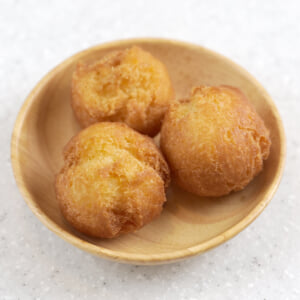
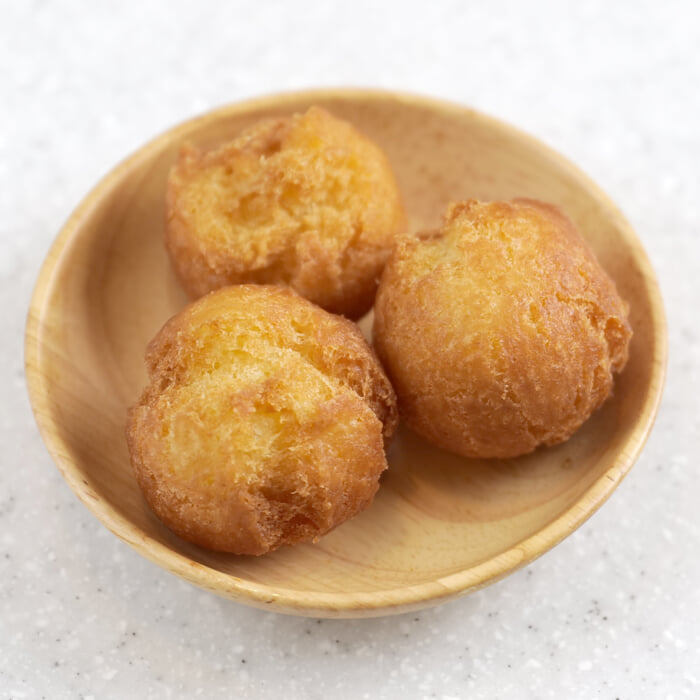
These little donuts are a preschool snack-time favorite in Japan, and they could hardly be simpler: silken tofu is blended smooth, mixed with an egg and pancake mix, then spooned straight into the oil. The tofu keeps the inside soft and moist, so they stay tender even once they cool. Fried at a gentle temperature, they turn a light golden color without browning too fast, which is just the kind of mild, not-too-sweet treat that children go back for.
Added. Open the recipe helper (bottom right) → ☰ Menu → 🛒 Shopping list to see the ingredients for your family size.
Printing uses the number of adults and children set under Ingredients, so set those first.
Ingredients
Amounts for 1 child (1 serving). An adult counts as 2 servings.
One serving here is 1.5× the portion served to a child in a Japanese preschool, sized for Western appetites. An adult counts as two servings. Tap an ingredient to check it off.
Ingredients
- 30 gpancake mixJapanese 'hotcake mix' is a sweetened pancake mix of flour, sugar, and leavening, often used as a shortcut baking mix. Brands differ, and some contain milk or egg, so check the label if you are cooking for a food allergy. Substitute: Sweetened pancake mix, or self-rising flour plus about 2 tablespoons sugar per 100 g.
- 22.5 gsilken tofu
- 7.5 gegg
Seasonings
- 4.5 gvegetable oil
About the Japanese ingredients in this recipe
- pancake mix (ホットケーキミックス)
- Japanese 'hotcake mix' is a sweetened pancake mix of flour, sugar, and leavening, often used as a shortcut baking mix. Brands differ, and some contain milk or egg, so check the label if you are cooking for a food allergy. Substitute: Sweetened pancake mix, or self-rising flour plus about 2 tablespoons sugar per 100 g.
Directions
- 1
Put the tofu in a bowl (no need to press or drain it) and mix well until smooth. Add the egg and mix in.
- 2
Add the pancake mix and stir until no dry flour remains.
- 3
Heat the oil to 160°C (320°F). Scoop up the batter with a spoon, drop it into the oil and fry.
If the oil is too hot, the outside browns quickly before the inside is done, so fry at a low temperature and keep an eye on it so it does not climb too high.
Nutrition
| Per | 1 serving | 1 adult serving | Your total |
|---|---|---|---|
| Energy | 171 kcal | 342 kcal | 171 kcal |
| Protein | 4.5 g | 9 g | 4.5 g |
| Fat | 7.2 g | 14.4 g | 7.2 g |
| Carbohydrates | 22.8 g | 45.6 g | 22.8 g |
| Fiber | 0.8 g | 1.5 g | 0.8 g |
| Salt equivalent | 0.3 g | 0.6 g | 0.3 g |
| Calcium | 49.5 mg | 99 mg | 49.5 mg |
| Iron | 0.6 mg | 1.2 mg | 0.6 mg |
| Potassium | 114 mg | 228 mg | 114 mg |
| Energy | Protein | Fat | Carbs | Fiber | Salt equiv. | Calcium | Iron | Potassium | |
|---|---|---|---|---|---|---|---|---|---|
| 1 serving | 171 kcal | 4.5 g | 7.2 g | 22.8 g | 0.8 g | 0.3 g | 49.5 mg | 0.6 mg | 114 mg |
| 1 adult serving | 342 kcal | 9 g | 14.4 g | 45.6 g | 1.5 g | 0.6 g | 99 mg | 1.2 mg | 228 mg |
Values are per serving (1.5× the Japanese preschool portion); an adult serving is double. They were calculated by a licensed Japanese nutritionist using the Standard Tables of Food Composition in Japan. "Salt equivalent" is sodium × 2.54, the standard Japanese measure. Allergen flags cover egg, milk and wheat only and come from the nutritionist's records. Soy sauce and miso are made with wheat but are usually allowed on Japanese wheat-free school menus, so check with your doctor.