Saba no Umeni (Mackerel Simmered with Umeboshi)
サバの梅煮 · Saba no Umeni
 By Aoi, licensed nutritionist · From a Japanese preschool lunch menu
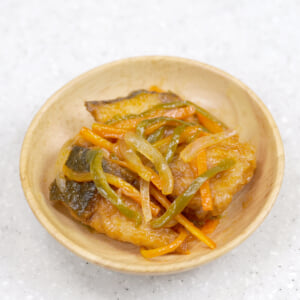
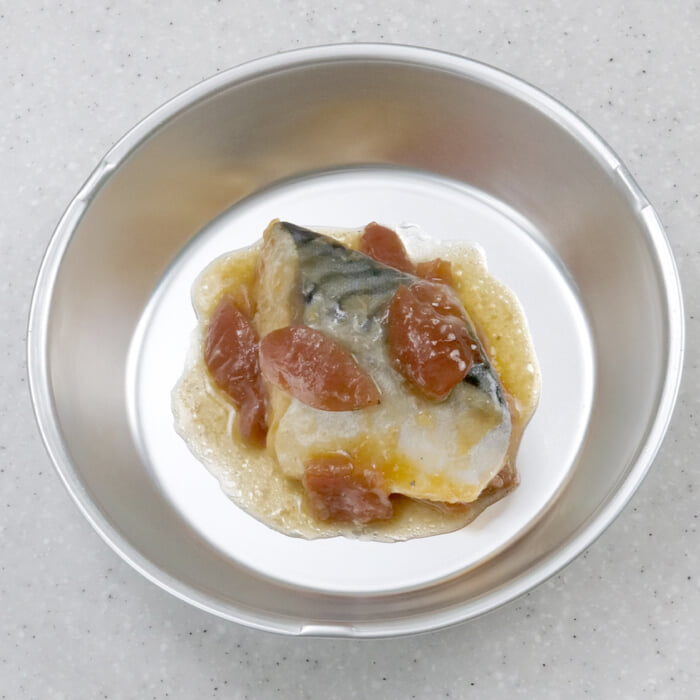
Saba no umeni is a classic Japanese home-style dish: mackerel simmered in a sweet soy broth with umeboshi (salted pickled plum) and a touch of ginger. The plum's gentle tartness and the ginger tame mackerel's strong smell, which is exactly why children who usually shy away from oily fish take to it. The sauce is thickened lightly with potato starch at the end so it clings to the fish and goes down easily with rice. You can start with frozen fillets straight from the freezer or with fresh mackerel, and both methods are given below.
Added. Open the recipe helper (bottom right) → ☰ Menu → 🛒 Shopping list to see the ingredients for your family size.
Printing uses the number of adults and children set under Ingredients, so set those first.
Ingredients
Amounts for 1 child (1 serving). An adult counts as 2 servings.
One serving here is 1.5× the portion served to a child in a Japanese preschool, sized for Western appetites. An adult counts as two servings. Tap an ingredient to check it off.
Ingredients
- 67.5 gfrozen mackerel
- 10.2 gumeboshi (pickled plum)Salty, sour pickled Japanese plums. Substitute: No close substitute - look for it at a Japanese grocery; umeboshi paste also works.
Seasonings
- 0.6 gginger paste (tube)Grated ginger sold ready to use in a squeeze tube, a staple in Japanese kitchens. Japanese school lunch kitchens grate fresh ginger for its aroma, but for cooking at home Aoi says the tube works just fine. Tube pastes often contain added salt, oil and other ingredients, so check the label. Substitute: Use freshly grated ginger in the same amount. 1 teaspoon of paste is about 5 g.
- 1.8 gsugar
- 1.5 gsoy sauce
- 1.5 gsakeSake (Japanese rice wine) is used in small amounts to soften the smell of fish and meat and add depth. Japanese "cooking sake" often contains added salt. Some alcohol can remain after short cooking. If you prefer no alcohol for children, use the substitute. Substitute: The same amount of water (the taste will be a little simpler), or dry white wine.
- 0.8 gmirinMirin is a sweet Japanese rice seasoning that adds gentle sweetness and a glossy finish. Hon-mirin (true mirin) contains about 14% alcohol; "mirin-style seasoning" has little or no alcohol. Some alcohol can remain after short cooking. If you prefer no alcohol for children, use the substitute. Substitute: For each tablespoon of mirin, use 1 tablespoon water plus 1 to 2 teaspoons sugar.
- 30 gwater
- 0.3 gpotato starch (katakuriko)Japanese potato starch used for thickening sauces and coating fried foods. Substitute: Cornstarch: start with the same amount and add a little more if it is still thin. It thickens a little less than potato starch and needs a couple of minutes at a gentle bubble to reach full thickness.
- 1.4 gwater
About the Japanese ingredients in this recipe
- umeboshi (pickled plum) (梅干し)
- Salty, sour pickled Japanese plums. Substitute: No close substitute - look for it at a Japanese grocery; umeboshi paste also works.
- ginger paste (tube) (しょうがチューブ)
- Grated ginger sold ready to use in a squeeze tube, a staple in Japanese kitchens. Japanese school lunch kitchens grate fresh ginger for its aroma, but for cooking at home Aoi says the tube works just fine. Tube pastes often contain added salt, oil and other ingredients, so check the label. Substitute: Use freshly grated ginger in the same amount. 1 teaspoon of paste is about 5 g.
- sake (酒)
- Sake (Japanese rice wine) is used in small amounts to soften the smell of fish and meat and add depth. Japanese "cooking sake" often contains added salt. Some alcohol can remain after short cooking. If you prefer no alcohol for children, use the substitute. Substitute: The same amount of water (the taste will be a little simpler), or dry white wine.
- mirin (みりん)
- Mirin is a sweet Japanese rice seasoning that adds gentle sweetness and a glossy finish. Hon-mirin (true mirin) contains about 14% alcohol; "mirin-style seasoning" has little or no alcohol. Some alcohol can remain after short cooking. If you prefer no alcohol for children, use the substitute. Substitute: For each tablespoon of mirin, use 1 tablespoon water plus 1 to 2 teaspoons sugar.
- potato starch (katakuriko) (かたくり粉)
- Japanese potato starch used for thickening sauces and coating fried foods. Substitute: Cornstarch: start with the same amount and add a little more if it is still thin. It thickens a little less than potato starch and needs a couple of minutes at a gentle bubble to reach full thickness. Read the guide: Katakuriko (Japanese Potato Starch) and What to Use Instead → Guide: japanese-school-lunch.com/articles/katakuriko-potato-starch/
Directions
- 1
Remove the pit from the umeboshi and cut the flesh into 6 pieces. - 2
In a pot, combine the ginger paste, sugar, soy sauce, sake, mirin and water and mix well. Scatter in the umeboshi, then add the frozen mackerel straight from the freezer, skin side up.
- 3
Set the pot over low heat and, once it comes to a boil, simmer for about 17 minutes.
- 4
Turn off the heat and drizzle in the potato starch mixed with water. Return to low heat and simmer until the sauce thickens.
- 5
Rinse the dark bloodline of the mackerel under running water and drain. Pat both sides lightly dry with paper towels. - 6
Remove the pit from the umeboshi and cut the flesh into 6 pieces.
- 7
In a pot, combine the ginger paste, sugar, soy sauce, sake, mirin and water, scatter in the umeboshi, and bring to a boil.
- 8
Once boiling, add the mackerel skin side up and simmer over low heat for about 5 minutes. Cover with a drop lid (otoshibuta) and simmer over low heat for about 10 minutes more.
- 9
Turn off the heat and drizzle in the potato starch mixed with water. Return to low heat and simmer until the sauce thickens.
Note: The amount of water will vary with the size of your pot and how much you are making. Add enough water to come about halfway up the mackerel fillets.
Note: With frozen fillets, a drop lid tends to pull the skin loose and makes the white scum more noticeable, so simmer without a lid.
Nutrition
| Per | 1 serving | 1 adult serving | Your total |
|---|---|---|---|
| Energy | 157.5 kcal | 315 kcal | 157.5 kcal |
| Protein | 14.1 g | 28.2 g | 14.1 g |
| Fat | 11.4 g | 22.8 g | 11.4 g |
| Carbohydrates | 0 g | 0 g | 0 g |
| Salt equivalent | 2.3 g | 4.5 g | 2.3 g |
| Calcium | 7.5 mg | 15 mg | 7.5 mg |
| Iron | 0.9 mg | 1.8 mg | 0.9 mg |
| Energy | Protein | Fat | Carbs | Salt equiv. | Calcium | Iron | |
|---|---|---|---|---|---|---|---|
| 1 serving | 157.5 kcal | 14.1 g | 11.4 g | 0 g | 2.3 g | 7.5 mg | 0.9 mg |
| 1 adult serving | 315 kcal | 28.2 g | 22.8 g | 0 g | 4.5 g | 15 mg | 1.8 mg |
Values are per serving (1.5× the Japanese preschool portion); an adult serving is double. They were calculated by a licensed Japanese nutritionist using the Standard Tables of Food Composition in Japan. "Salt equivalent" is sodium × 2.54, the standard Japanese measure. Allergen flags cover egg, milk and wheat only and come from the nutritionist's records. Soy sauce and miso are made with wheat but are usually allowed on Japanese wheat-free school menus, so check with your doctor.
Cooking for bigger kids? See the elementary-school portion of this recipe.