Raisin Cookies
レーズンクッキー
 By Aoi, licensed nutritionist · From a Japanese preschool lunch menu
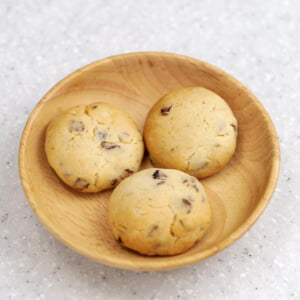
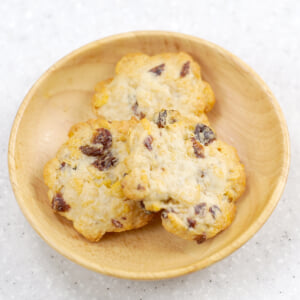
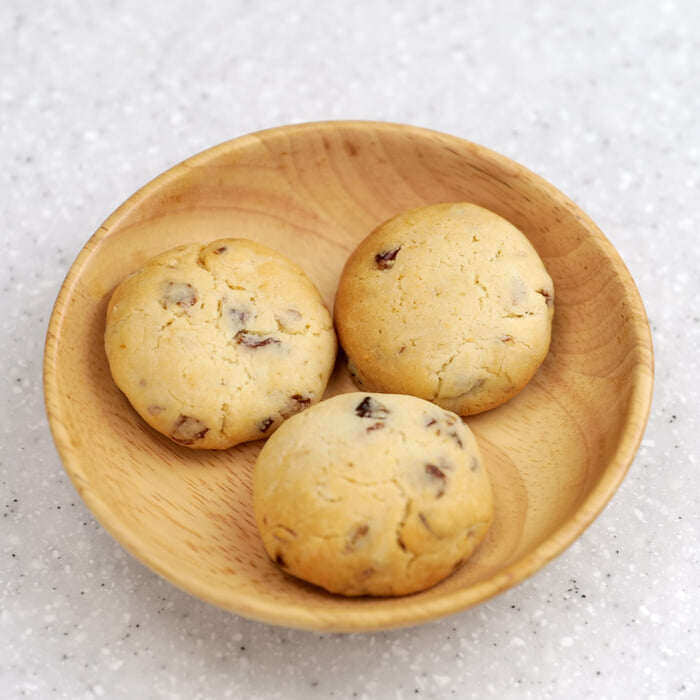
These raisin cookies are the kind of afternoon snack (oyatsu) we make in the preschool kitchen: a soft, gently sweet cookie with plumped-up raisins in every bite. The dough is mixed in one bowl with oil instead of butter, and there is no egg, so it is quick to put together and friendly to little ones with egg allergies. Soaking the raisins first makes them soft and easy for small children to chew, and chopping them keeps the sweetness spread evenly through the dough. They bake in a toaster oven or a regular oven, so you can have a warm batch ready in well under half an hour.
Added. Open the recipe helper (bottom right) → ☰ Menu → 🛒 Shopping list to see the ingredients for your family size.
Printing uses the number of adults and children set under Ingredients, so set those first.
Ingredients
Amounts for 1 child (1 serving). An adult counts as 2 servings.
One serving here is 1.5× the portion served to a child in a Japanese preschool, sized for Western appetites. An adult counts as two servings. Tap an ingredient to check it off.
Ingredients
- 7.5 graisins
- 7.5 gmilk
- 37.5 gflour
Seasonings
- 13.5 gvegetable oil
- 8.7 gsugar
- 0.9 gbaking powder
Directions
- 1
Soak the raisins in lukewarm water for about 5 minutes to plump them up, then chop them coarsely.
- 2
In a bowl, combine the vegetable oil, milk, and sugar and mix well.
- 3
Add the raisins from step 1, the flour, and the baking powder, and mix until combined.
- 4
Roll the dough into balls, flatten them slightly, and place them on a baking sheet lined with parchment paper. Bake in a toaster oven (or an oven preheated to 170°C/340°F) for about 15 minutes.
Nutrition
| Per | 1 serving | 1 adult serving | Your total |
|---|---|---|---|
| Energy | 315 kcal | 630 kcal | 315 kcal |
| Protein | 3.6 g | 7.2 g | 3.6 g |
| Fat | 14.4 g | 28.8 g | 14.4 g |
| Carbohydrates | 43.8 g | 87.6 g | 43.8 g |
| Fiber | 1.2 g | 2.4 g | 1.2 g |
| Salt equivalent | 0.2 g | 0.3 g | 0.2 g |
| Calcium | 42 mg | 84 mg | 42 mg |
| Iron | 0.3 mg | 0.6 mg | 0.3 mg |
| Potassium | 144 mg | 288 mg | 144 mg |
| Energy | Protein | Fat | Carbs | Fiber | Salt equiv. | Calcium | Iron | Potassium | |
|---|---|---|---|---|---|---|---|---|---|
| 1 serving | 315 kcal | 3.6 g | 14.4 g | 43.8 g | 1.2 g | 0.2 g | 42 mg | 0.3 mg | 144 mg |
| 1 adult serving | 630 kcal | 7.2 g | 28.8 g | 87.6 g | 2.4 g | 0.3 g | 84 mg | 0.6 mg | 288 mg |
Values are per serving (1.5× the Japanese preschool portion); an adult serving is double. They were calculated by a licensed Japanese nutritionist using the Standard Tables of Food Composition in Japan. "Salt equivalent" is sodium × 2.54, the standard Japanese measure. Allergen flags cover egg, milk and wheat only and come from the nutritionist's records. Soy sauce and miso are made with wheat but are usually allowed on Japanese wheat-free school menus, so check with your doctor.