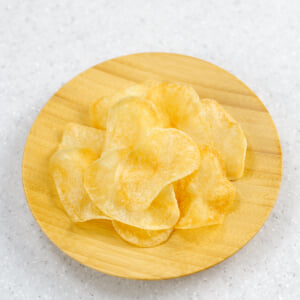
Potato Chips
ポテトチップ
 By Aoi, licensed nutritionist · From a Japanese preschool lunch menu
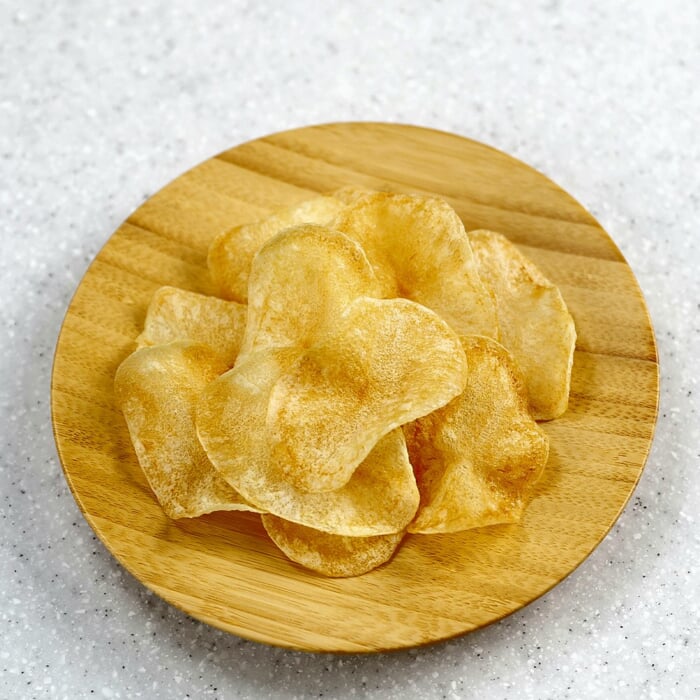
Crisp, lightly salted potato chips are one of the simplest snacks to make at home, and in Japanese preschool kitchens they are a favorite afternoon oyatsu. Slicing the potatoes paper-thin and soaking them in water first rinses off surface starch, which is what keeps the chips from sticking together and helps them fry up evenly crisp. Because you season them yourself, you can keep the salt gentle for little ones while still giving them that satisfying crunch.
Added. Open the recipe helper (bottom right) → ☰ Menu → 🛒 Shopping list to see the ingredients for your family size.
Printing uses the number of adults and children set under Ingredients, so set those first.
Ingredients
Amounts for 1 child (1 serving). An adult counts as 2 servings.
One serving here is 1.5× the portion served to a child in a Japanese preschool, sized for Western appetites. An adult counts as two servings. Tap an ingredient to check it off.
Ingredients
- 90 gpotato
Seasonings
- 4.5 gvegetable oil
- to tastesalt
Directions
- 1
Slice the potatoes into 1 mm rounds and soak them in water.
- 2
Drain well and pat dry, then deep-fry in oil at 170°C (340°F).
- 3
Sprinkle with salt while the chips are still warm.
Nutrition
| Per | 1 serving | 1 adult serving | Your total |
|---|---|---|---|
| Energy | 93 kcal | 186 kcal | 93 kcal |
| Protein | 1.7 g | 3.3 g | 1.7 g |
| Fat | 4.7 g | 9.3 g | 4.7 g |
| Carbohydrates | 12.6 g | 25.2 g | 12.6 g |
| Salt equivalent | 0 g | 0 g | 0 g |
| Calcium | 3 mg | 6 mg | 3 mg |
| Iron | 0.3 mg | 0.6 mg | 0.3 mg |
| Energy | Protein | Fat | Carbs | Salt equiv. | Calcium | Iron | |
|---|---|---|---|---|---|---|---|
| 1 serving | 93 kcal | 1.7 g | 4.7 g | 12.6 g | 0 g | 3 mg | 0.3 mg |
| 1 adult serving | 186 kcal | 3.3 g | 9.3 g | 25.2 g | 0 g | 6 mg | 0.6 mg |
Values are per serving (1.5× the Japanese preschool portion); an adult serving is double. They were calculated by a licensed Japanese nutritionist using the Standard Tables of Food Composition in Japan. "Salt equivalent" is sodium × 2.54, the standard Japanese measure. Allergen flags cover egg, milk and wheat only and come from the nutritionist's records. Soy sauce and miso are made with wheat but are usually allowed on Japanese wheat-free school menus, so check with your doctor.