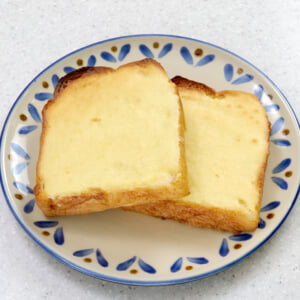
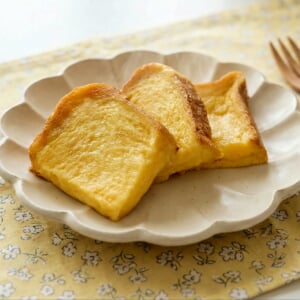
Melon Pan-Style Toast
メロンパン風トースト(卵なし) · Meronpan-fū Tōsuto
 By Aoi, licensed nutritionist · From a Japanese preschool lunch menu
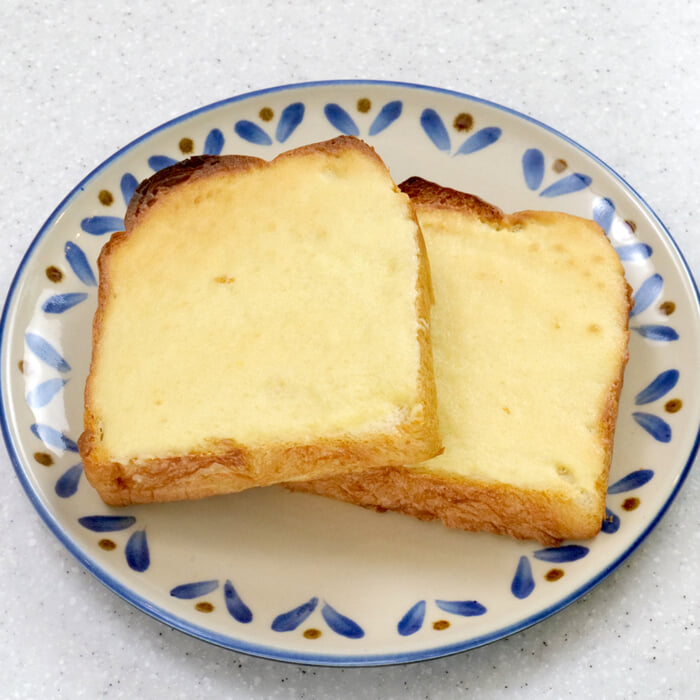
Melon pan is one of Japan's best-loved bakery treats: a soft bun wrapped in a crisp, sweet cookie crust, scored so it looks like a melon. This toast version borrows just the fun part. A quick dough of melted butter, sugar and flour is pressed onto small pieces of sandwich bread and baked, so you get that crackly, buttery top without any kneading or proofing. Cutting the bread into quarters keeps each piece small enough for little hands, which makes it an easy afternoon snack at preschool.
Added. Open the recipe helper (bottom right) → ☰ Menu → 🛒 Shopping list to see the ingredients for your family size.
Printing uses the number of adults and children set under Ingredients, so set those first.
Ingredients
Amounts for 1 child (1 serving). An adult counts as 2 servings.
One serving here is 1.5× the portion served to a child in a Japanese preschool, sized for Western appetites. An adult counts as two servings. Tap an ingredient to check it off.
Ingredients
- 45 gwhite sandwich bread, thin-sliced (Chojuku brand)Japanese shokupan cut 8 slices to a loaf, about 1.5 cm thick; Chojuku is a popular soft brand by Pasco. Substitute: Any plain white sandwich bread.
- 13.2 gflour
Seasonings
- 5.7 gsugar
- 7.5 gunsalted butter
About the Japanese ingredients in this recipe
- white sandwich bread, thin-sliced (Chojuku brand) (食パン,8枚切 超熟)
- Japanese shokupan cut 8 slices to a loaf, about 1.5 cm thick; Chojuku is a popular soft brand by Pasco. Substitute: Any plain white sandwich bread.
Directions
- 1
Cut the sandwich bread into 4 equal pieces.
- 2
Melt the butter and stir in the sugar. Add the flour, mix, and knead until the dough comes together in one mass.
- 3
Divide the dough into equal portions, roll each lightly into a ball, then flatten it and place it on top of a piece of bread.
- 4
Bake in a 200°C (400°F) oven for about 5 to 8 minutes.
Nutrition
| Per | 1 serving | 1 adult serving | Your total |
|---|---|---|---|
| Energy | 234 kcal | 468 kcal | 234 kcal |
| Protein | 5.1 g | 10.2 g | 5.1 g |
| Fat | 8.3 g | 16.5 g | 8.3 g |
| Carbohydrates | 38.1 g | 76.2 g | 38.1 g |
| Salt equivalent | 0.6 g | 1.2 g | 0.6 g |
| Calcium | 13.5 mg | 27 mg | 13.5 mg |
| Iron | 0.3 mg | 0.6 mg | 0.3 mg |
| Energy | Protein | Fat | Carbs | Salt equiv. | Calcium | Iron | |
|---|---|---|---|---|---|---|---|
| 1 serving | 234 kcal | 5.1 g | 8.3 g | 38.1 g | 0.6 g | 13.5 mg | 0.3 mg |
| 1 adult serving | 468 kcal | 10.2 g | 16.5 g | 76.2 g | 1.2 g | 27 mg | 0.6 mg |
Values are per serving (1.5× the Japanese preschool portion); an adult serving is double. They were calculated by a licensed Japanese nutritionist using the Standard Tables of Food Composition in Japan. "Salt equivalent" is sodium × 2.54, the standard Japanese measure. Allergen flags cover egg, milk and wheat only and come from the nutritionist's records. Soy sauce and miso are made with wheat but are usually allowed on Japanese wheat-free school menus, so check with your doctor.