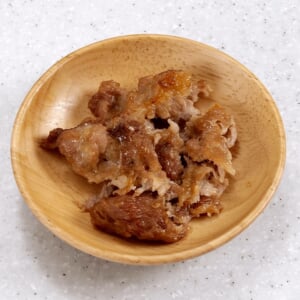
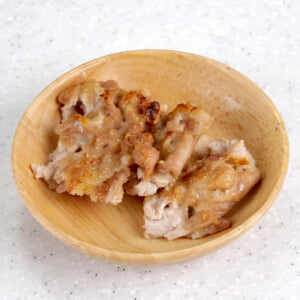
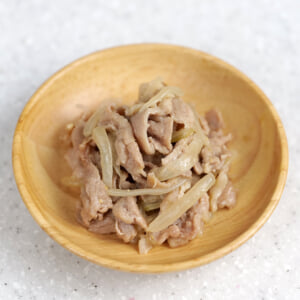
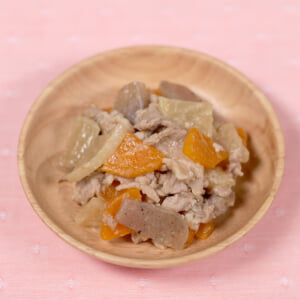
Marmalade-Glazed Pork
豚肉のマーマレード焼き · Butaniku no Marmalade-yaki
 By Aoi, licensed nutritionist · From a Japanese preschool lunch menu
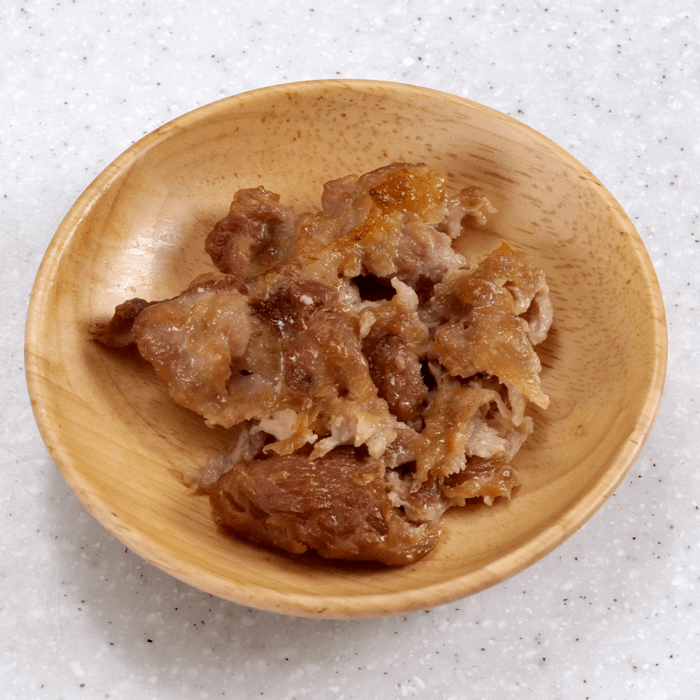
Just three pantry ingredients turn thinly sliced pork into a glossy, gently sweet main dish. The soy sauce keeps the marmalade from tasting like dessert, and the orange flavor makes the pork feel bright and light rather than heavy. A dusting of flour before marinating helps the glaze cling to every piece, and because it bakes on a single tray in the oven, there is no standing at the stove - a trick we lean on in the preschool kitchen when cooking for a lot of children at once.
Added. Open the recipe helper (bottom right) → ☰ Menu → 🛒 Shopping list to see the ingredients for your family size.
Printing uses the number of adults and children set under Ingredients, so set those first.
Ingredients
Amounts for 1 child (1 serving). An adult counts as 2 servings.
One serving here is 1.5× the portion served to a child in a Japanese preschool, sized for Western appetites. An adult counts as two servings. Tap an ingredient to check it off.
Ingredients
- 67.5 gthinly sliced pork (komagire)Small, thin offcuts of pork sold in Japan for quick stir-fries and simmered dishes. Substitute: Thinly sliced pork shoulder or loin cut into bite-size pieces.
Seasonings
- 3.5 gflour
- 6 gorange marmalade
- 2.4 gsoy sauce
About the Japanese ingredients in this recipe
- thinly sliced pork (komagire) (豚こま切れ肉)
- Small, thin offcuts of pork sold in Japan for quick stir-fries and simmered dishes. Substitute: Thinly sliced pork shoulder or loin cut into bite-size pieces.
Directions
Video is in Japanese and may show a different version of this dish (other ingredients or steps). Follow the ingredients and steps on this page, especially when cooking for allergies.
- 1
Cut the pork into 1 to 2 cm wide pieces. Rub the flour into the pork.
- 2
Combine the soy sauce and marmalade to make a marinade, add the pork from step 1, and rub it in well.
- 3
Spread the pork from step 2 out on a baking sheet and bake in an oven preheated to 180°C (350°F) for about 15 minutes.
- 4
Separate any pieces that have stuck together and serve.
Nutrition
| Per | 1 serving | 1 adult serving | Your total |
|---|---|---|---|
| Energy | 142.5 kcal | 285 kcal | 142.5 kcal |
| Protein | 14.3 g | 28.5 g | 14.3 g |
| Fat | 6.9 g | 13.8 g | 6.9 g |
| Carbohydrates | 6.6 g | 13.2 g | 6.6 g |
| Fiber | 0.2 g | 0.3 g | 0.2 g |
| Salt equivalent | 0.3 g | 0.6 g | 0.3 g |
| Calcium | 4.5 mg | 9 mg | 4.5 mg |
| Iron | 0.5 mg | 0.9 mg | 0.5 mg |
| Potassium | 252 mg | 504 mg | 252 mg |
| Energy | Protein | Fat | Carbs | Fiber | Salt equiv. | Calcium | Iron | Potassium | |
|---|---|---|---|---|---|---|---|---|---|
| 1 serving | 142.5 kcal | 14.3 g | 6.9 g | 6.6 g | 0.2 g | 0.3 g | 4.5 mg | 0.5 mg | 252 mg |
| 1 adult serving | 285 kcal | 28.5 g | 13.8 g | 13.2 g | 0.3 g | 0.6 g | 9 mg | 0.9 mg | 504 mg |
Values are per serving (1.5× the Japanese preschool portion); an adult serving is double. They were calculated by a licensed Japanese nutritionist using the Standard Tables of Food Composition in Japan. "Salt equivalent" is sodium × 2.54, the standard Japanese measure. Allergen flags cover egg, milk and wheat only and come from the nutritionist's records. Soy sauce and miso are made with wheat but are usually allowed on Japanese wheat-free school menus, so check with your doctor.