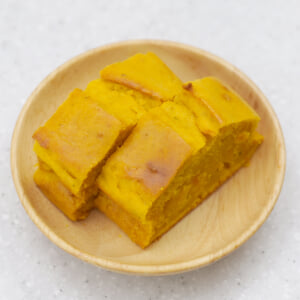
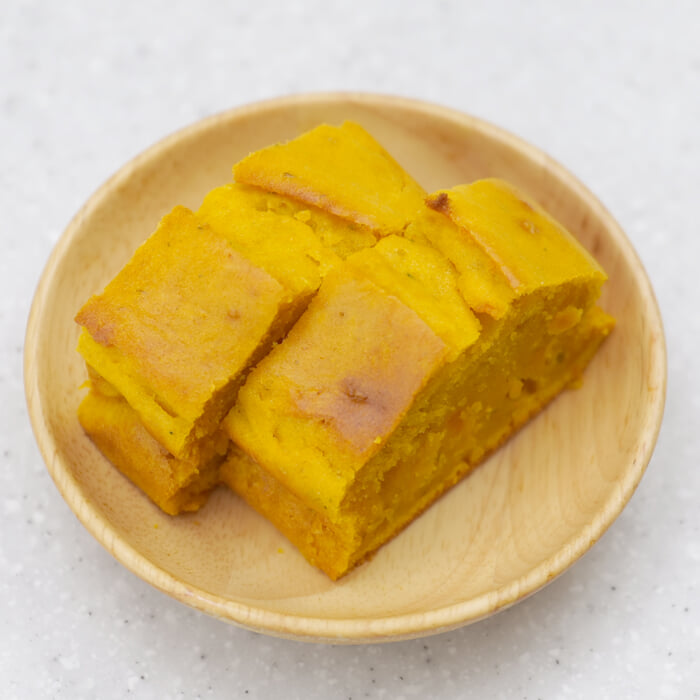
Kabocha Squash Pound Cake
かぼちゃのパウンドケーキ
 By Aoi, licensed nutritionist · From a Japanese preschool lunch menu
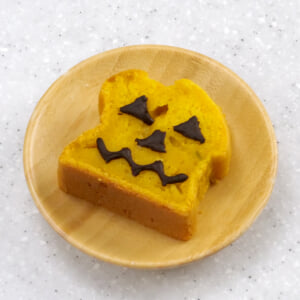
This kabocha pound cake is one of the snacks we bake in the preschool kitchen when squash is in season. Mashed kabocha gives the cake a golden color, a moist crumb and gentle sweetness, so only a little sugar is needed. There are no eggs in the batter and Japanese pancake mix (hotcake mix, which already contains flour, sugar and leavening) does the heavy lifting, so it comes together in one bowl. Children love its soft texture and warm, pumpkin-like flavor.
Added. Open the recipe helper (bottom right) → ☰ Menu → 🛒 Shopping list to see the ingredients for your family size.
Printing uses the number of adults and children set under Ingredients, so set those first.
Ingredients
Amounts for 1 child (1 serving). An adult counts as 2 servings.
One serving here is 1.5× the portion served to a child in a Japanese preschool, sized for Western appetites. An adult counts as two servings. Tap an ingredient to check it off.
Ingredients
- 37.5 gkabocha squashSweet, dense Japanese pumpkin with dark green skin and orange flesh. Substitute: Butternut squash or another sweet winter squash.
- 37.5 gpancake mixJapanese 'hotcake mix' is a sweetened pancake mix of flour, sugar, and leavening, often used as a shortcut baking mix. Brands differ, and some contain milk or egg, so check the label if you are cooking for a food allergy. Substitute: Sweetened pancake mix, or self-rising flour plus about 2 tablespoons sugar per 100 g.
Seasonings
- 9.5 gsugar
- 37.5 mlmilk
- 9 gvegetable oil
About the Japanese ingredients in this recipe
- kabocha squash (かぼちゃ)
- Sweet, dense Japanese pumpkin with dark green skin and orange flesh. Substitute: Butternut squash or another sweet winter squash.
- pancake mix (ホットケーキミックス)
- Japanese 'hotcake mix' is a sweetened pancake mix of flour, sugar, and leavening, often used as a shortcut baking mix. Brands differ, and some contain milk or egg, so check the label if you are cooking for a food allergy. Substitute: Sweetened pancake mix, or self-rising flour plus about 2 tablespoons sugar per 100 g.
Directions
- 1
Peel the kabocha squash, cut it into rough chunks and boil until tender. While it is still hot, add the sugar and milk and mash.
- 2
Add the vegetable oil and mix well.
- 3
Add the pancake mix and stir until combined.
- 4
Pour the batter into a loaf pan lined with parchment paper and bake in an oven preheated to 180°C (350°F) for about 30 minutes.
Nutrition
| Per | 1 serving | 1 adult serving | Your total |
|---|---|---|---|
| Energy | 304.5 kcal | 609 kcal | 304.5 kcal |
| Protein | 4.9 g | 9.9 g | 4.9 g |
| Fat | 12.1 g | 24.3 g | 12.1 g |
| Carbohydrates | 47 g | 93.9 g | 47 g |
| Fiber | 2.1 g | 4.2 g | 2.1 g |
| Salt equivalent | 0.5 g | 0.9 g | 0.5 g |
| Calcium | 88.5 mg | 177 mg | 88.5 mg |
| Iron | 0.3 mg | 0.6 mg | 0.3 mg |
| Potassium | 306 mg | 612 mg | 306 mg |
| Energy | Protein | Fat | Carbs | Fiber | Salt equiv. | Calcium | Iron | Potassium | |
|---|---|---|---|---|---|---|---|---|---|
| 1 serving | 304.5 kcal | 4.9 g | 12.1 g | 47 g | 2.1 g | 0.5 g | 88.5 mg | 0.3 mg | 306 mg |
| 1 adult serving | 609 kcal | 9.9 g | 24.3 g | 93.9 g | 4.2 g | 0.9 g | 177 mg | 0.6 mg | 612 mg |
Values are per serving (1.5× the Japanese preschool portion); an adult serving is double. They were calculated by a licensed Japanese nutritionist using the Standard Tables of Food Composition in Japan. "Salt equivalent" is sodium × 2.54, the standard Japanese measure. Allergen flags cover egg, milk and wheat only and come from the nutritionist's records. Soy sauce and miso are made with wheat but are usually allowed on Japanese wheat-free school menus, so check with your doctor.