Cocoa Agepan (Japanese Fried Bread)
ココア揚げパン · Kokoa Agepan
 By Aoi, licensed nutritionist · From a Japanese preschool lunch menu
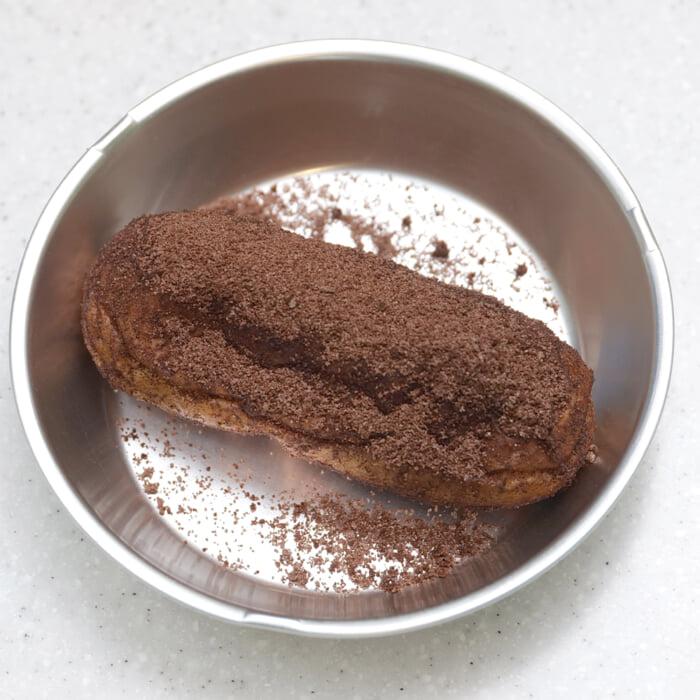
Agepan, or fried bread, is one of the most famous treats to come out of Japanese school lunch kitchens. Soft dinner rolls take a quick dip in hot oil until the outside is lightly crisp, then get tossed in a sweet coating while they are still warm so it clings to every surface. This version uses unsweetened cocoa mixed with sugar and a pinch of salt, and it disappears fast at snack time - the warm, cocoa-dusted rolls are hard for children to resist.
Added. Open the recipe helper (bottom right) → ☰ Menu → 🛒 Shopping list to see the ingredients for your family size.
Printing uses the number of adults and children set under Ingredients, so set those first.
Ingredients
Amounts for 1 child (1 serving). An adult counts as 2 servings.
One serving here is 1.5× the portion served to a child in a Japanese preschool, sized for Western appetites. An adult counts as two servings. Tap an ingredient to check it off.
Ingredients
- 52.5 gdinner rolls
Seasonings
- 9 gvegetable oil
- 1.4 gunsweetened cocoa powder
- 5.3 gsugar
- 0 gsalt
Directions
- 1
In a bowl, combine the cocoa, sugar, and salt and mix until there are no lumps.
- 2
Heat the oil to 180°C (350°F) and add the dinner rolls. (The key is to fry them quickly at a high temperature.)
- 3
Fry for about 1 minute, turning the rolls over as they cook.
- 4
Coat the rolls with the cocoa mixture while they are still warm. (Coating them while warm helps the powder stick well.)
Use pure, unsweetened cocoa powder with no sugar or other additives.
Prepare a little more coating than you think you need - it makes it much easier to coat the rolls evenly.
Nutrition
| Per | 1 serving | 1 adult serving | Your total |
|---|---|---|---|
| Energy | 267 kcal | 534 kcal | 267 kcal |
| Protein | 5.6 g | 11.1 g | 5.6 g |
| Fat | 14.1 g | 28.2 g | 14.1 g |
| Carbohydrates | 31.4 g | 62.7 g | 31.4 g |
| Fiber | 1.4 g | 2.7 g | 1.4 g |
| Salt equivalent | 0.6 g | 1.2 g | 0.6 g |
| Calcium | 24 mg | 48 mg | 24 mg |
| Iron | 0.5 mg | 0.9 mg | 0.5 mg |
| Potassium | 96 mg | 192 mg | 96 mg |
| Energy | Protein | Fat | Carbs | Fiber | Salt equiv. | Calcium | Iron | Potassium | |
|---|---|---|---|---|---|---|---|---|---|
| 1 serving | 267 kcal | 5.6 g | 14.1 g | 31.4 g | 1.4 g | 0.6 g | 24 mg | 0.5 mg | 96 mg |
| 1 adult serving | 534 kcal | 11.1 g | 28.2 g | 62.7 g | 2.7 g | 1.2 g | 48 mg | 0.9 mg | 192 mg |
Values are per serving (1.5× the Japanese preschool portion); an adult serving is double. They were calculated by a licensed Japanese nutritionist using the Standard Tables of Food Composition in Japan. "Salt equivalent" is sodium × 2.54, the standard Japanese measure. Allergen flags cover egg, milk and wheat only and come from the nutritionist's records. Soy sauce and miso are made with wheat but are usually allowed on Japanese wheat-free school menus, so check with your doctor.