Chicken Tsukune (Japanese Chicken Meatballs) (Milk & Wheat-Free)
鶏つくね(乳小麦なし) · Tori Tsukune
 By Aoi, licensed nutritionist · From a Japanese preschool lunch menu
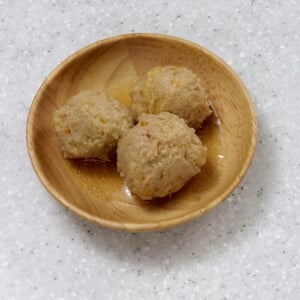
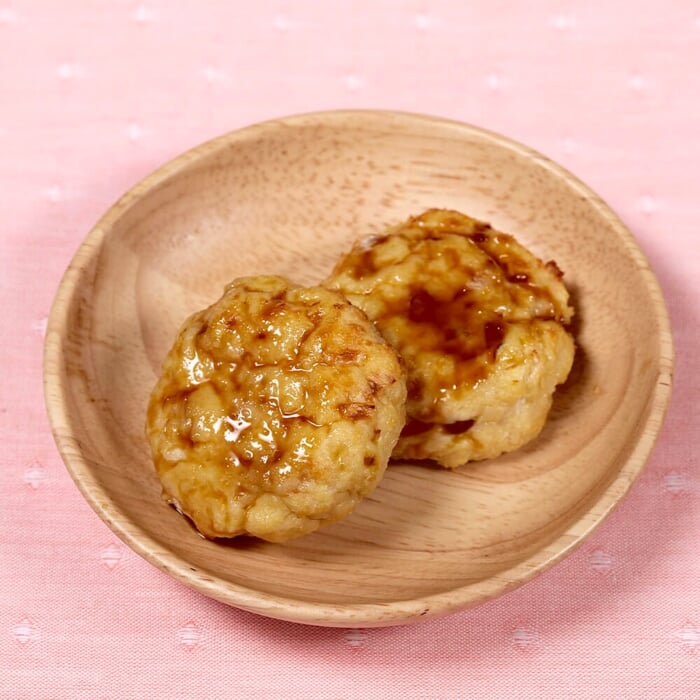
Tsukune are the soft Japanese chicken meatballs you'll find on skewers at yakitori restaurants, finished with a sweet-savory soy glaze. This preschool-kitchen version skips the egg binder and uses a little soy milk and potato starch instead, so the meatballs stay tender and moist while being made without egg or milk, and with no wheat flour. Shaping them into small, flat patties and baking them on a sheet pan means no standing at the stove, and the gentle glaze of soy sauce, sugar and mirin is exactly the kind of flavor that has children asking for seconds.
Wheat-free, but uses soy sauce (made with wheat). Japanese school-lunch allergy menus usually allow it, so check with your doctor. How to read the labels
Added. Open the recipe helper (bottom right) → ☰ Menu → 🛒 Shopping list to see the ingredients for your family size.
Printing uses the number of adults and children set under Ingredients, so set those first.
Ingredients
Amounts for 1 child (1 serving). An adult counts as 2 servings.
One serving here is 1.5× the portion served to a child in a Japanese preschool, sized for Western appetites. An adult counts as two servings. Tap an ingredient to check it off.
Ingredients
- 82.5 gground chicken
- 18 ggreen onion (naga negi)Japanese long onion, thicker and milder than Western scallions. Substitute: Scallions or the white part of a leek.
Seasonings
- 5.6 gpotato starch (katakuriko)Japanese potato starch used for thickening sauces and coating fried foods. Substitute: Cornstarch: start with the same amount and add a little more if it is still thin. It thickens a little less than potato starch and needs a couple of minutes at a gentle bubble to reach full thickness.
- 7.5 gsweetened soy milk (Japanese chosei tonyu)Japanese 'prepared' soy milk that is lightly sweetened and flavored to taste milder than plain soy milk. Substitute: Regular (original, lightly sweetened) soy milk from the supermarket.
- 0.2 gsalt
- to tastepepper
- 1.2 gsoy sauce
- 0.8 gsugar
- 1 gmirinMirin is a sweet Japanese rice seasoning that adds gentle sweetness and a glossy finish. Hon-mirin (true mirin) contains about 14% alcohol; "mirin-style seasoning" has little or no alcohol. Some alcohol can remain after short cooking. If you prefer no alcohol for children, use the substitute. Substitute: For each tablespoon of mirin, use 1 tablespoon water plus 1 to 2 teaspoons sugar.
About the Japanese ingredients in this recipe
- green onion (naga negi) (ねぎ)
- Japanese long onion, thicker and milder than Western scallions. Substitute: Scallions or the white part of a leek.
- potato starch (katakuriko) (かたくり粉)
- Japanese potato starch used for thickening sauces and coating fried foods. Substitute: Cornstarch: start with the same amount and add a little more if it is still thin. It thickens a little less than potato starch and needs a couple of minutes at a gentle bubble to reach full thickness. Read the guide: Katakuriko (Japanese Potato Starch) and What to Use Instead → Guide: japanese-school-lunch.com/articles/katakuriko-potato-starch/
- sweetened soy milk (Japanese chosei tonyu) (調製豆乳)
- Japanese 'prepared' soy milk that is lightly sweetened and flavored to taste milder than plain soy milk. Substitute: Regular (original, lightly sweetened) soy milk from the supermarket.
- mirin (みりん)
- Mirin is a sweet Japanese rice seasoning that adds gentle sweetness and a glossy finish. Hon-mirin (true mirin) contains about 14% alcohol; "mirin-style seasoning" has little or no alcohol. Some alcohol can remain after short cooking. If you prefer no alcohol for children, use the substitute. Substitute: For each tablespoon of mirin, use 1 tablespoon water plus 1 to 2 teaspoons sugar.
Directions
- 1
Finely mince the green onion.
- 2
Add the green onion, potato starch, soy milk, salt and pepper to the ground chicken and knead until the mixture becomes sticky.
- 3
Shape the mixture into small patties, arrange them on a baking sheet, and bake in an oven preheated to 180°C (350°F) for about 20 minutes.
- 4
Put the soy sauce, sugar and mirin in a small saucepan and bring to a brief boil to make the glaze, then brush it over the baked tsukune.
Nutrition
| Per | 1 serving | 1 adult serving | Your total |
|---|---|---|---|
| Energy | 178.5 kcal | 357 kcal | 178.5 kcal |
| Protein | 15.2 g | 30.3 g | 15.2 g |
| Fat | 10.2 g | 20.4 g | 10.2 g |
| Carbohydrates | 7.7 g | 15.3 g | 7.7 g |
| Fiber | 0.6 g | 1.2 g | 0.6 g |
| Salt equivalent | 0.5 g | 0.9 g | 0.5 g |
| Calcium | 15 mg | 30 mg | 15 mg |
| Iron | 0.8 mg | 1.5 mg | 0.8 mg |
| Potassium | 262.5 mg | 525 mg | 262.5 mg |
| Energy | Protein | Fat | Carbs | Fiber | Salt equiv. | Calcium | Iron | Potassium | |
|---|---|---|---|---|---|---|---|---|---|
| 1 serving | 178.5 kcal | 15.2 g | 10.2 g | 7.7 g | 0.6 g | 0.5 g | 15 mg | 0.8 mg | 262.5 mg |
| 1 adult serving | 357 kcal | 30.3 g | 20.4 g | 15.3 g | 1.2 g | 0.9 g | 30 mg | 1.5 mg | 525 mg |
Values are per serving (1.5× the Japanese preschool portion); an adult serving is double. They were calculated by a licensed Japanese nutritionist using the Standard Tables of Food Composition in Japan. "Salt equivalent" is sodium × 2.54, the standard Japanese measure. Allergen flags cover egg, milk and wheat only and come from the nutritionist's records. Soy sauce and miso are made with wheat but are usually allowed on Japanese wheat-free school menus, so check with your doctor.