Carrot Puree
にんじんのペースト · Ninjin no Pesuto
 By Aoi, licensed nutritionist · From a Japanese preschool lunch menu
This is about as simple as a preschool side dish gets: carrot, simmered until soft, then blended with kombu dashi until silky smooth. The kelp stock adds a quiet savory depth that brings out the carrot's natural sweetness, so no salt or sugar is needed. In preschool kitchens we serve purees like this to the youngest children, whose teeth and chewing are still developing, and it also works nicely as a sauce or spread for older kids.
Added. Open the recipe helper (bottom right) → ☰ Menu → 🛒 Shopping list to see the ingredients for your family size.
Printing uses the number of adults and children set under Ingredients, so set those first.
Ingredients
Amounts for 1 child (1 serving). An adult counts as 2 servings.
One serving here is 1.5× the portion served to a child in a Japanese preschool, sized for Western appetites. An adult counts as two servings. Tap an ingredient to check it off.
Ingredients
- 15 gcarrot
Seasonings
- 15 gkombu dashi (kelp stock)A light, savory stock made by steeping dried kombu kelp in water. Substitute: Light vegetable stock, or water with a small pinch of dashi powder.
About the Japanese ingredients in this recipe
- kombu dashi (kelp stock) (だし汁,昆布)
- A light, savory stock made by steeping dried kombu kelp in water. Substitute: Light vegetable stock, or water with a small pinch of dashi powder.
Directions
- 1
Boil the carrot until tender, then blend it with the kombu dashi in a blender until smooth.
Nutrition
| Per | 1 serving | 1 adult serving | Your total |
|---|---|---|---|
| Energy | 6 kcal | 12 kcal | 6 kcal |
| Protein | 0.2 g | 0.3 g | 0.2 g |
| Fat | 0 g | 0 g | 0 g |
| Carbohydrates | 1.5 g | 3 g | 1.5 g |
| Fiber | 0.5 g | 0.9 g | 0.5 g |
| Salt equivalent | 0 g | 0 g | 0 g |
| Calcium | 4.5 mg | 9 mg | 4.5 mg |
| Iron | 0 mg | 0 mg | 0 mg |
| Potassium | 66 mg | 132 mg | 66 mg |
| Energy | Protein | Fat | Carbs | Fiber | Salt equiv. | Calcium | Iron | Potassium | |
|---|---|---|---|---|---|---|---|---|---|
| 1 serving | 6 kcal | 0.2 g | 0 g | 1.5 g | 0.5 g | 0 g | 4.5 mg | 0 mg | 66 mg |
| 1 adult serving | 12 kcal | 0.3 g | 0 g | 3 g | 0.9 g | 0 g | 9 mg | 0 mg | 132 mg |
Values are per serving (1.5× the Japanese preschool portion); an adult serving is double. They were calculated by a licensed Japanese nutritionist using the Standard Tables of Food Composition in Japan. "Salt equivalent" is sodium × 2.54, the standard Japanese measure. Allergen flags cover egg, milk and wheat only and come from the nutritionist's records. Soy sauce and miso are made with wheat but are usually allowed on Japanese wheat-free school menus, so check with your doctor.
Ingredients in this recipe
You might also like
All recipes →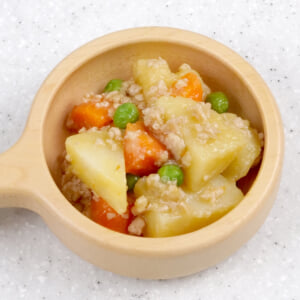
Jagaimo no Soboro-ni (Potatoes Simmered with Ground Chicken)
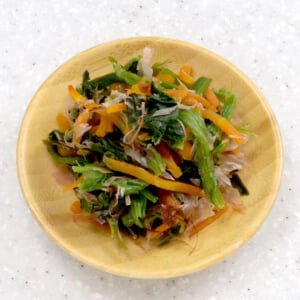
Spinach Ohitashi (Dashi-Soaked Spinach)
Hijiki no Irini (Simmered Hijiki Seaweed)

Sweet Simmered New Potatoes
Chikuzenni (Simmered Chicken and Root Vegetables)