Asparagus Okaka-ae (Asparagus with Bonito Flakes)
アスパラのおかか和え · Asupara no Okaka-ae
 By Aoi, licensed nutritionist · From a Japanese preschool lunch menu
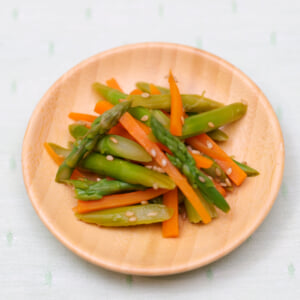
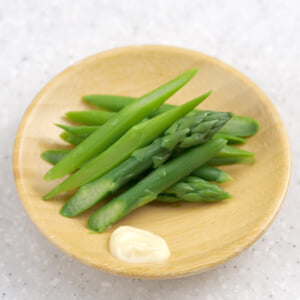
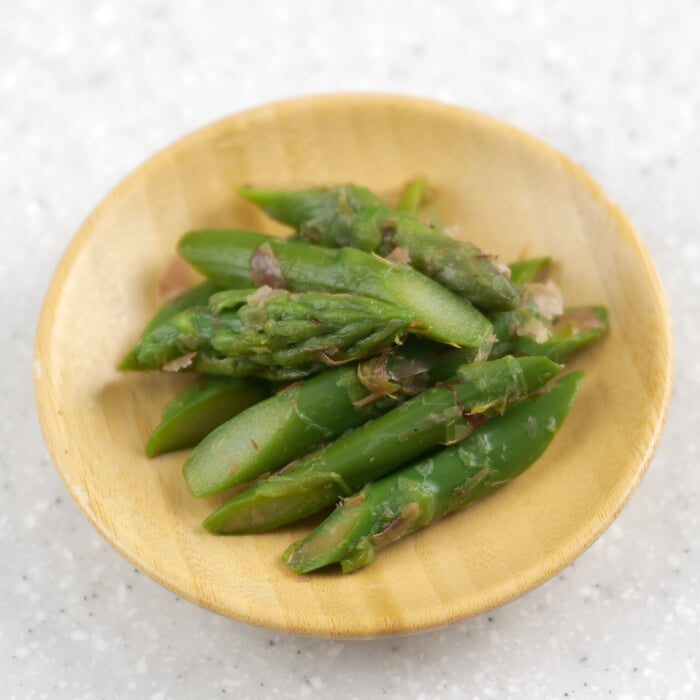
Okaka-ae is one of the simplest side dishes in Japanese home and school cooking: blanched vegetables tossed with soy sauce and katsuobushi, the paper-thin flakes of dried, smoked bonito. Here the vegetable is asparagus, cut on the diagonal so each piece is easy for small hands and mouths to manage. The bonito flakes soak up the soy sauce and cling to the asparagus, adding a gentle savory depth without much salt, which is exactly why children who are wary of green vegetables tend to take to it.
Wheat-free, but uses soy sauce (made with wheat). Japanese school-lunch allergy menus usually allow it, so check with your doctor. How to read the labels
Added. Open the recipe helper (bottom right) → ☰ Menu → 🛒 Shopping list to see the ingredients for your family size.
Printing uses the number of adults and children set under Ingredients, so set those first.
Ingredients
Amounts for 1 child (1 serving). An adult counts as 2 servings.
One serving here is 1.5× the portion served to a child in a Japanese preschool, sized for Western appetites. An adult counts as two servings. Tap an ingredient to check it off.
Ingredients
- 30 gasparagus
Seasonings
- 0.6 gsoy sauce
- 0.5 gkatsuobushi (dried bonito flakes)Paper-thin shavings of dried, smoked skipjack tuna that add a savory, smoky depth as a topping or stock base. Substitute: A pinch of dashi powder, or omit.
About the Japanese ingredients in this recipe
- katsuobushi (dried bonito flakes) (かつお削り節)
- Paper-thin shavings of dried, smoked skipjack tuna that add a savory, smoky depth as a topping or stock base. Substitute: A pinch of dashi powder, or omit.
Directions
- 1
Peel the tough skin from the bottom third of the asparagus, cut the stalks into diagonal slices and boil them. Cool under running water.
- 2
Drain the asparagus well, then toss with the soy sauce and bonito flakes.
Nutrition
| Per | 1 serving | 1 adult serving | Your total |
|---|---|---|---|
| Energy | 7.5 kcal | 15 kcal | 7.5 kcal |
| Protein | 1 g | 2.1 g | 1 g |
| Fat | 0 g | 0 g | 0 g |
| Carbohydrates | 1.2 g | 2.4 g | 1.2 g |
| Fiber | 0.6 g | 1.2 g | 0.6 g |
| Salt equivalent | 0.2 g | 0.3 g | 0.2 g |
| Calcium | 6 mg | 12 mg | 6 mg |
| Iron | 0.2 mg | 0.3 mg | 0.2 mg |
| Potassium | 87 mg | 174 mg | 87 mg |
| Energy | Protein | Fat | Carbs | Fiber | Salt equiv. | Calcium | Iron | Potassium | |
|---|---|---|---|---|---|---|---|---|---|
| 1 serving | 7.5 kcal | 1 g | 0 g | 1.2 g | 0.6 g | 0.2 g | 6 mg | 0.2 mg | 87 mg |
| 1 adult serving | 15 kcal | 2.1 g | 0 g | 2.4 g | 1.2 g | 0.3 g | 12 mg | 0.3 mg | 174 mg |
Values are per serving (1.5× the Japanese preschool portion); an adult serving is double. They were calculated by a licensed Japanese nutritionist using the Standard Tables of Food Composition in Japan. "Salt equivalent" is sodium × 2.54, the standard Japanese measure. Allergen flags cover egg, milk and wheat only and come from the nutritionist's records. Soy sauce and miso are made with wheat but are usually allowed on Japanese wheat-free school menus, so check with your doctor.