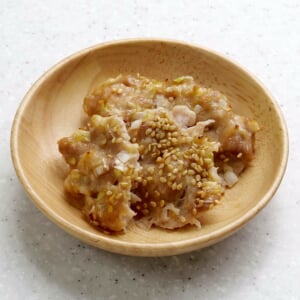
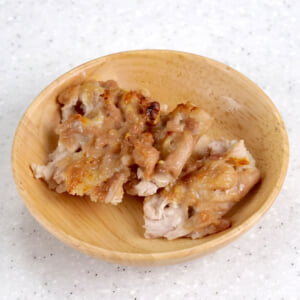
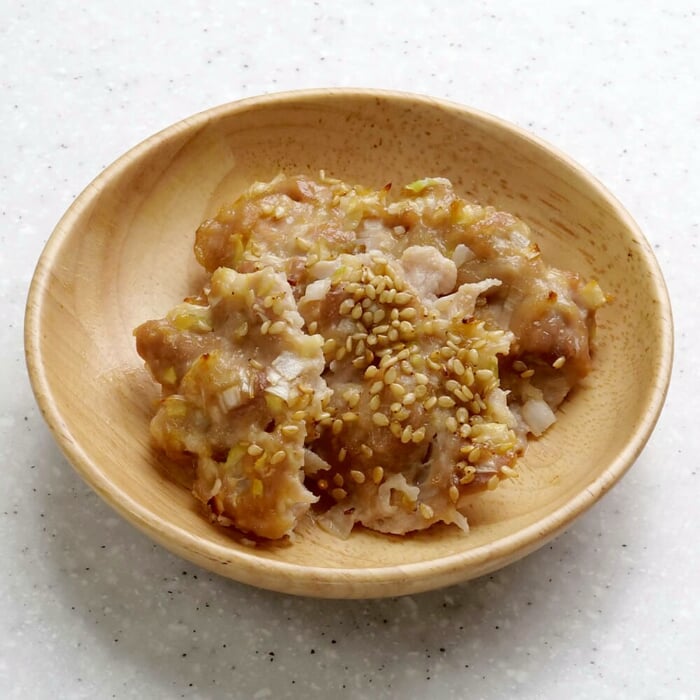
Aromatic Baked Pork with Green Onion and Ginger
豚肉の香味焼き(ねぎ・小麦なし) · Butaniku no Komiyaki
 By Aoi, licensed nutritionist · From a Japanese preschool lunch menu
Komiyaki means "aromatic bake": thin slices of pork are massaged with soy sauce, mirin, ginger, garlic and finely chopped green onion, then spread on a sesame-oiled baking sheet and baked until the edges catch a little color. Rubbing in joshinko (rice flour), used here in place of wheat flour, helps the marinade cling to the meat and keeps it tender. Ginger and garlic go in gently, just enough to smell wonderful without being sharp, and the sweet-savory sauce is exactly the kind of flavor that has children asking for more rice. Baking everything on one tray, the way we do in the preschool kitchen, also means no standing at the stove turning pieces of pork.
Wheat-free, but uses soy sauce (made with wheat). Japanese school-lunch allergy menus usually allow it, so check with your doctor. How to read the labels
Added. Open the recipe helper (bottom right) → ☰ Menu → 🛒 Shopping list to see the ingredients for your family size.
Printing uses the number of adults and children set under Ingredients, so set those first.
Ingredients
Amounts for 1 child (1 serving). An adult counts as 2 servings.
One serving here is 1.5× the portion served to a child in a Japanese preschool, sized for Western appetites. An adult counts as two servings. Tap an ingredient to check it off.
Ingredients
- 67.5 gthinly sliced pork (komagire)Small, thin offcuts of pork sold in Japan for quick stir-fries and simmered dishes. Substitute: Thinly sliced pork shoulder or loin cut into bite-size pieces.
- 8.1 ggreen onion (naga negi)Japanese long onion, thicker and milder than Western scallions. Substitute: Scallions or the white part of a leek.
Seasonings
- 3.8 gjoshinko (Japanese non-glutinous rice flour)Fine flour milled from regular short-grain rice, used for chewy Japanese sweets like dango. Substitute: Plain rice flour (not glutinous/sweet rice flour).
- 2.3 gsoy sauce
- 0.9 gmirinMirin is a sweet Japanese rice seasoning that adds gentle sweetness and a glossy finish. Hon-mirin (true mirin) contains about 14% alcohol; "mirin-style seasoning" has little or no alcohol. Some alcohol can remain after short cooking. If you prefer no alcohol for children, use the substitute. Substitute: For each tablespoon of mirin, use 1 tablespoon water plus 1 to 2 teaspoons sugar.
- 0.2 gginger paste (tube)Grated ginger sold ready to use in a squeeze tube, a staple in Japanese kitchens. Japanese school lunch kitchens grate fresh ginger for its aroma, but for cooking at home Aoi says the tube works just fine. Tube pastes often contain added salt, oil and other ingredients, so check the label. Substitute: Use freshly grated ginger in the same amount. 1 teaspoon of paste is about 5 g.
- 0.2 ggarlic paste (tube)Grated garlic sold ready to use in a squeeze tube, a staple in Japanese kitchens. Japanese school lunch kitchens grate fresh garlic for its aroma, but for cooking at home Aoi says the tube works just fine. Tube pastes often contain added salt, oil and other ingredients, so check the label. Substitute: Use freshly grated garlic in the same amount. 1 teaspoon of paste is about 5 g.
- 0.8 gwhite sesame seeds
- 1.5 gsesame oil
About the Japanese ingredients in this recipe
- thinly sliced pork (komagire) (豚こま切れ肉)
- Small, thin offcuts of pork sold in Japan for quick stir-fries and simmered dishes. Substitute: Thinly sliced pork shoulder or loin cut into bite-size pieces.
- joshinko (Japanese non-glutinous rice flour) (上新粉)
- Fine flour milled from regular short-grain rice, used for chewy Japanese sweets like dango. Substitute: Plain rice flour (not glutinous/sweet rice flour).
- green onion (naga negi) (ねぎ)
- Japanese long onion, thicker and milder than Western scallions. Substitute: Scallions or the white part of a leek.
- mirin (みりん)
- Mirin is a sweet Japanese rice seasoning that adds gentle sweetness and a glossy finish. Hon-mirin (true mirin) contains about 14% alcohol; "mirin-style seasoning" has little or no alcohol. Some alcohol can remain after short cooking. If you prefer no alcohol for children, use the substitute. Substitute: For each tablespoon of mirin, use 1 tablespoon water plus 1 to 2 teaspoons sugar.
- ginger paste (tube) (しょうがチューブ)
- Grated ginger sold ready to use in a squeeze tube, a staple in Japanese kitchens. Japanese school lunch kitchens grate fresh ginger for its aroma, but for cooking at home Aoi says the tube works just fine. Tube pastes often contain added salt, oil and other ingredients, so check the label. Substitute: Use freshly grated ginger in the same amount. 1 teaspoon of paste is about 5 g.
- garlic paste (tube) (にんにくチューブ)
- Grated garlic sold ready to use in a squeeze tube, a staple in Japanese kitchens. Japanese school lunch kitchens grate fresh garlic for its aroma, but for cooking at home Aoi says the tube works just fine. Tube pastes often contain added salt, oil and other ingredients, so check the label. Substitute: Use freshly grated garlic in the same amount. 1 teaspoon of paste is about 5 g.
Directions
- 1
Cut the pork into 1-2 cm wide pieces. Combine the finely chopped green onion, soy sauce, mirin, ginger paste and garlic paste to make a marinade, add the pork and massage it in well. Then rub in the joshinko.
- 2
Brush a baking sheet with sesame oil, place the pork on it and spread it out in an even layer.
- 3
Sprinkle with white sesame seeds and bake in an oven preheated to 200°C (400°F) for about 15 minutes.
Nutrition
| Per | 1 serving | 1 adult serving | Your total |
|---|---|---|---|
| Energy | 153 kcal | 306 kcal | 153 kcal |
| Protein | 14.6 g | 29.1 g | 14.6 g |
| Fat | 8.9 g | 17.7 g | 8.9 g |
| Carbohydrates | 4.5 g | 9 g | 4.5 g |
| Fiber | 0.3 g | 0.6 g | 0.3 g |
| Salt equivalent | 0.3 g | 0.6 g | 0.3 g |
| Calcium | 15 mg | 30 mg | 15 mg |
| Iron | 0.5 mg | 0.9 mg | 0.5 mg |
| Potassium | 268.5 mg | 537 mg | 268.5 mg |
| Energy | Protein | Fat | Carbs | Fiber | Salt equiv. | Calcium | Iron | Potassium | |
|---|---|---|---|---|---|---|---|---|---|
| 1 serving | 153 kcal | 14.6 g | 8.9 g | 4.5 g | 0.3 g | 0.3 g | 15 mg | 0.5 mg | 268.5 mg |
| 1 adult serving | 306 kcal | 29.1 g | 17.7 g | 9 g | 0.6 g | 0.6 g | 30 mg | 0.9 mg | 537 mg |
Values are per serving (1.5× the Japanese preschool portion); an adult serving is double. They were calculated by a licensed Japanese nutritionist using the Standard Tables of Food Composition in Japan. "Salt equivalent" is sodium × 2.54, the standard Japanese measure. Allergen flags cover egg, milk and wheat only and come from the nutritionist's records. Soy sauce and miso are made with wheat but are usually allowed on Japanese wheat-free school menus, so check with your doctor.