Orange Jelly
オレンジゼリー
 By Aoi, licensed nutritionist · From a Japanese preschool lunch menu
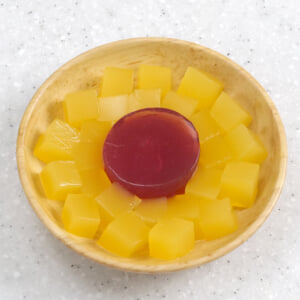
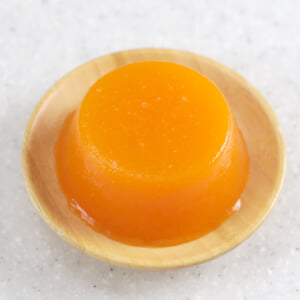
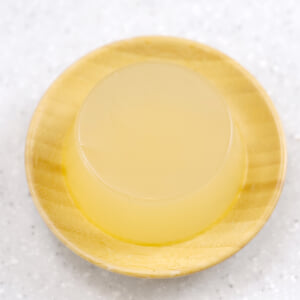
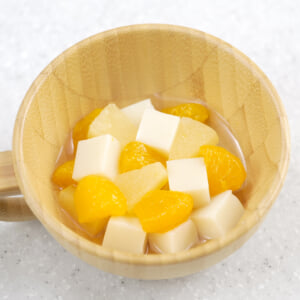
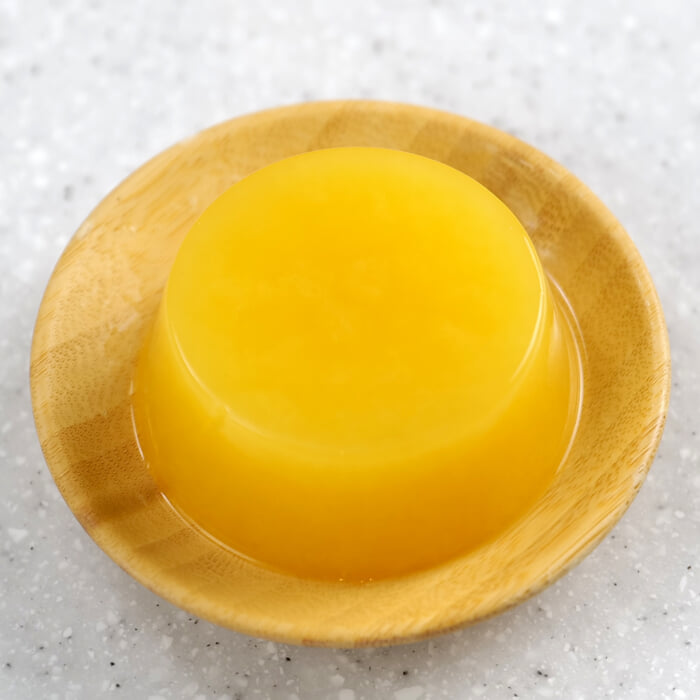
This bright orange jelly is a classic preschool snack in Japan, made with just 100% orange juice, a little sugar and kanten (agar), the seaweed-based setting agent used in traditional Japanese sweets. Because kanten sets firmly even at room temperature, it holds its shape on a toddler's spoon, yet it is soft enough for little ones to eat with ease. Children love the gentle sweetness and sunny color. It is made without egg, milk or wheat.
Added. Open the recipe helper (bottom right) → ☰ Menu → 🛒 Shopping list to see the ingredients for your family size.
Printing uses the number of adults and children set under Ingredients, so set those first.
Ingredients
Amounts for 1 child (1 serving). An adult counts as 2 servings.
One serving here is 1.5× the portion served to a child in a Japanese preschool, sized for Western appetites. An adult counts as two servings. Tap an ingredient to check it off.
Ingredients
- 0.9 gkanten powder (agar powder)A seaweed-based setting agent that gels firmly at room temperature and is plant-based. Substitute: Agar-agar powder; gelatin can be used but gives a softer, wobblier set.
- 45 gwater
- 75 g100% orange juice
Seasonings
- 9 gsugar
About the Japanese ingredients in this recipe
- kanten powder (agar powder) (粉寒天)
- A seaweed-based setting agent that gels firmly at room temperature and is plant-based. Substitute: Agar-agar powder; gelatin can be used but gives a softer, wobblier set.
Directions
- 1
Pour the orange juice into a bowl and warm it in the microwave until it is just lukewarm (about body temperature).
- 2
Put the kanten powder and water in a pot, bring to a boil, then keep cooking for about 2 minutes until the kanten has fully dissolved. Add the sugar and stir well. Stir in the warmed orange juice from step 1.
- 3
Pour into a shallow tray or individual cups and chill in the refrigerator for at least 1 hour, until set.
Kanten will not set unless it is completely dissolved, so keep the mixture at a steady boil and cook it until every trace of powder has melted away.
Nutrition
| Per | 1 serving | 1 adult serving | Your total |
|---|---|---|---|
| Energy | 70.5 kcal | 141 kcal | 70.5 kcal |
| Protein | 0.6 g | 1.2 g | 0.6 g |
| Fat | 0 g | 0 g | 0 g |
| Carbohydrates | 18 g | 36 g | 18 g |
| Fiber | 1 g | 2.1 g | 1 g |
| Salt equivalent | 0 g | 0 g | 0 g |
| Calcium | 9 mg | 18 mg | 9 mg |
| Iron | 0.2 mg | 0.3 mg | 0.2 mg |
| Potassium | 135 mg | 270 mg | 135 mg |
| Energy | Protein | Fat | Carbs | Fiber | Salt equiv. | Calcium | Iron | Potassium | |
|---|---|---|---|---|---|---|---|---|---|
| 1 serving | 70.5 kcal | 0.6 g | 0 g | 18 g | 1 g | 0 g | 9 mg | 0.2 mg | 135 mg |
| 1 adult serving | 141 kcal | 1.2 g | 0 g | 36 g | 2.1 g | 0 g | 18 mg | 0.3 mg | 270 mg |
Values are per serving (1.5× the Japanese preschool portion); an adult serving is double. They were calculated by a licensed Japanese nutritionist using the Standard Tables of Food Composition in Japan. "Salt equivalent" is sodium × 2.54, the standard Japanese measure. Allergen flags cover egg, milk and wheat only and come from the nutritionist's records. Soy sauce and miso are made with wheat but are usually allowed on Japanese wheat-free school menus, so check with your doctor.