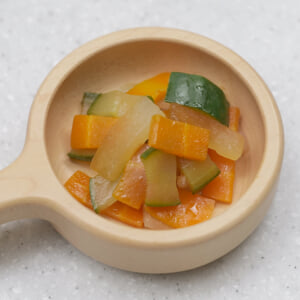
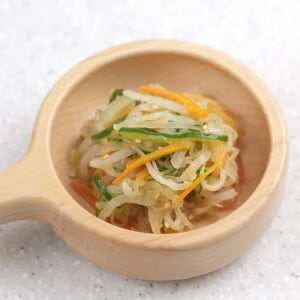
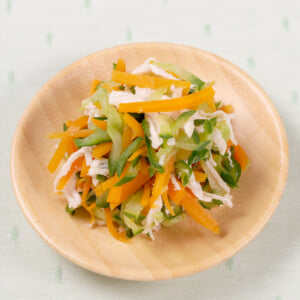
Daikon Sesame Salad
大根のごまサラダ · Daikon no Goma Salad
 By Aoi, licensed nutritionist · From a Japanese preschool lunch menu
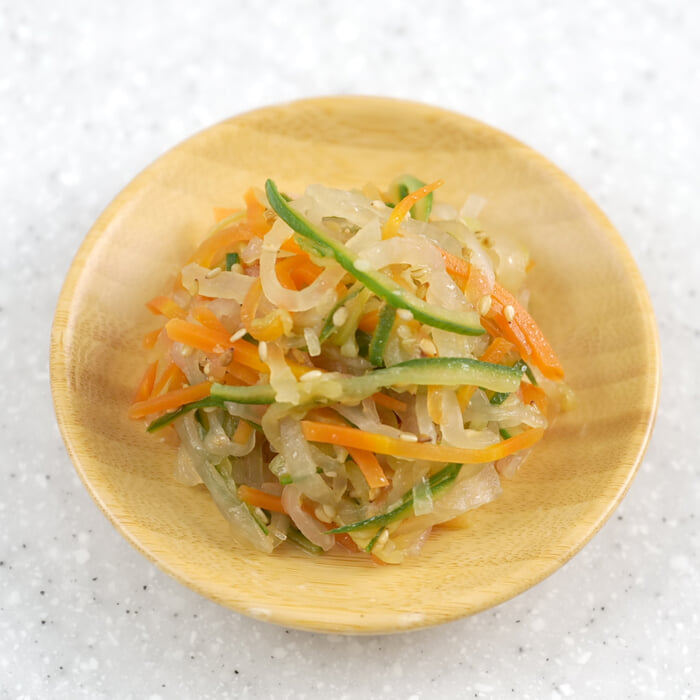
This is a light, crunchy side salad straight from the preschool lunch menu: thin strips of daikon radish, cucumber and carrot tossed in a gentle soy and sesame dressing. Briefly boiling the vegetables softens them just enough for little mouths while keeping their crunch, and warming the dressing takes the sharp edge off the vinegar so even children who shy away from sour flavors dig in. A sprinkle of toasted white sesame seeds adds a nutty aroma that makes the vegetables that much easier to eat.
Wheat-free, but uses soy sauce (made with wheat). Japanese school-lunch allergy menus usually allow it, so check with your doctor. How to read the labels
Added. Open the recipe helper (bottom right) → ☰ Menu → 🛒 Shopping list to see the ingredients for your family size.
Printing uses the number of adults and children set under Ingredients, so set those first.
Ingredients
Amounts for 1 child (1 serving). An adult counts as 2 servings.
One serving here is 1.5× the portion served to a child in a Japanese preschool, sized for Western appetites. An adult counts as two servings. Tap an ingredient to check it off.
Ingredients
- 55.5 gdaikon radish
- 19.5 gcucumber
- 13.5 gcarrot
Seasonings
- 0.9 gsugar
- 3 gvinegar
- 2.4 gsoy sauce
- 2.3 gsesame oil
- 0.8 gwhite sesame seeds
Directions
- 1
Cut the daikon radish, cucumber and carrot into short, thin matchsticks and boil each one separately. Rinse under running water to cool.
- 2
Combine all the dressing ingredients and heat them to cook off the sharpness of the vinegar. Toast the white sesame seeds (optional).
- 3
Squeeze the vegetables from step 1 to remove excess water, then toss with the dressing from step 2.
Toasting the sesame seeds brings out a nutty aroma that makes the vegetables easier for children to eat (you can skip this step to save time).
Nutrition
| Per | 1 serving | 1 adult serving | Your total |
|---|---|---|---|
| Energy | 46.5 kcal | 93 kcal | 46.5 kcal |
| Protein | 0.9 g | 1.8 g | 0.9 g |
| Fat | 2.7 g | 5.4 g | 2.7 g |
| Carbohydrates | 5.3 g | 10.5 g | 5.3 g |
| Fiber | 1.5 g | 3 g | 1.5 g |
| Salt equivalent | 0.3 g | 0.6 g | 0.3 g |
| Calcium | 31.5 mg | 63 mg | 31.5 mg |
| Iron | 0.2 mg | 0.3 mg | 0.2 mg |
| Potassium | 219 mg | 438 mg | 219 mg |
| Energy | Protein | Fat | Carbs | Fiber | Salt equiv. | Calcium | Iron | Potassium | |
|---|---|---|---|---|---|---|---|---|---|
| 1 serving | 46.5 kcal | 0.9 g | 2.7 g | 5.3 g | 1.5 g | 0.3 g | 31.5 mg | 0.2 mg | 219 mg |
| 1 adult serving | 93 kcal | 1.8 g | 5.4 g | 10.5 g | 3 g | 0.6 g | 63 mg | 0.3 mg | 438 mg |
Values are per serving (1.5× the Japanese preschool portion); an adult serving is double. They were calculated by a licensed Japanese nutritionist using the Standard Tables of Food Composition in Japan. "Salt equivalent" is sodium × 2.54, the standard Japanese measure. Allergen flags cover egg, milk and wheat only and come from the nutritionist's records. Soy sauce and miso are made with wheat but are usually allowed on Japanese wheat-free school menus, so check with your doctor.