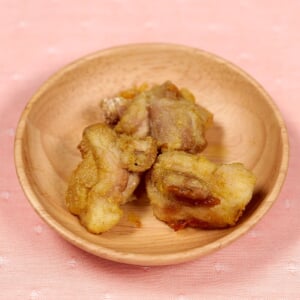
Tandoori Chicken (Milk-Free)
タンドリーチキン(乳なし)
 By Aoi, licensed nutritionist · From a Japanese preschool lunch menu
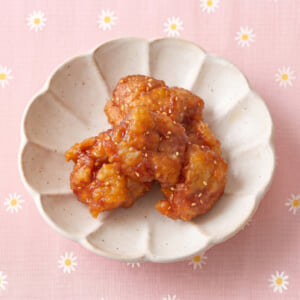
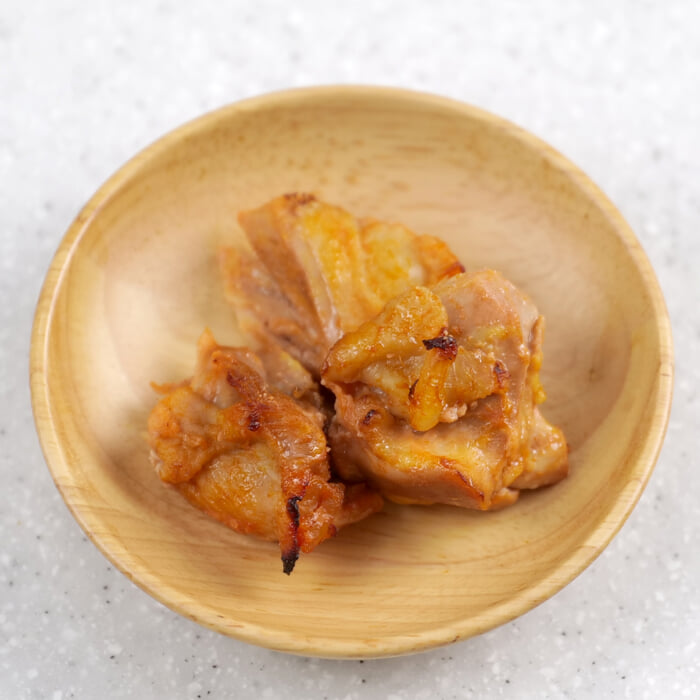
Tandoori chicken is a favorite on preschool lunch menus, and this version swaps the usual yogurt marinade for soy milk, so it is made without milk. Ketchup adds a gentle sweetness and color, and just a little curry powder gives the flavor without any heat, so even small children take to it happily. The chicken is cut into bite-size pieces before marinating, which lets the flavor soak in quickly and makes it easy for little hands and mouths to manage.
Added. Open the recipe helper (bottom right) → ☰ Menu → 🛒 Shopping list to see the ingredients for your family size.
Printing uses the number of adults and children set under Ingredients, so set those first.
Ingredients
Amounts for 1 child (1 serving). An adult counts as 2 servings.
One serving here is 1.5× the portion served to a child in a Japanese preschool, sized for Western appetites. An adult counts as two servings. Tap an ingredient to check it off.
Ingredients
- 75 gchicken thigh
Seasonings
- 0.3 ggarlic paste (tube)Grated garlic sold ready to use in a squeeze tube, a staple in Japanese kitchens. Japanese school lunch kitchens grate fresh garlic for its aroma, but for cooking at home Aoi says the tube works just fine. Tube pastes often contain added salt, oil and other ingredients, so check the label. Substitute: Use freshly grated garlic in the same amount. 1 teaspoon of paste is about 5 g.
- 0.3 gginger paste (tube)Grated ginger sold ready to use in a squeeze tube, a staple in Japanese kitchens. Japanese school lunch kitchens grate fresh ginger for its aroma, but for cooking at home Aoi says the tube works just fine. Tube pastes often contain added salt, oil and other ingredients, so check the label. Substitute: Use freshly grated ginger in the same amount. 1 teaspoon of paste is about 5 g.
- 0.2 gcurry powder
- 0.3 gsalt
- 9.6 gsweetened soy milk (Japanese chosei tonyu)Japanese 'prepared' soy milk that is lightly sweetened and flavored to taste milder than plain soy milk. Substitute: Regular (original, lightly sweetened) soy milk from the supermarket.
- 4.4 gketchup
About the Japanese ingredients in this recipe
- garlic paste (tube) (にんにくチューブ)
- Grated garlic sold ready to use in a squeeze tube, a staple in Japanese kitchens. Japanese school lunch kitchens grate fresh garlic for its aroma, but for cooking at home Aoi says the tube works just fine. Tube pastes often contain added salt, oil and other ingredients, so check the label. Substitute: Use freshly grated garlic in the same amount. 1 teaspoon of paste is about 5 g.
- ginger paste (tube) (しょうがチューブ)
- Grated ginger sold ready to use in a squeeze tube, a staple in Japanese kitchens. Japanese school lunch kitchens grate fresh ginger for its aroma, but for cooking at home Aoi says the tube works just fine. Tube pastes often contain added salt, oil and other ingredients, so check the label. Substitute: Use freshly grated ginger in the same amount. 1 teaspoon of paste is about 5 g.
- sweetened soy milk (Japanese chosei tonyu) (調製豆乳)
- Japanese 'prepared' soy milk that is lightly sweetened and flavored to taste milder than plain soy milk. Substitute: Regular (original, lightly sweetened) soy milk from the supermarket.
Directions
- 1
Cut the chicken into pieces of about 20 g each.
- 2
In a bowl, mix together the garlic paste, ginger paste, curry powder, salt, soy milk and ketchup. Add the chicken and rub the marinade in well. Let it rest in the refrigerator for about 15 minutes.
- 3
Arrange the chicken on a baking tray and bake in a toaster oven (or an oven preheated to 200°C / 400°F) for 20 minutes.
Nutrition
| Per | 1 serving | 1 adult serving | Your total |
|---|---|---|---|
| Energy | 153 kcal | 306 kcal | 153 kcal |
| Protein | 12.8 g | 25.5 g | 12.8 g |
| Fat | 11 g | 21.9 g | 11 g |
| Carbohydrates | 2 g | 3.9 g | 2 g |
| Fiber | 0.2 g | 0.3 g | 0.2 g |
| Salt equivalent | 0.6 g | 1.2 g | 0.6 g |
| Calcium | 9 mg | 18 mg | 9 mg |
| Iron | 0.6 mg | 1.2 mg | 0.6 mg |
| Potassium | 255 mg | 510 mg | 255 mg |
| Energy | Protein | Fat | Carbs | Fiber | Salt equiv. | Calcium | Iron | Potassium | |
|---|---|---|---|---|---|---|---|---|---|
| 1 serving | 153 kcal | 12.8 g | 11 g | 2 g | 0.2 g | 0.6 g | 9 mg | 0.6 mg | 255 mg |
| 1 adult serving | 306 kcal | 25.5 g | 21.9 g | 3.9 g | 0.3 g | 1.2 g | 18 mg | 1.2 mg | 510 mg |
Values are per serving (1.5× the Japanese preschool portion); an adult serving is double. They were calculated by a licensed Japanese nutritionist using the Standard Tables of Food Composition in Japan. "Salt equivalent" is sodium × 2.54, the standard Japanese measure. Allergen flags cover egg, milk and wheat only and come from the nutritionist's records. Soy sauce and miso are made with wheat but are usually allowed on Japanese wheat-free school menus, so check with your doctor.